


 Shkruar nga Pamfleti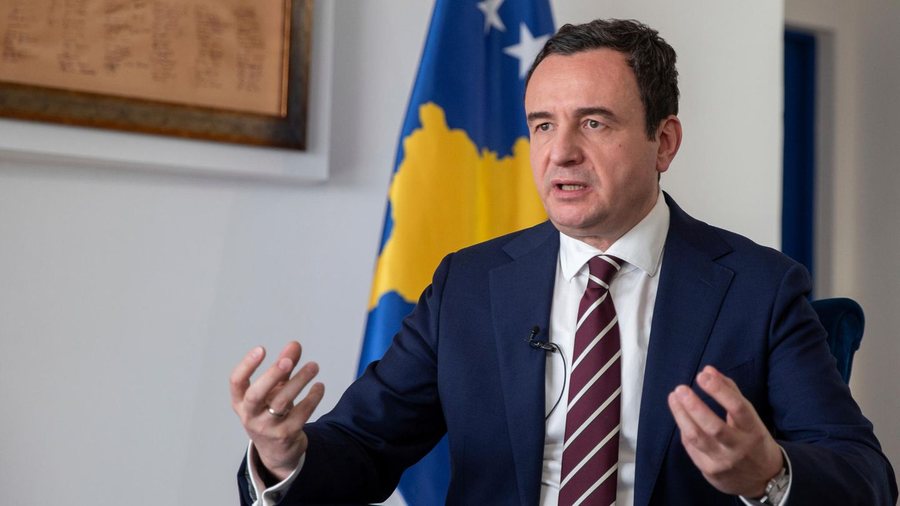
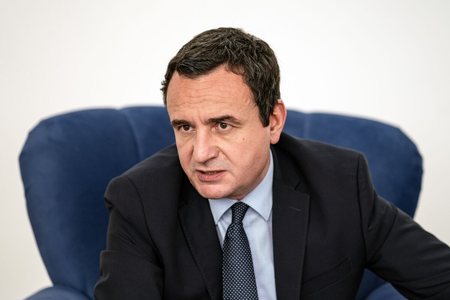
Kosovo's acting Prime Minister Albin Kurti said on Friday that Serbia could use "destructive elements" to incite incidents during the Serbian Vidovdan holiday on Saturday in Gazimestan, about 10 kilometers from the capital Pristina. Belgrade has reacted to Kurti's statement, calling it "baseless."
Speaking at a meeting of the acting government, Kurti said that Serbia will try to divert attention from the anti-government protest expected to take place on Saturday in Belgrade by inciting incidents in Kosovo.
Serbs from Kosovo, Serbia, and the region traditionally mark Vidovdan on June 28 at Gazimestan, a historical monument near Pristina.
Kurti said that - according to assessments by security and intelligence institutions - there are efforts to make the rally in Gazimestan "as massive as possible, therefore groups of Serbs from Serbia, Montenegro and Bosnia and Herzegovina have been organized to come to Kosovo tomorrow."
"Such groups have traditionally been provocative, carrying Serbian and Russian nationalist symbols that are contrary to the Constitution of Kosovo and are also against democratic and European values," Kurti said.
He said that the Vidovdan holiday, "although of a religious character, has unfortunately been constantly accompanied by political rhetoric, inciting and threatening public security on the part of Serbia."
A week ago, the Basic Court in Pristina overturned the decision of the Municipality of Gracanica to display the Serbian flag in honor of Vidovdan in 2024.
The court's reasoning states that the municipality exceeded its powers and acted contrary to Kosovo laws, having adopted a decision to display the Serbian flag on June 28 - a day that is not designated as an official holiday in Kosovo.
Kurti said that Vidovdan rallies should be held in accordance with the law, "not turned into a tool for political instrumentalization by the authorities in Belgrade."
The rally is usually secured by the Kosovo Police, while in recent years, Serbian flags or other national symbols, except for church ones, have not been allowed to be brought in, as the commemoration is also organized by the Serbian Orthodox Church in honor of the 1389 battle against the Ottoman army.
Last week, Kosovo's acting Minister for Communities and Returns, Nenad Rašić, called for respect for the rights of the Serbian community regarding the use of their symbol.
He said that the use of the Serbian flag by Serbs "does not constitute a threat to anyone's identity, but is evidence of Kosovo's commitment as a democratic society based on respect for human and minority rights."
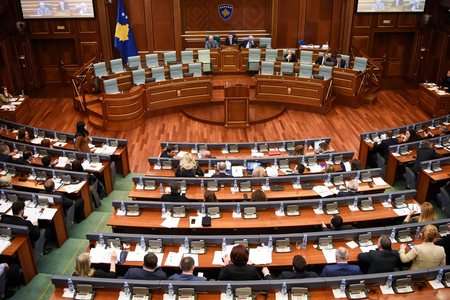
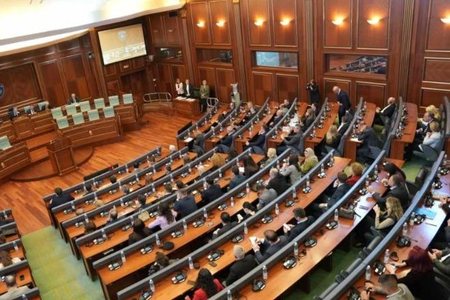
The Serbian List, the largest Serb party in Kosovo that has the support of Belgrade, accused Kurti of displaying the national flag of Albania during sessions in the Kosovo Assembly.
In a statement, she asked the court to use "the same standards and apply the same reasoning in cases related to the Albanian flag."
The director of the Office for Kosovo in the Serbian Government, Petar Petkovic, has also reacted to Kurti's statement.
He said that these accusations are "baseless" and added that Kurti is in fact trying to "create an alibi for his repressive plans that he intends to implement tomorrow."
Petkovic connected Kurti with student protesters in Serbia, who have announced a protest on June 28 in Belgrade, where they will once again demand the announcement of early parliamentary elections.
"They have the same goal and effort: to destroy and divide Serbia, to weaken the Serbian people, and for this reason they are no longer even trying to hide that they are in coordination," Petkovic said.
He said he hopes that Vidovdan Day will be marked peacefully and that no one "will fall prey to provocations."
Meanwhile, on June 27, Kosovo Police said that measures have been planned for the Vidovdan celebrations so that the event takes place peacefully and without incidents.
"The Kosovo Police appeals to all citizens and participants to demonstrate peacefully, to avoid any possible provocation, to respect the laws and instructions of the Kosovo Police, which will be present with its units to provide security and prevent any illegal actions," the announcement said.
Last year, Vidovdan celebrations in Gazimestan passed without any incident.
But, in previous years, there have also been arrests for inciting religious and national hatred, while in 2023, Vidovdan was not celebrated in Gazimestan – the place where it is traditionally celebrated – due to the worsening security situation in northern Kosovo.
Gazimestan in Kosovo is also known for the speech of former Serbian president Slobodan Milosevic, who, on June 28, 1989, did not rule out "armed battles."
That speech by Milosevic was seen by many as a warning of the wars that followed in the 1990s in the former Yugoslavia.
On the same day in 2001, Milosevic was extradited to the Hague Tribunal, which indicted him for war crimes. He died in custody in 2006, before his final trial. /REL/




Lini një Përgjigje