


 Shkruar nga Pamfleti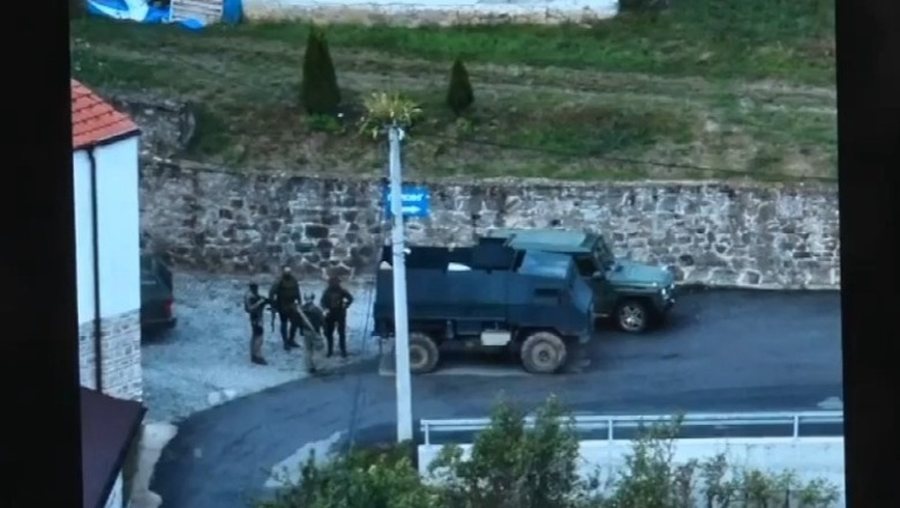
Former US Army colonel Gian Gentile says that the armed group in the September 24 attack in Banjska was equipped as a military infantry of 120 or 130 soldiers and that it had the potential to cause major damage to the civilian infrastructure in Banjska and the forces police.
After analyzing photos and a list of weapons confiscated by the Kosovo Police - after the attack that left a policeman dead in the northern part of the country - the associate director of the Division for Military Research at the American institute RAND Corporation, Gentile, says he was surprised by the presence and some types of weapons.
"There were pictures of 60-millimeter mortars. These are military weapons and are effective against lightly armed infantry on the other side. But they wouldn't be effective if you want to stop a tank, for example," Gentile told Radio Free Europe.
The attack in Banjska happened on the night between September 23 and 24 when armed groups attacked the Kosovo police in the village of Zveçan municipality, leaving one policeman dead.
In the clashes that followed, three attackers were also killed.
Gentile believes the confiscated weaponry would not be very effective against fortified facilities, such as bunkers, but says that, in an attack on a group of police, the weaponry would be very effective.
“If your only goal was survival, you'd be better off siding with the attackers with these types of weapons. The types of weapons in the photos you sent me [displayed by the Kosovo Police], would destroy a lightly armed police force with only pistols and maybe rifles,” says Gentile.
He adds that the police forces do not have equipment of such a military level even in the USA and that such weaponry could seriously damage the civil infrastructure, such as the houses around the Banjska Monastery, where the attackers took refuge.
"It occurred to me ... that these are the types of weapons, equipment and systems that an infantry company would be equipped with, not a police force," says Gentile, who served several years as a professor at the U.S. military academy. USA, Westpoint.
In the Banjska Monastery and the surrounding facilities, including residential houses, a large amount of weapons, two armored vehicles, more than 20 mountain vehicles and two motorbikes, also for mountain terrain, were confiscated, the Kosovo Police said.
Apart from the two motorbikes, which he says have no military value since their driver would be exposed to attack, Gentile says the confiscated weaponry is of the type still in use around the world.
"Ukrainian and Russian soldiers definitely use small-caliber mortars, 80-millimeter mortars, and automatic rocket launchers. Then, machine guns are also (used). So, yes, I would say that these systems are definitely still used by the military today," says Gentile.
Using some of the confiscated equipment, Gentile says, would not even require extensive training. Basic knowledge of the use of weapons would be sufficient. But, according to him, things would be complicated if they had to be cleaned and reused.
"Then, when we talk about C4 explosives. Someone would have to know how to put an explosive wire in there, how to install it without exploding themselves," Gentile says.
Në mbledhjen e Qeverisë së Kosovës më 27 shtator, kryeministri i Kosovës, Albin Kurti, tha se vlera e armatimit të konfiskuar është mbi pesë milionë euro. Por, i gjithë ky armatim i konfiskuar mund të shkatërrohet.
Sipas Kodit të Procedurës Penale në Kosovë, armatimi i konfiskuar mund të shkatërrohet, por mund edhe të shfrytëzohet nga organet e vendit.
Duke iu përgjigjur Radios Evropa e Lirë, Policia e Kosovës tha se vendimi për fatin e këtij armatimi “do të lëshohet nga organet e drejtësisë pas përfundimit të të gjitha procedurave të parapara ligjore”.
“Në raste të mëhershme me armë të konfiskuara, kur kanë përfunduar të gjitha procedurat lidhur me to, janë ndërmarrë veprime të ndryshme. Në shumicën e herëve janë shkatërruar”, thuhet në përgjigjen e Policisë së Kosovës.
Finally, confiscated weapons were melted down on September 20 – four days before the Banjska attack – and used to make manhole covers. /REL



Lini një Përgjigje