


 Shkruar nga Ekrem Idrizi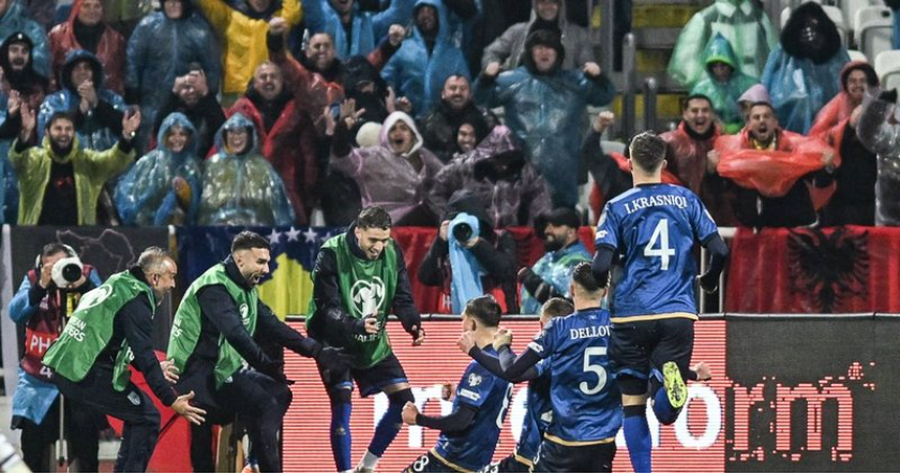
When Kosovo began its 2026 World Cup qualifying campaign in September, it had only one win in its entire young history in World Cup qualifiers, and a heavy defeat by Switzerland in the opening match for next summer's tournament led many to believe the national team was headed for another failure.
But, in the blink of an eye, Kosovo achieved three wins and two draws in a drastic and stunning turnaround within months to reach the play-offs, and is now one step away from reaching the World Cup, precisely on the 10th anniversary of its admission to the home of world football, FIFA.
Kosovo has never participated in a major tournament, and next summer's World Cup in Canada, Mexico and the United States will be its first.
And, to achieve this, they must first win two more matches in the play-offs in March, the semi-final against Slovakia and the possible final against the winner of the Turkey-Romania match.
For sports analyst and professor at the University of Pristina, Malsor Gjonbalaj, Kosovo's qualification for the World Cup "would be something impressive, it would be the best representation that the country would have in the international arena."
" Because, you know how popular football is, how much attention it gets around the world, so Kosovo's appearance at an event like the World Cup would be the best recognition for the state of Kosovo ," Gjonbalaj, also a former footballer, tells Radio Free Europe.
After losing the opening match against Switzerland in Basel in September, the yellow-blue coach, Franco Foda, admitted that his team performed poorly defensively in an attacking 4-3-3 formation and decided to change their approach and tactics.
" Today, although we had many duels, we lost the decisive ones and this affected the final result. Against Sweden we have to do this much, much better ," he said after the loss.
Foda then changed the formation and switched to a classic 4-4-2 formation for the next match against Sweden three days later in Pristina, playing defensive football, thanks to which Kosovo scored twice on counterattacks. His tactics worked and Kosovo took their first win in qualifying Group B, 2-0.
After a less than stellar performance in a goalless draw against Slovenia in the next home match, Kosovo won their next two matches against Sweden (1-0) and Slovenia (2-0) to secure the play-offs, having stayed true to Foda's tactics.
They drew 1-1 with Switzerland in their final group game in November, ultimately accumulating 11 points in second place, enough to secure a play-off spot, as Switzerland qualified directly as group winners.
Gjonbalaj vlerëson se kjo vjen falë një pune të gjatë të trajnerit dhe disiplinës që ai ka sjellë në kombëtare.
“Në këtë rast kemi të bëjmë me punë për një kohë bukur të gjatë, një planifikim dhe, sidomos, kemi në krye të ekipit një trajner, i cili e ka realizuar taktikën e lojës me mjaft disiplinë, i ka përzgjedhur lojtarët mjaft mirë dhe mendoj se homogjeniteti i ekipit është çelësi kryesor i këtyre rezultateve deri tani”, thekson ai.
Foda, i cili e mori drejtimin e kombëtares më 2024, bëri shumë ndryshime në ekipin e parë, i ndihmuar shumë edhe nga prurjet e reja, të cilat kanë lënë gjurmët e tyre të dukshme në ekip deri tani.
Pas “play off“-it të dështuar për Kampionatin Evropian 2020, kur u mposht nga Maqedonia e Veriut, Kosova po vuante të rindërtonte mesfushën, veçanërisht pas largimit të Hekuran Kryeziut dhe Herolind Shalës.
Pas shumë vitesh përpjekje, Federata e Futbollit arriti të sjellë disa mesfushorë të talentuar, si Elvis Rexhbeçaj më 2024 dhe Leon Avdullahu e Veldin Hoxha në prag të kualifikueseve këtë verë.
Rexhbeçaj, i cili luan për Augsburgun në Gjermani, dhe Avdullahu, i cili është pjesë e Hofenheimit, po ashtu në Gjermani, kanë qenë vendimtarë përkrah Florent Muslijas, i cili ka pasur më shumë detyra sulmuese.
Foda, madje, e vendosi mbrojtësin e djathtë të Comos në Itali, Mërgim Vojvoda, në krahun e djathtë të mesfushës, falë aftësive të tij teknike.
“Tani kemi në mesfushë lojtarë që vrapojnë, mbajnë barrën, kanë disiplinë të jashtëzakonshme në lojë, siç janë Avdullahu, Rexhbeçaj, Hoxha. Ata bëjnë edhe një lojë të mirë sulmuese me Muslijan, i cili i bashkohet sulmuesve, si një lojtar shumë kreativ dhe teknik, i cili po ndihmon të vijmë më shpejt te goli”, nënvizon Gjonbalaj.
Taktikat e Fodës nënkuptuan, gjithashtu, se ai që shihet si ylli më i madh dhe më i vlefshëm i kombëtares, Edon Zhegova, të mbetej jashtë ekipit të tij startues.
Zhegrova, i cili iu bashkua në verë gjigantit italian Juventus, është sulmues anësor që përshtatet kryesisht në një formacion sulmues 4-3-3.
Lënia e Zhegrovës jashtë formacionit startues habiti shumë njerëz në Kosovë, por Fodës iu shpagua kjo qasje.
“Ne kemi një numër të madh të futbollistëve, secili e meriton të luajë, por secili duhet të jetë i bindur që për të përfaqësuar shtetin mjaftojnë edhe 30 sekonda apo një minutë lojë. Prandaj, asnjëri nuk duhet të ndihet i fyer kur nuk luan”, thekson Gjonbalaj.
Nuk është vetëm mesfusha që është përmirësuar gjatë kësaj kohe pas ardhjeve të reja, por edhe sulmi me Fisnik Asllanin e Hofenheimit dhe, posaçërisht mbrojtja, ku Albian Hajdari dhe Dion Gallapeni kanë lënë mbresa.
Gallapeni, 19 vjeç, është mbase përforcimi më i dëshiruar te Kosova, që ka pasur shumë vështirësi të gjejë një mbrojtës të majtë solid.
Por, a u ndihmua Kosova edhe nga faktorë të tjerë? Gjonbalaj mendon se po.
Of the four national teams in Group B, only Kosovo and Switzerland achieved victories. Sweden and Slovenia failed to get more than draws.
Both have shown poor form in these qualifying matches, considering their past.
Sweden faced Kosovo with two of the most expensive strikers in English Premier League history, Liverpool's Alexander Isak and Arsenal's Viktor Gjokeres.
" There is no easy team to beat, but it is true that they have not been in their best form in these matches ," says Gjonbalaj.
Sweden, however, is in the "play off" just like Kosovo, not through the qualifiers, but through the Nations League, and could ultimately be part of the World Cup in the summer.
Kosovo would like the play-off matches to take place now, given the team's form, but they will have to wait until the end of March, which means it is perhaps too early to talk about the chances of qualifying for the World Cup.
The "Dardans" will travel to Bratislava on March 26 to face Slovakia in the semi-final of the "play off", which they must win to keep alive their hopes for a final that would lead them to the World Cup.
" Let's not forget, we are in excitement, because we are in the play-offs, but we have not done the job yet, we need great calm and great professional work to achieve qualification, because we are talking about two very strong teams ," Gjonbalaj assesses.
Kosovo would play the possible final in Pristina against the winner of the next match between Turkey and Romania on March 31.
While he believes that the chances with Slovakia are very real, Gjonbalaj believes that the potential confrontation with Turkey would be much more difficult.
" I think we have a lot of chances with Slovakia, while in the final match I expect to face Turkey, which I think is a very unsuitable team for us, but we will have a chance because we are playing at home ," he emphasizes./REL


Lini një Përgjigje