


 Shkruar nga Pamfleti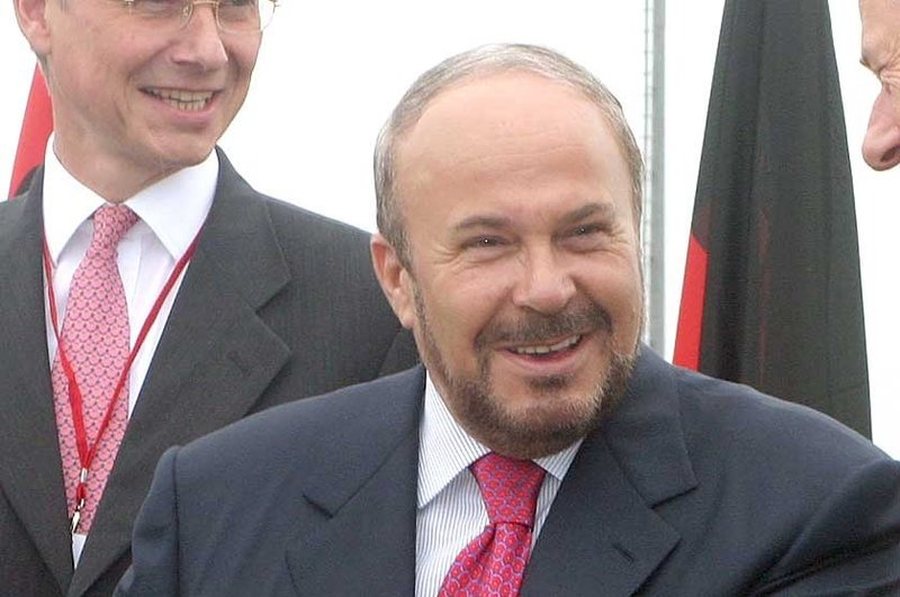
Fatos Nano, a three-time former prime minister but without a full term, once considered the country's "last political prisoner" and accused of corruption multiple times, who passed away on Friday, October 31, will likely be remembered as the man who resigned from power not once, but twice, and managed the first transition of power without mass violence and widespread civil unrest to the opposition in 2005.
"The institution of resignation," the writer Ismail Kadare once wrote in 2011, "was established in the Albanian state by Ismail Qemali." Kadare referred in this way to the decision of the founder of the present-day Albanian state in 1913 to resign as president and pave the way for the implementation of the Great Powers' decision to declare Albania a principality, with Wilhelm Wied as prince.
Resignation from power as a way to avoid a crisis damaging to the state and the well-being of citizens was indeed founded by Ismail Qemali, but since then, it has been implemented extremely rarely in Albanian politics, dominated by autocratic figures who refuse to step down unless they are forcibly overthrown.
Well, in this story, Fatos Nano, a three-time former prime minister but without a full mandate, once considered the country's "last political prisoner" and accused of corruption multiple times, who passed away on Friday, October 31, will likely be remembered as the man who resigned from power not once, but twice, and who managed the first transition of power without mass violence and widespread civil unrest to the opposition in 2005.
Nano, who comes from a family of senior Labor Party officials, grew up in an alley in an old neighborhood of Tirana, in what he himself once described as the home of a shoe merchant whose property had been confiscated under the Extraordinary Tax in 1947.
Likewise, his career began within the framework of the Party of Labor, at the Institute of Marxist-Leninist Studies, an institution headed by Nexhmije Hoxha, the dictator's wife.
Nano became prime minister in February 1991, at a time when the country was still officially under the regime of the Dictatorship of the Proletariat, and in the elections held on March 31 of that year, the Labor Party secured an overwhelming majority against newly formed opposition parties.
The election victory, secured in large part by the poor rural population, did little to help the Labor Party survive the widespread economic crisis. Nano resigned on June 5, 1991, to make way for a coalition government with the opposition, after mediation in Italy and an agreement with the Democratic Party. Two short-lived governments followed, while the Labor Party rebranded itself as the Socialist Party, with Fatos Nano elected as its first leader.
When the Democratic Party came to power after a plebiscite victory on March 22, 1992, the country did not experience an establishment of democracy but rather a continuation of dictatorship, where citizens were raped if they protested, elections were stolen, and the opposition leader, Fatos Nano, was arrested and convicted of corruption, while major international institutions considered it a political arrest.
After serving five years in prison, Nano was released in 1997 and a few months later became prime minister. Social tension was at its peak at this time, following the 1997 riots that had disrupted the state structure and public order, and with tensions rising in the region, particularly in Kosovo. On 12 September 1998, Azem Hajdari, an opposition MP, was assassinated for reasons that are widely debated and unknown even today, but violent opposition protests during his funeral brought about another breakdown in public order, with protesters breaking into the Council of Ministers premises and stealing various materials.
Nano fled the country during the opposition attack, while a tank brought out by the security forces fell into the hands of the opposition, who parked it for several days near the DP headquarters. A few weeks later, Nano resigned for the second time from the post of prime minister to transfer power to Pandeli Majko, then 29 years old.
Nano's departure from the political scene and the increase in unrest in Kosovo from March 1998, followed by the Kosovo War and the mass exodus, brought about the easing of the internal political conflict.
His decision not to take action to arrest Berisha when he came to power in 1997 likely ended a cycle of vindictiveness and destabilization in the country. Unlike Nano, one of his successors, Ilir Meta, ordered Berisha's arrest after one of the many protests. Berisha spent a night in jail.
In October of that year, Nano defeated Pandeli Majko in the party's presidential election, after a campaign of meetings across Albania, while earlier, Sali Berisha had defeated Genc Pollo in the Democratic Party's internal race. Majko resigned as prime minister a few days later to be replaced by Ilir Meta. Meta was prime minister when, in 2001, the country held a series of elections marred by widespread violence, corruption and vote-rigging. Meta was formally prime minister, whose party won two-thirds of the parliament. He resigned a few months later, in February 2002.
During the break between his two terms as prime minister, Nano separated from his wife, Rexhina, and married Xhoana Nano, several decades younger.
As a result of the elections not in accordance with standards, internationals intervened in a mediation process that, in 2002, brought about a broad agreement between Fatos Nano, as leader of the Socialist Party, and Sali Berisha, as leader of the opposition, an agreement that gave the country its first and last non-partisan president elected through compromise between the parties, as well as an electoral reform that guaranteed, not exactly free and fair elections, but acceptable elections that brought about the victory of the opposition in 2005.
That same year, Nano, respecting the internal politics of his own party, resigned as chairman and retired from active politics.
His two decisions to resign from the post of Prime Minister, in 1991 and 1998, as well as his decision to resign from the post of chairman of the Socialist Party in 2005, make Nano a very different figure from other leaders the country has had.
In 2006, when his successor in the Socialist Party, Edi Rama, pursued a policy of tension, refusing to enter the local government elections, Nano appeared on Berisha's side, calling on Rama not to pursue a policy of tension. At that time, a journalist asked Berisha if he stood by the accusations he had previously leveled against Nano. During his time in opposition, Berisha accused Nano of a host of heinous crimes, including murder and leading organized crime. Responding to the question, Berisha in 2006 declared that his words had been "campaign language."
Fatos Nano is one of eight prime ministers to have governed the country since the establishment of political pluralism. He was the father of a son and a daughter. (BIRN)







Lini një Përgjigje