


 Shkruar nga Pamfleti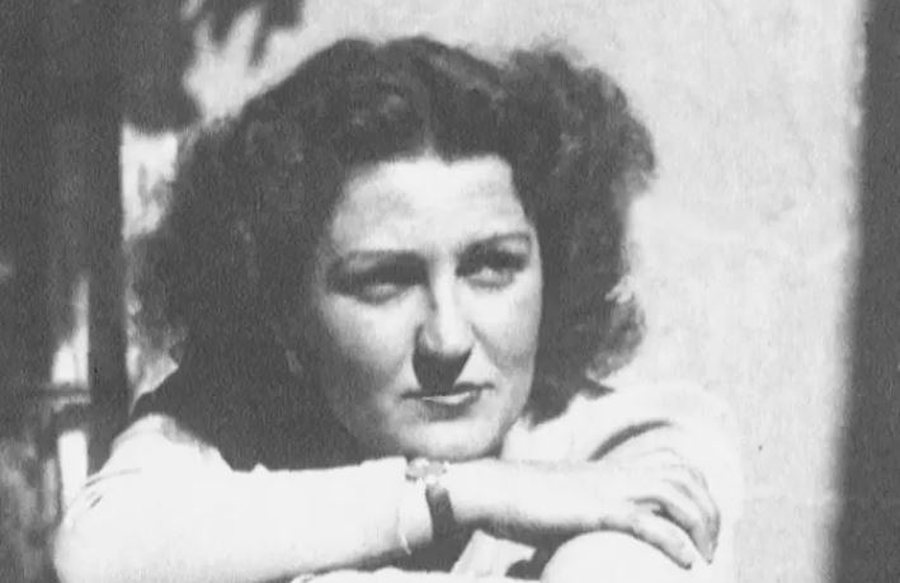
On the anniversary of Marije Logoreci's passing (June 19, 1988), we remember one of the most representative figures of the Albanian stage and screen, an icon who, with the power of her talent, character and dedication, conceived an incomparable and eternal art. Trying to describe Marije Logoreci is like trying to define the limitless. She was an actress who represented not just a name, but an era.
In each of her roles lived the entire conscience of a society, engraved with sensitivity, temperament, psychological depth and a fine human observation. Her figure, both in theater and cinema, is imprinted in our memory as a flash that does not fade, like a powerful sound that does not die out. Born in Shkodra on September 23, 1920, Marija, affectionately known as “Tushi”, grew up in an environment where love for art and devotion to tradition were intertwined.
Her education at the institute of the “Stigmatine Sisters” left the first traces of an artistic sensitivity that would later unfold naturally. Her early drawings, sweet singing, and involvement in the world of Northern legends, known to the highlanders who stayed in her house, were the spiritual basis of what would later become a great artistic explosion.
In Tirana, Marija married Kolë Logoreci, a prominent economist and son of the patriot and scholar Mati Logoreci. In the environment of the Logoreci house, she was confronted for the first time with the Albanian elite thought: conversations with Fishta, Koliq, Çabej, Xhuvan. These were not just meetings, but horizons that shaped her culture and stage language, enriched her soul and creative vision. Also, her husband fully supported the artistic path she chose, at a time when this was not common for a woman.
Her career began with music: in 1945 she sang folk and partisan songs on Radio Tirana. Her talent led her to the People's Theatre in 1947, where she would begin a long and bright journey. The transition from music to the stage was not easy, but Marija won the stage with work, discipline and a rare dedication.
Marije Logoreci created a gallery of figures that remain a reference for every actor. She interpreted characters from the greatest world and national dramas, with an intensity that leaves no room for oblivion. From Loki in “Our Land”, which is one of her dramatic peaks, to “Bernarda Alba”, Gertrude in “Hamlet”, Fatima in “Halili and Hajria”, or Kristina Padera in “The Plot of the Condemned”, each of her roles was an experience, an immersion in human nature, a carving of character with the scalpel of a master.
In cinematography, Marija remains among the first to bring the theatrical spirit to the screen: in “Our Land”, “The Great Flood”, “The Mountain Cuca”, “The Great Wall”, “The Kolgjinajt”, etc., she built strong characters, often women broken by life, but with an unwavering dignity. At a time when Albanian film was just taking its first steps, she preserved the scenic essence of interpretation, adapting it to the screen with intuition and experience.
Beyond her role as an actress, Marija was an extraordinary person. She read a lot, took care of the house, the flowers, the dogs and cats, and the garden. She did not know the word “tiredness”. She was a lively, smiling soul, always ready to share a piece of advice, a wise word, a wise thought. Her phenomenal memory and passion for literature, mythology, and legends made her a born storyteller and an inspiring friend to all.
With her work, Marije Logoreci gave Albanian theater and film not only genuine art, but a method, an attitude, an ethic. She remains a figure that is not imitated, but studied. Her voice, the word loaded with feeling, the deep expressiveness of the face and gestures, gave the audience what is rarest in art – experience. In her roles, the crying and laughter of life, the absurd and the tragic, the absurdity of everyday life and the sacredness of the human spirit were embodied.
Marije Logoreci, "People's Artist", remains one of the emblems of Albanian art, a monument of inspiration, a voice that does not fade away and a name that deserves to be mentioned with respect, humility and pride. On each of her anniversary, we return not simply to remember, but to meditate on the greatness that she represents./Memorie.al




Lini një Përgjigje