


 Shkruar nga Pamfleti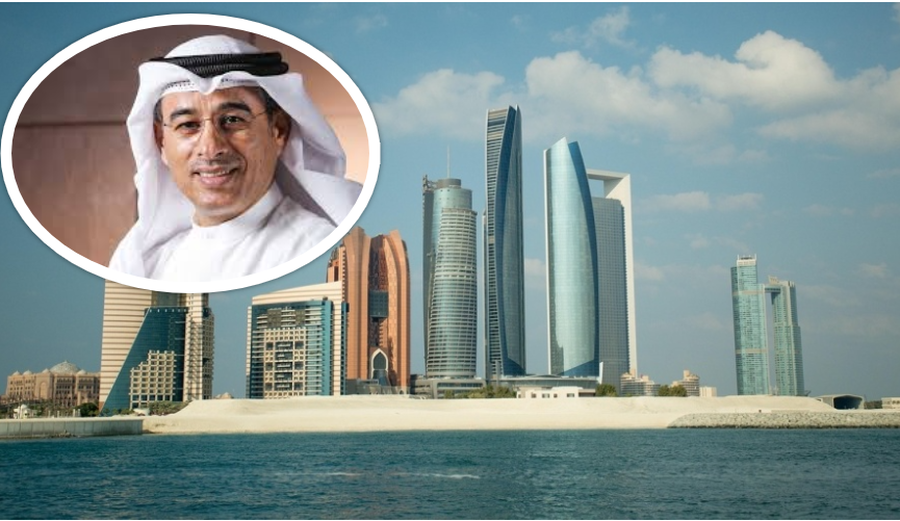
These fantastic schemes come with hidden costs: unclear agreements, legal exemptions for investors, and disregard for community voices...
Velika Plaza, a pristine 13-kilometer stretch of sand on Montenegro's Adriatic coast, has long been regarded as a national treasure.
But after a controversial deal with the United Arab Emirates, it has become the latest battleground in a growing backlash against foreign-backed development deals across the Western Balkans.
Earlier this month, Montenegro's parliament ratified two agreements with the United Arab Emirates on economic cooperation and real estate development. The move paves the way for UAE-based real estate giant Eagle Hills to develop Velika Plaza into a large-scale tourist complex.
The government touts the deal as a potential catalyst for billions of euros in foreign investment – but environmental groups and citizens see it as a land grab that threatens the country's natural resources and democratic accountability.
“New investments will ensure economic growth, and economic growth will contribute to significantly higher wages and better jobs for our descendants, as well as higher state revenues, which will thus improve healthcare, education, roads, security, etc.,” Spajic posted on X, after the agreements were approved by Parliament. He also announced on April 23 that the IFC, part of the World Bank Group, will help draft an intergovernmental energy agreement with the United Arab Emirates and will technically and financially support all projects agreed upon by Montenegro and the United Arab Emirates, including in the tourism sector.
However, the agreements sparked a series of protests in the coastal town of Ulcinj, followed by a demonstration outside parliament in Podgorica, where demonstrators waved banners and denounced the lack of transparency.
The initiative to develop Velika Plaza is being led by Mohamed Alabbar, founder of Eagle Hills and Emaar Properties. Alabbar's firms are already well-known in the Balkans for ambitious developments such as the Belgrade Waterfront project in Serbia.
But critics argue that these fantastic schemes come with hidden costs: unclear agreements, legal exemptions for investors, and disregard for community voices.
"This is an attempt to push through a multi-billion dollar deal without public debate, without transparency and with violations of legal procedures, which could have serious consequences for the public interest and natural resources of Montenegro," the protest group Big Beach or Big Lie said in a statement quoted by public broadcaster RTCG.
President Jakov Milatovic, whose relations with Spajic's government have deteriorated recently, has emerged as a vocal opponent of the deal. He claims the agreements would violate numerous Montenegrin laws and bypass critical oversight mechanisms. The government's request for parliament to vote on them is "frivolous," Milatovic argued during a meeting with Genci Nimanbeg, the head of the Ulcinj municipality, RTCV reported.
He has written to the European Commission seeking clarity on whether the agreements comply with EU regulations.
Nimanbeg warned that MPs who support the deal risk becoming "enemies of Ulcinj." The local government fears that Velika Plaza will be handed over to developers without adequate safeguards or benefits for the community. There is also an ethnic dimension to the dispute; about 75% of Ulcinj's population is Albanian.
Despite the backlash, supporters within the ruling Europe Now party (PES) argue that the deal is a rare opportunity. "Montenegro is more than ready for new investments, new jobs and a better standard of living," PES leadership member Filip Radulovic was quoted as saying by RTCG.
"The agreement with the United Arab Emirates confirms the government's determination to evaluate the tourism potential in cooperation with reliable partners," he added.
The Velika Plaza project echoes previous UAE-led ventures in the region.
Eagle Hills previously launched the $3 billion Belgrade Waterfront development on the banks of the Sava River in the Serbian capital. The project got off to a dubious start when masked men demolished buildings in the Savamala district at night in 2016, sparking more than a year of protests under the banner "Don't drown Belgrade," with a yellow duck as its symbol.
Other major investments in the region include plans by UAE-based Emaar to develop the port of Durres in Albania. The project, with a reported value of 2 billion euros, was unveiled in 2021 when Prime Minister Edi Rama spoke of one of the “largest and most beautiful tourist ports in the Mediterranean”. However, the opposition Democratic Party has challenged the project; in recent developments, the DP’s lawsuit was rejected by the Constitutional Court in February.
In all three countries, a criticism raised against their governments' relations with UAE investors is that mega-deals are usually concluded behind closed doors, without competitive tenders, and often include generous incentives for investors.
Since the 2010s, the UAE has shifted from post-war foreign aid to long-term business investments in the Balkans. UAE firms, which also target other global regions, are particularly focused on real estate and infrastructure projects.
Some other examples include Emaar Properties’ investment in the Kukes airport; the Porto Montenegro tourist and superyacht marina, which is owned and operated by Adriatic Marinas, a subsidiary of the Investment Corporation of Dubai (ICD), in turn the main investment arm of the Dubai government; the Dubai-based Buroj International Group’s planned Buroj Ozon mountain resort town in Bosnia and Herzegovina; and Eagle Hills’ acquisition of the Suncani Hvar hotel portfolio on the island of Hvar in Croatia.
While the investments do not carry the overt geopolitical implications of those from China or Russia, concerns have been raised about their transparency.
These deals are often negotiated at the highest political levels, bypassing conventional oversight channels. Serbian President Aleksandar Vučić in particular has cultivated close ties with Abu Dhabi Crown Prince Mohammed bin Zayed.
Critics say this style of governance risks eroding institutional checks and balances. The Montenegrin anti-corruption NGO network MANS warned in March that the country's government "is committed to adapting Montenegrin legislation to the needs of selected projects, i.e., the interests of their investors."
MANS also raised concerns about the potential for money laundering, arguing that "the UAE very rarely cooperates with international institutions and other countries when it comes to preventing money laundering."
One of the leaders of the European Alliance, Ivan Vujovic, accused the government of repeating bad practices from the past. “This represents an even worse practice, characterized by ignoring the local community, the lack of a wider public debate and the acceleration of parliamentary procedure,” Vujovic added.
The stakes are particularly high given the symbolic importance of Velika Plaza.
Spajic and other officials have touted the benefits of large-scale investment for the small country's economy. Meanwhile, environmentalists fear that the mass tourism infrastructure could irreparably damage the unique ecosystem of the beach and surrounding wetlands, but it is the lack of transparency that has drawn most protesters to the streets. /Pamphlet adapted from IntellNews/





Lini një Përgjigje