


 Shkruar nga Pamfleti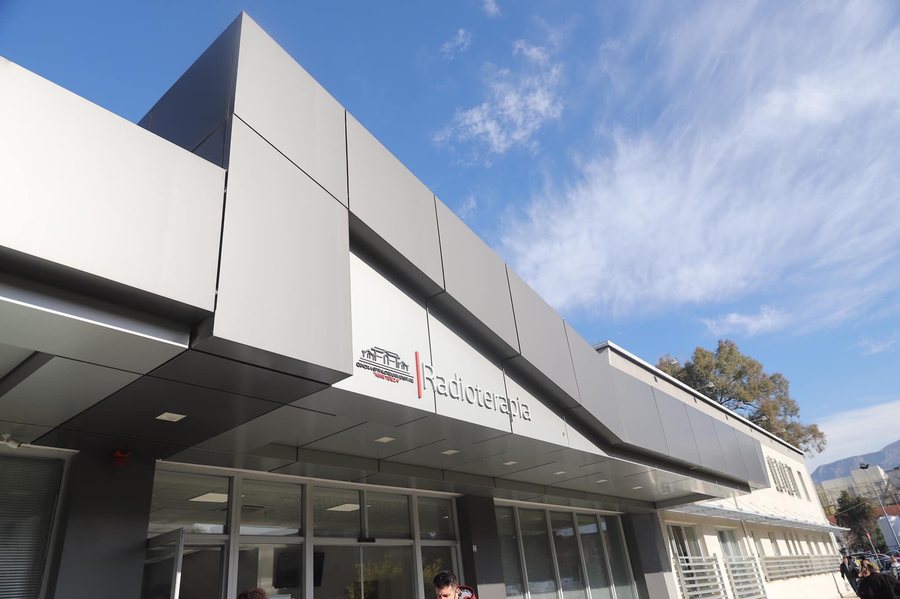
The radiotherapy service at the Oncology Hospital at the University Hospital of Tirana was interrupted for three consecutive days, leaving dozens of cancer patients without treatment. The denunciation was made by journalist Osman Stafa, who reported that the only two linear accelerators available at the hospital were not functioning, one due to a broken bunker door and the other due to technical problems.
According to him, about 100 patients a day present themselves for X-rays according to medical protocol. The interruption of this critical service has directly blocked their treatment. The patients themselves speak of a serious and unsolvable situation. "I came yesterday, the machine is broken. I came today, the machine is broken. The car pays, it comes from far away, and it can't do X-rays. We are fighting for our lives," says a patient, who calls on the prime minister to intervene. Another patient from Malësia e Madhe says that she has not had X-rays for three days and holds the government responsible for the situation.
Only after the public denunciation was made public, QSUT reacted with an official announcement, acknowledging the technical defects, but trying to minimize the consequences. According to QSUT, the linear accelerator LINAC 1 has shown a technical problem today and after the intervention of technicians, the replacement of a component and the performance of mechanical and dosimetric verifications, the device has returned to function. QSUT also states that LINAC 2 is also in full operation after the bunker door was repaired.
However, the reality of three days without radiation for oncology patients remains an undeniable fact. The QSUT talks about safety standards and calibrations, but does not provide any answers about the lack of alternatives, the lack of spare equipment and the consequences that the interruption of treatment brings for patients fighting for their lives. This case once again raises strong questions about public health management and institutional responsibility in the face of a vital service that cannot be stopped even for one day, let alone three.


Lini një Përgjigje