


 Shkruar nga Pamfleti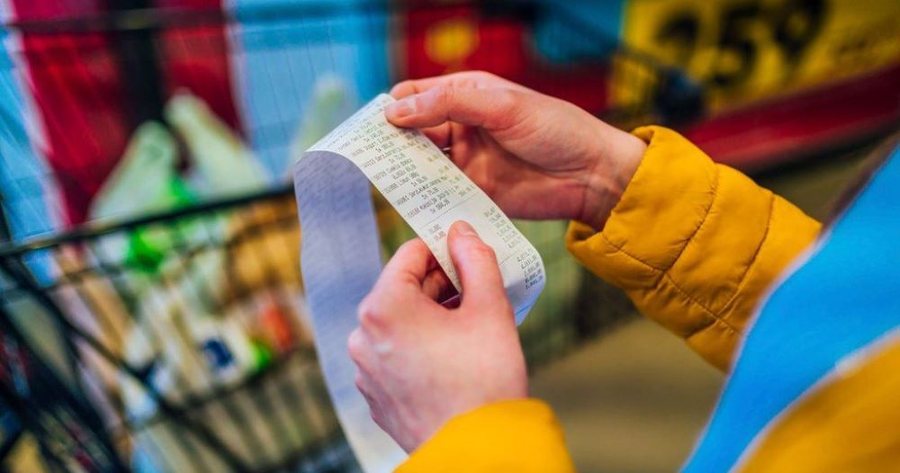
Food accounts for almost 40% of the household budget in 2024, maintaining the same weight as in 2023, while this is the highest weight in Europe (the European Union average is around 13% and the region's below 35%).
According to INSTAT data on household budgets, Albanian households spent an average of 93 thousand lek per month on consumption, a modest increase of 1.5% compared to 2023. Although total expenditures have increased, the structure of household budgets has remained almost unchanged, with food continuing to account for the largest share.
In 2024, the "food and non-alcoholic beverages" group accounts for 39.6% of monthly expenses, the same as the year before, with an average amount of 36,879 lek.
According to INSTAT, among the groups with the largest increase in expenses are "furniture and home maintenance" (+5.7%), "transportation" (+5.2%) and "clothing and footwear" (+4.4%).
However, their weight in the budget has changed very little. For example, furniture expenses now account for 6.8% of the total, up from 6.6% a year ago.
Along the same lines, transportation accounts for 7.1% of the budget (from 6.8%), while clothing and footwear 5.1% (from 5.0%). On the other hand, health spending contracted slightly from 4.3% to 3.8%, and education spending from 3.5% to 3.3%.
Families spend an average of 8,944 lek per month on housing, water, electricity and rent, which constitutes 9.6% of the total budget, with a minimal change from last year.
At the same time, spending on restaurants and hotels increased by 4.1%, reaching 7.6% of the budget, due to increased demand for accommodation and dining services outside the home.
Tirana, with the highest consumption
According to data from the "2024 Household Budget Survey" published by INSTAT, the distribution of consumption expenditures by region shows significant differences in the level of well-being and cost of living between the country's regions.
Families in the Tirana region have the highest average monthly expenses in the country, at 108,588 lekë, about 17% more than the national average (93,042 lekë). This difference is related to the higher prices of housing, services and food in the capital, as well as the higher incomes of urban families.
Tirana also contains a large portion of the economically active population and employed in higher-wage sectors, such as administration, finance, and services.
After the capital, Korça and Durrës rank among the regions with the highest consumption, with 91,418 lek and 90,218 lek per month, respectively.
In the case of Korça, high spending is related to smaller family structures, but with relatively stable incomes, as well as the influence of winter tourism and local agricultural production that drives local consumption.
Meanwhile, Durrës, in addition to the influence of coastal tourism, also benefits from its proximity to Tirana and a higher level of employment in trade and port services.
In the middle range are regions such as Fier (87,171 lek) and Shkodra (85,891 lek), which have economies based on agriculture, light industry, and services.
Although incomes are lower than in Tirana or Durrës, living costs are also more affordable, maintaining a stable balance in family budgets.
The group of regions with lower than the national average spending includes Elbasan (80,929 lekë), Berat (84,475 lekë), Lezha (84,542 lekë) and Gjirokastra (84,420 lekë). These regions have a more traditional family structure, with more members per family and a tendency towards self-consumption — especially in rural areas.
At the bottom of the ranking are Kukës (75,048 lekë) and Dibra (75,883 lekë), with almost 30% less expenses than Tirana.
These two regions exhibit the lowest levels of consumption and income, due to their distance from urban centers, lack of developed labor markets, and dependence on remittances.
The majority of families in these areas still rely on agriculture for subsistence and have more limited access to educational and health services./Monitor



Lini një Përgjigje