


 Shkruar nga Pamfleti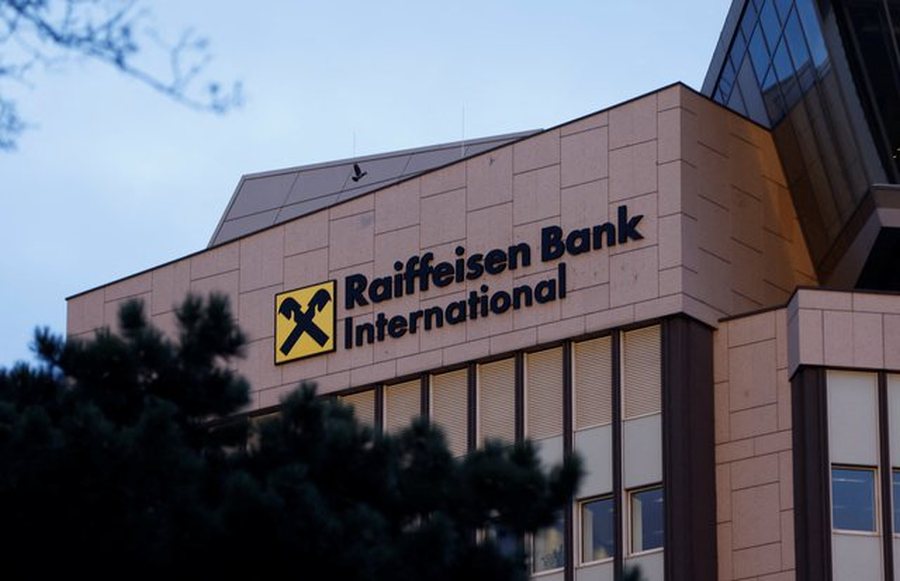
Washington has put pressure on one of Austria's largest banks, Raiffeisen Bank International, to withdraw from Russia. Washington has warned that in case of non-withdrawal, the bank risks being closed from the US financial system.
Despite the fact that some international brands announced their withdrawal from Russia at the beginning of the conflict in Ukraine, most continue their activity in both countries.
In particular, in Russia, which was condemned by the West for its intervention in Ukraine, 95% of the companies operating before the war continue to remain there.
Austrian companies, e.g. remain "very engaged" in both countries.
Austrian Foreign Minister Alexander Schallenberg said at a press conference with State Secretary Anthony Blinken that Austria is the sixth largest investor in Ukraine's economy.
"Austrian companies were present in Russia and partly are still present, like about 95% of all Western companies," he said.
Schallenberg blamed Russian President Vladimir Putin for using gas and wheat as "leverage" in the clash with the West.
"Austria will continue to reduce its dependence on gas supplied by Russia, with the aim of becoming '100% independent' by 2027," he said.
Last week, Politico reported that Washington has pressured one of Austria's largest banks, Raiffeisen Bank International, to withdraw from Russia.
According to the newspaper, Washington has warned that in case of non-withdrawal, the bank risks being closed from the US financial system.
Apple, IKEA, Microsoft, IBM, Shell, McDonald's, Volkswagen, Porsche, Toyota and H&M were among the first companies to leave Russia after fighting broke out between Moscow and Kiev in 2022, but many foreign businesses chose to stay, some of which they passed into Russian ownership or changed their name.
In February, Russian Deputy Prime Minister Denis Manturov said that about 20% of large European and American companies have left the Russian market, but the rest have kept their businesses in Russia and some of them are increasing their investments.
Detachment through Deripaska
Raiffeisen has insisted it is doing everything it reasonably can to break away, but its chosen exit strategy is fraught with pitfalls. It aims to effectively swap its stake in the Russian operation for a 27.8 percent stake in Strabag SE, an Austria-based construction group focused on Central and Eastern Europe.
The exact mechanics of this exchange are not clear, but it is intended that the Russian arm of Raiffeisen will transfer the shares as a dividend in kind to the Austrian company.
According to Raiffeisen's calculations, it would save about 1.5 billion euros from its Russian operations if the deal goes as planned. Conversely, a fire sale to appease the Treasury could see it lose everything.
The problem is that Strabag shares were until recently owned by metals magnate Oleg Deripaska, sanctioned by both the US and the EU. Deripaska owned the shares through a holding company called Rasperia; on the same day that Strabag announced the intended exchange, it also announced that Rasperia had been taken over by another Moscow-registered holding company, AO Iliadis.




Lini një Përgjigje