


 Shkruar nga Pamfleti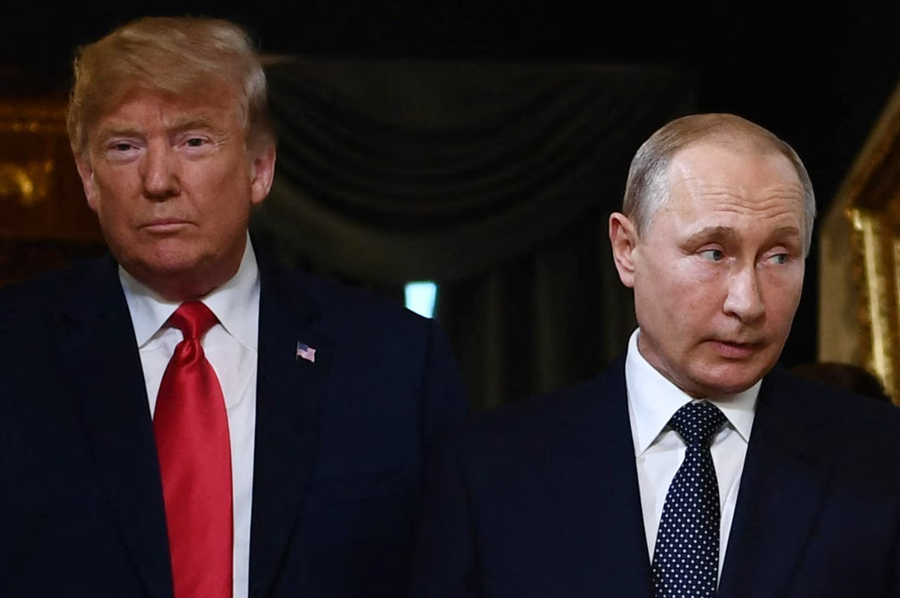
The American president seems to have run out of patience with his Russian counterpart, but it remains to be seen how this will translate into practical support for Kiev...
The American president appears to have run out of patience with his Russian counterpart, but it remains to be seen how this will translate into practical support for Kiev.
"I'm not happy with Putin. I can tell you that right now," Trump said, expressing his frustration with the Russian leader over the war in Ukraine. He added that "Putin tells us a lot of nonsense, he's very nice all the time, but it turns out to be nonsense."
With Trump, everything could turn upside down in a matter of hours, but perhaps relations between Vladimir Putin and Donald Trump have already deteriorated.
If so, this is a transformative moment and a vindication both for Volodymyr Zelensky as he arrives in Rome for the annual conference on Ukraine reconstruction, and for others, especially the British and French governments, who have been patiently waiting for Trump to distrust Putin. Finally, and after many false starts, the US president seems to have acknowledged that Putin is recalcitrant to ending the war.
With Trump, the parting of ways is unlikely to be complete or permanent. After all, Trump's disillusionment with Putin may not translate into the kind of practical financial and logistical support that Ukraine and Europe have been seeking, but "America First" is no longer "Russia First."
It has been a long process with many low points. In February, it seemed as if the entire transatlantic alliance was on the verge of collapse, after Trump began direct talks with Putin and ordered Ukraine to make concessions. On February 19, he repeated the Kremlin’s talking points in a post on his social media account Truth, calling Zelensky a “dictator” and warning that time was running out for Ukraine: “Think about it, a moderately successful comedian, Volodymyr Zelensky, convinced the US to spend $350 billion to go to a war it couldn’t win. A dictator with no choice, Zelensky better act fast or he’ll have no place left.”
A week later, at the UN General Assembly in New York, the US opposed a European-drafted resolution condemning Moscow's invasion of Ukraine and supporting Ukraine's territorial integrity, voting in the same way as Russia, North Korea and Belarus.
Veteran UK diplomats were shocked when the US drafted and voted for a Security Council resolution calling for an end to the conflict but containing no criticism of Russia. The UK and France abstained after their efforts to change the wording were called into question.
Later that week, there was the televised Oval Office clash with Zelensky, followed by the Ukrainian leader’s hasty embrace in London with Keir Starmer and King Charles. Russian Foreign Ministry spokeswoman Maria Zakharova cheered the White House from Moscow. “The way Trump and Vance exercised restraint and didn’t hit this garbage is a miracle of restraint,” she posted on Telegram.
All the while, American negotiator Steve Witkoff revealed a profound ignorance of Ukrainian history and a sympathy for Putin’s claims that the war was provoked. He often switched from trying to understand the Russian perspective to supporting it. In an interview with Tucker Carlson that really alarmed European diplomats, Witkoff asked: “Why would they want to anchor Ukraine? For what purpose, exactly? They don’t need to anchor Ukraine. That would be like invading Gaza. But the Russians have what they want too. They’ve taken, they’ve taken back these five regions. They’ve got Crimea and they’ve got what they want. So why do they need more?”
Witkoff also delivered a portrait commissioned by Putin of a bloodied, clenched-fist Trump after last year's assassination. Putin revealed that he had been praying for Trump, and on June 14, he remembered the president's birthday with a phone call.
However, by the end of March, Trump’s frustrations with Putin began to show, as the Russian leader refused to commit to the 30-day ceasefire he had proposed and that Ukraine had quickly accepted. On April 1, Finnish President Alexander Stubb, after playing eight hours of golf with Trump, reported for the first time that he was losing patience with Russia.
Yet even by late May it was clear that the process of Trump’s exhaustion had an almost endless quality. After fruitless diplomatic exchanges in Istanbul, continued evasions about a ceasefire, and escalating attacks on Ukraine, Trump vented his frustration on Truth Social, warning that Putin was “playing with fire.”
However, a combination of events may have influenced Trump in recent weeks. The NATO summit on June 25 was treated as a triumph for Trump on defense spending, making him more willing to listen to Europe's security concerns. "There's a fine line between flattery and self-abasement, and we happily crossed it," said one European diplomat.
NATO Secretary General Mark Rutte called Trump "Dad."
With his ego massaged, Trump seemed like a man no longer willing to be distracted by Putin. “I consider Putin a flawed person. I’m actually very surprised. I thought we would have resolved that war,” he told reporters at the summit, revealing that Putin had called him and offered to intervene in Iran.
“I said, ‘No, no, help me reach a solution with you, with Russia,’ and I think we’ll do that.”
But the next phone call between the two on July 4th didn’t go well, and it seemed as if Putin had decided he could get more out of war than by keeping up the romance with Trump. The Kremlin was uncompromising: “Our president said that Russia will achieve its goals, namely the elimination of the known root causes that led to the current situation,” said Yuri Ushakov, a close adviser to the Russian leader. “Russia will not back down from these goals.”
The deadly Russian attacks on Ukraine every night could not be kept off American screens, and, most recently, Trump was not happy when it emerged last week that the Pentagon was holding a shipment of weapons destined for Ukraine and no one informed the White House. Defense Secretary Pete Hegseth looked visibly uncomfortable.
For Ukraine supporters in Congress and Europe, the question now is to what extent Trump’s frustration with Russia will translate into practical support for Kiev. The real test will come if the devastating sanctions proposed months ago by Republican Senator Lindsey Graham are finally approved by the president. The measure would impose a 500% tariff on imports from any country that buys Russian uranium, gas or oil, with India and China most affected.
Lord Mandelson, the UK ambassador to the US, has been working behind the scenes to refine Graham's deceptions so that the proposed secondary sanctions do not ensnare European firms.
Graham is now proposing an exemption from his bill to spare countries that still import Russian gas but have supported Ukraine in its three-year war with the Kremlin’s military. The bill also gives Trump the right to waive sanctions on countries that buy Russian oil or uranium for 180 days and, in its revised form, proposes a second 180-day waiver.
“We are moving,” Graham said after Trump’s criticism of Putin, adding that Trump “told me it was time to move, so we will move.” Ukrainians on the front lines can only hope that a turning point has come. / Adapted from The Guardian Pamphlet/




Lini një Përgjigje