


 Shkruar nga Pamfleti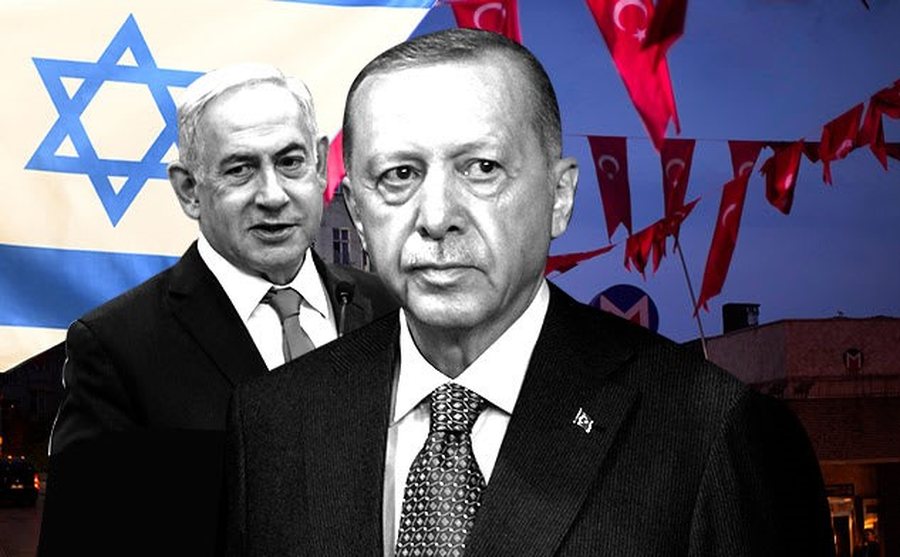
Is Turkey becoming the next target in Israel's aggressive strategy for regional dominance?
Just hours after Israel launched airstrikes against Qatar, a major non-NATO ally of the US and one of Washington's closest partners in the Persian Gulf, the focus of pro-Israeli circles quickly shifted towards Turkey.
In the US capital, renowned analyst Michael Rubin of the American Enterprise Institute suggested that Turkey could be Israel’s next target, warning that Ankara should not rely on NATO membership for protection. Meanwhile, figures linked to the Israeli government published openly provocative messages such as: “Today Qatar, tomorrow Turkey”. The reaction from Ankara was not long in coming, with senior advisors to President Erdogan responding with unprecedented language, calling Israel “a threat that will be wiped off the map”.
For months, pro-Israeli media outlets have been intensifying their rhetoric against Turkey, portraying it as “Israel’s most dangerous enemy.” Ankara’s role in the Eastern Mediterranean and its involvement in the reconstruction of Syria have been described as “new and growing threats.”
This clash is taking place against the backdrop of a protracted conflict in Gaza and unprecedented aggression by Israel, which, in addition to daily attacks on the West Bank, has also struck Yemen, Syria and most recently a flotilla of aid to Gaza off the coast of Tunisia.
Turkish Foreign Minister Hakan Fidan responded in August by suspending all trade relations with Israel—an act that signals a deep political and geostrategic divide. Meanwhile, Ankara views with concern the tacit support that the US gives to Israel’s aggressive policies, even towards countries like Qatar, which enjoys the status of a privileged ally of Washington. This has raised serious questions in Ankara: if an ally like Qatar is not protected by the US, would NATO intervene in the event of a real conflict with Turkey?
Unlike most Arab states, Turkey has long understood that it cannot blindly rely on US or NATO guarantees for its national security. This conviction has been strengthened by the clashes in Syria and the increasingly expansionist rhetoric of Benjamin Netanyahu, who in August declared his support for the idea of a “Greater Israel” – a concept that includes territories in Syria, Lebanon, Jordan and Egypt.
Ankara does not see this vision as merely symbolic; for Turkey, it is a direct threat to the stability of the region and an attempt to keep Israel's neighbors weak, fragmented, and unable to stand up to it. It is here that the Turkish vision of a unified, centralized Syria clashes with Israeli efforts to "balkanize" Syria into ethnic and sectarian enclaves.
This ideological clash is expanding on the ground. Israel, supported by Greece, the Greek Cypriot administration and the US, has been strengthening its military and intelligence presence in Cyprus – perceived by Turkey as an attempt at naval encirclement and weakening of its sovereignty in the Eastern Mediterranean. This undermines the maritime doctrine of the “Blue Homeland” (Mavi Vatan), which seeks to guarantee Turkish interests in the Aegean Sea, the Eastern Mediterranean and the Black Sea.
Another flashpoint is southern Syria, where Israel has launched attacks on positions where Turkey is exploring the establishment of new bases in cooperation with the new Damascus administration. If these attacks continue, according to Turkish analysts, a military clash between Ankara and Tel Aviv will become inevitable. “Turkey cannot tolerate policies that fuel instability on its southern borders,” said Murat Yesiltas of SETA.
Ankara also views with suspicion the Israeli strategy to undermine the peace process between Turkey and the PKK, fearing that a deal could weaken the autonomy of the Syrian Kurds, whom Tel Aviv sees as partners on the ground. Meanwhile, Israeli Defense Minister Israel Katz has declared that the occupied territory in southern Syria will be held “indefinitely,” a position that undermines any efforts for lasting peace in the region.
In this context, Turkey is clearly displaying its "red lines": it will not accept the federalization of Syria, nor the fragmentation of the region into ethnic enclaves, nor a military alliance that only supports Israeli and American interests.
While tensions between Israel and Turkey are currently “under control,” the risk of escalation is present. Any destabilization in Syria could be profitable for Israel’s vision of regional dominance, but would pose a direct threat to the security of Turkey – a country with vast military capabilities, a key geostrategic position, and clear aspirations for regional leadership.
In this quiet but dangerous duel, the Eastern Mediterranean is becoming not only the center of a diplomatic conflict, but also an arena where opposing visions for the region's future clash: a divided and weakened region, as Tel Aviv wants, versus a unified and stable region, as Ankara projects. /Taken with abbreviations from " Al Jazeera "

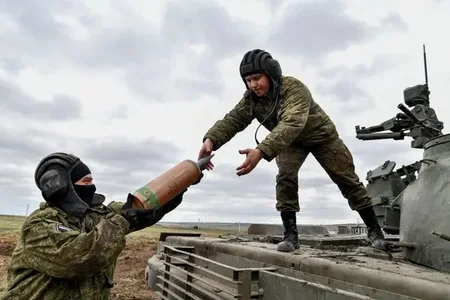






Po, Izraeli po luan me administratën e Erdoganit... Kur bëhet fjalë për nivelin "basta cosi", gjeneralëve turq nuk do t'u interesojë as Erdogani dhe as Trumpi! Ata nuk do të jenë si gjeneralët iranianë që dërgojnë raketa false. Turqit lindin si luftëtarë për të "luftuar deri në zhdukje!" Po, Izraeli mund të zhduket nga Lindja e Mesme nëse Turqia zemërohet! Dhe përfshirja e SHBA-së vetëm sa do t'i radikalizojë turqit që të largohen menjëherë nga NATO për t'u bashkuar me Rusinë dhe Kinën! Një Luftë e Tretë Botërore ose Trump do të zbrazë shishen e tretë të uiskit në zyrën e tij!