


 Shkruar nga Pamfleti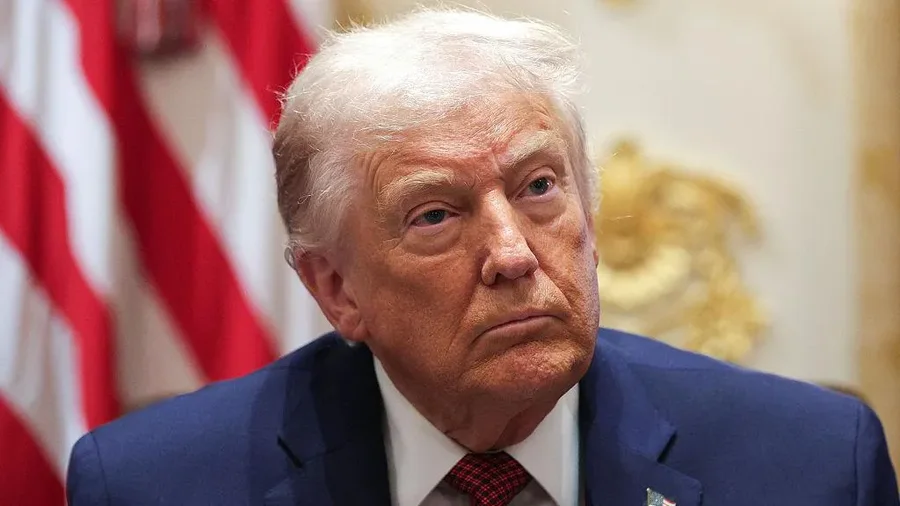
US President Donald Trump has ordered a "complete and total" blockade of all sanctioned oil tankers entering and leaving Venezuela, a move that Caracas has denounced as "warmongering threats".
Trump wrote that the government of Venezuelan President Nicolas Maduro had been designated a Foreign Terrorist Organization (FTO), which was also involved in "Drug Smuggling and Human Trafficking."
His comments come after the US seized an oil tanker off the coast of Venezuela last week, a move seen as significant given Venezuela's dependence on oil.
The US has also recently carried out deadly attacks on suspected Venezuelan drug-smuggling ships and has significantly increased its naval presence nearby.
Trump's post did not provide further details on how the broad blockade of sanctioned oil tankers would be enforced.
As of last week, more than 30 of the 80 ships in Venezuelan waters or approaching the country were under U.S. sanctions, according to data compiled by TankerTrackers.com.
After the tanker was seized, the US imposed new sanctions on ships allegedly carrying Venezuelan oil. Sanctions were also imposed on some of President Maduro's relatives and businesses linked to what the US called his illegitimate regime.
In his post on Truth Social on Tuesday, Trump wrote that Venezuela was "completely surrounded by the largest Armada ever assembled in the history of South America." He added that it would "only get bigger" and "be like nothing they've ever seen before."
Trump also accused Maduro's government of using "stolen" oil to "fund itself, drug terrorism, human trafficking, murder and kidnapping."
The president has repeatedly accused Venezuela of drug smuggling, and since September the US military has killed at least 90 people with its attacks on ships suspected of transporting fentanyl and other illegal drugs to the US.
However, it has not offered any public evidence that these ships were transporting drugs, whether fentanyl, which is mainly produced in Mexico, or cocaine.
Trump's Tuesday tweet suggested that a label the US had previously applied only to Maduro is now being expanded to include his entire government.
Last month, the US officially designated the Venezuelan Cartel de los Soles as a FTO. This designation meant that Maduro was effectively designated as a terrorist as well, because he was alleged to be the group's leader, which he denies.
In response to the latest US actions, Venezuela, the country home to the world's largest oil reserves, has accused Washington of trying to steal its resources.
Venezuela's economy is heavily dependent on oil exports, although the amount of oil it actually produces is relatively small considering that the country has the largest proven reserves in the world.
When announcing the seizure of a tanker off the coast of Venezuela last week, the White House said the vessel in question, named the Skipper, was involved in the "illegal transportation of oil" and would be taken to a US port.
The Venezuelan government criticized the move, with Maduro saying the US "kidnapped the crew" and "stole" the ship.
The US had been building up its military presence in the Caribbean Sea, which borders Venezuela to the north, in the weeks and months leading up to the raid.
The preparation has involved thousands of troops and the USS Gerald Ford, the world's largest aircraft carrier, positioned within striking distance of Venezuela.
Congressman Joaquin Castro, a Democrat representing Texas, said that "Trump's naval blockade is clearly an act of war."
He added that US lawmakers will vote on Thursday on a resolution "directing the president to end hostilities with Venezuela."
The US, under the leadership of Trump and former President Joe Biden, has opposed Maduro's government for years and has pressured him to step down by imposing strict sanctions.
Maduro's government has been accused of rights abuses by the international community for years. Venezuela's opposition, as well as many countries, including the United States, denounced last year's election as rigged and say his rule is illegitimate.
On Tuesday, the UN human rights chief, Volker Türk, warned that "the tightening of civic space in the country has intensified, stifling people's freedoms." /Adapted from BBC/


Lini një Përgjigje