


 Shkruar nga Pierre Haski*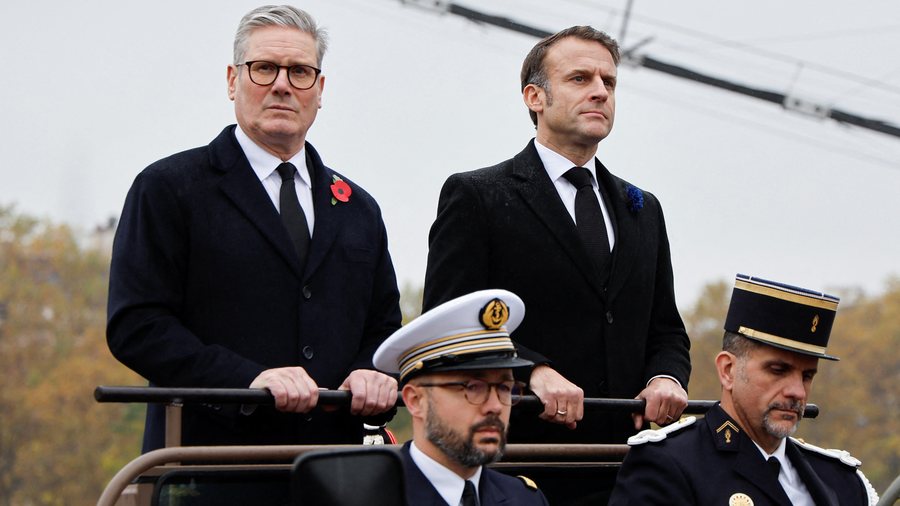
The so-called "leader of the free world" from the Cold War era has transformed into a selfish imperial power.
Thirty-one countries gathered in Paris — without the United States — to coordinate their support for Ukraine during this critical time. This unprecedented “soft NATO” initiative comes as Washington turns its back on its allies. Two new leaders emerge to lead.
French President Emmanuel Macron has coined a bold phrase to describe the current moment in Europe: he called it "the end of geopolitical minority status."
He spoke at the end of a meeting in Paris on Thursday about a new "format," as it is called in diplomatic circles: the "coalition of the willing" - 31 countries committed to supporting Ukraine during this uncertain moment. It is not yet peace, nor the end of the war, but a phase fraught with dangers that are impossible to ignore.
The most striking aspect of this meeting was, of course, the conspicuous absence of the United States. Every country present is a U.S. ally – though many are beginning to wonder whether that should now be spoken of in the past tense. So Macron’s phrase about leaving behind that “minority status” in international affairs is a kind of emancipation, a coming of age on the world stage.
American absence
Thursday’s meeting had the feel of a Western alliance without the Americans. Most European Union countries were present, with the exception of Viktor Orban’s Hungary, Slovakia, Austria and Malta. The EU members were joined by other NATO members, including the United Kingdom, Norway, Canada and Turkey. Australia also made the trip from the distant Pacific. The absence of the United States was even more striking, underscoring a change in the geopolitical era.
The so-called "leader of the free world" from the Cold War era has transformed into a selfish imperial power.
What binds these countries together is the painful realization that the so-called "leader of the free world" from the Cold War era has suddenly transformed into a selfish imperial power, one that no longer recognizes allies or friends.
Those who had become very comfortable under Uncle Sam's protection now find themselves exposed to an increasingly dangerous world.
Italian bridge?
This coalition, still riddled with contradictions, came together in just a few weeks after it became clear that Ukraine could pay the price for this change. Volodymyr Zelensky’s moment of humiliation in the Oval Office was likely the final wake-up call.
Amid this uncertainty, the “coalition of the willing,” a kind of soft NATO, has found itself with two co-leaders: France and the United Kingdom. As nuclear powers with battle-hardened militaries, they stand out from the crowd. Emmanuel Macron and Keir Starmer are at the forefront, backed by their top military commanders in a partnership that goes beyond mere cordiality.
There are also dissenting voices, such as Giorgia Meloni, who yesterday expressed the hope that the United States of America would be invited to the next such meeting of the “willing.” The Italian Prime Minister has clearly not given up on acting as a bridge across the Atlantic.
In reality, no one wants to sever ties with the United States, but most participants can only now begin to accept that Washington is turning its back on them.
Despite the uncertainty, something unprecedented is happening as these once-subservient allies of the US organize without them. It’s a historic moment, though we should be cautious about its current game-changing potential./ Adapted from “Pamphlet” by “WorldCrunch”




Lini një Përgjigje