


 Shkruar nga Pamfleti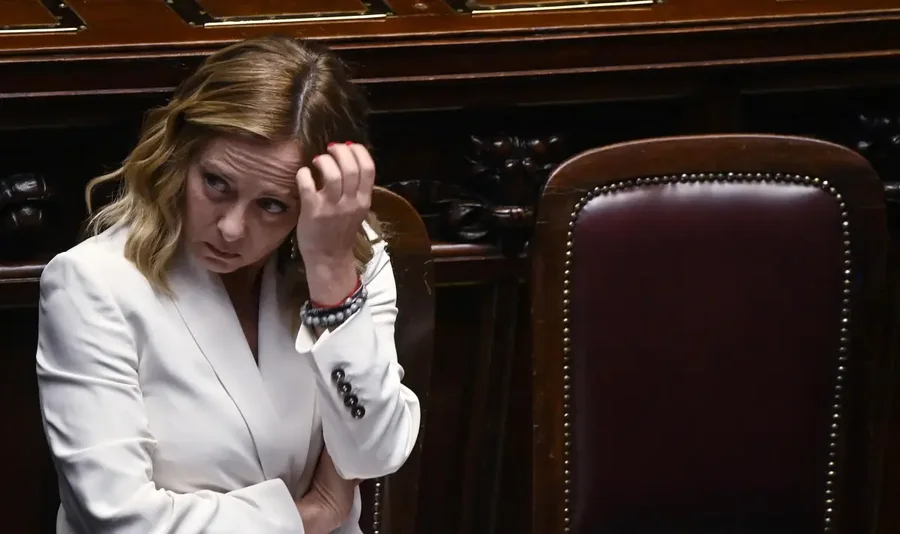
Phase 2 must begin. The question is how. The Prime Minister has a number of issues on her mind...
The train has slowed down. The restart is difficult. A sense of uncertainty and disorientation reigns in Palazzo Chigi. The scenario is unprecedented: for the first time since she began to govern, Giorgia Meloni is stuck at a crossroads. She has a map of the next steps in her hand, but she is still not sure which path to take. And these unprecedented hesitations give vent to her imagination: the opposition betting agencies in Montecitorio are ready to bet that she will eventually give in and hold elections in June. An evocative scenario, but at this stage extremely imaginary. Meloni intends to move forward, even if her pace will never be the same as before. Even though she knows that she will pay dearly for any possible setback.
The Prime Minister returned from Algeria on the evening of March 25: her mind is racing towards the energy file, which she negotiated in the North African country, and towards the electoral law, which she wants to change quickly, but her allies are working against her. The other obsession, almost a nagging thought, is the political turmoil that she has had and will have to face. There was no real Plan B in case of a referendum defeat. Partly because many polls predicted a "yes" vote, partly because the real storm, the Delmastro case, arrived very close to the vote and did not give the Prime Minister time to organize: there is no decree ready, not even a slogan to start over. Only the desire for a general "restart". With the resignations of Delmastro and Giusi Bartolozzi, as well as the more difficult resignation of Daniela Santanché, the prime minister must now start over: "Once the obstacles are overcome," is the essence of Meloni's reasoning with her people, "we must start from scratch.
Phase 2 must begin. The question is how. The Prime Minister has a number of issues on her mind: first the economic and fiscal issues, followed by the energy crisis, immigration and housing shortage. For justice, there is only the opening for a new discussion between the parties, but the main issues will be put on hold. If not until the end of the legislature, at least for the next few months. In the early hours of the day, the possibility of a meeting of the Council of Ministers was proposed for today, Thursday, March 26. But the ministerial meeting has been postponed: it will be discussed on Friday at 5:00 p.m. The first measure that Meloni and her colleagues will approve after the storm is the tax decree. It was already in the works before the vote, but has been refined in recent days: two very popular measures are being considered, such as a small extension of tax bill repayment and additional incentives for those who choose to pay their tax bills.
It will take a few more days to fill the remaining gaps: "We will have the names by Easter," government sources said. The prime minister is leaning towards replacing Daniela Santanché with one of her own: she will serve as interim minister for a few days, and then the tourism ministry is expected to be headed by Gianluca Caramanna, currently undersecretary. The alternative could be an even less visible name, such as the Sicilian senator Salvo Sallemi, or the director of ENIT Elena Nembrini, a technical figure representing the FdI. The options of Luca Zaia and Giovanni Malagò have been ruled out for the moment: they are very visible figures who could be excellent at running a ministry if the government has five years left. It makes no sense, the reasoning goes, to tire them out by keeping them in a low-level ministry for a year.
Delmastro's position is also destined for a staunch supporter of the prime minister: the leading candidate is Sara Kelany, an FdI immigration officer and lawyer. The alternative could be deputy Carolina Varchi. Galeazzo Bignami, whom the prime minister prefers to continue leading Meloni's troops in the Chamber of Deputies, seems to have been ruled out for the time being. The issue of Bartolozzi's successor, Chief of Staff, has been resolved: Nordio has appointed Antonio Mura, a retired magistrate, currently head of the legislative office in Via Arenula. Mura has also received the green light from Palazzo Chigi. Meanwhile, the Minister of Justice will not be at the Council of Ministers tomorrow. He left for Veneto before the meeting was called.
The outlook beyond the Council of Ministers is still unclear; the Prime Minister intends to make the most of the cohesion funds, which the European Union will allow her to use for the housing plan, the water emergency and the energy. Regarding this last issue, the date circled in red, which is also somewhat scary for the government, is April 7: the excise duty reduction expires. Should it be extended? With what benefits and what costs? These are recurring questions among the ministers who follow the issue, knowing that money is scarce. And that at a time when the war will cause a continuous increase in the cost of raw materials, a fixed reduction, over time, could have an impact.
Very little will be spent on Italians' pockets. Minister Adolfo Urso has said the government is ready to intervene in inflation to help businesses and families, but no formal measures have yet been drawn up. Another area where the prime minister aims to recapitalize the consensus is immigration: the European Union's green light for new repatriation regulations is a modest victory for the Italian right./ Adapted from "Pamphlet" by "HuffPost"


Lini një Përgjigje