


 Shkruar nga Pamfleti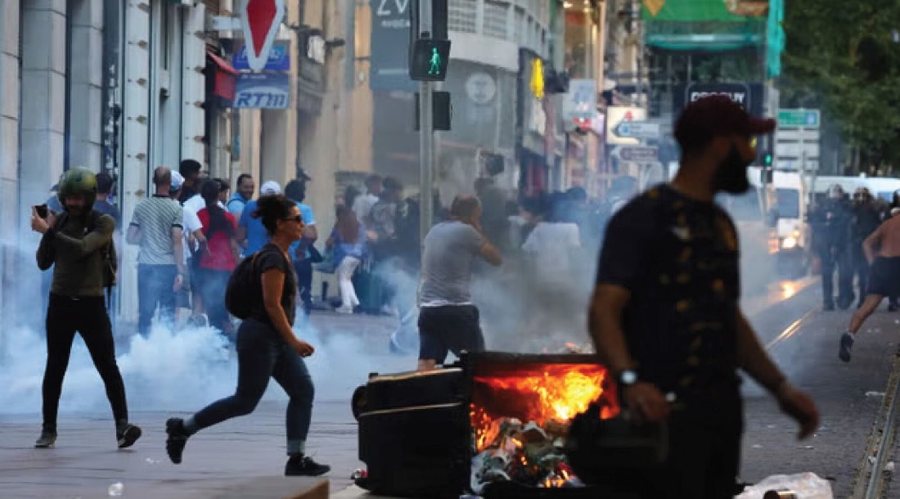
Paris, we have a problem! The situation in France appears to be more serious than other unrest in recent years, such as this year's protests against pension reform and the yellow vest riots of five years ago. Indeed, the current wave of protests is potentially more serious than the three weeks of unrest that followed the deaths of two teenagers who hid in an electrical substation to escape police in 2005.
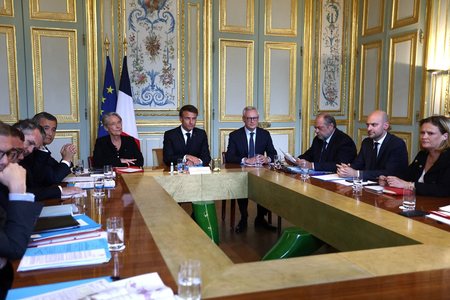
This time the French police seem to be more to blame – or at least the officer who shot and killed Nahel, 17, seems to have no defense for his action. In contrast, the response of Emmanuel Macron, the French president, appears to have been more responsible than that of Nicolas Sarkozy, the interior minister 18 years ago. President Macron called the shooting "inexplicable and inexcusable", while Sarkozy called the dead teenagers thieves and fueled tensions in 2005.
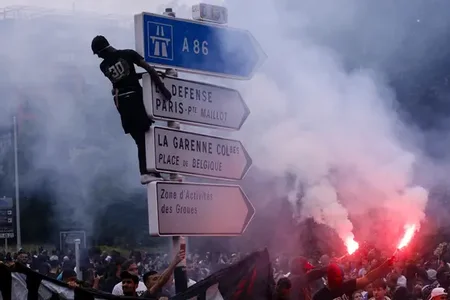
The tragedy in both cases is that the rebels are doing the most damage to their own neighborhoods, setting fire to the shops their families use and destroying the trams and buses their communities rely on. While the French soccer team, most of whose members were born in the same neighborhoods, called for calm on Friday, the protesters have engaged in a "genuine process of self-destruction."
Moral outrage over what appears to be a clear case of police brutality — the officer who shot Nahel has been charged with manslaughter — has sparked complaints against police brutality in multiracial residential areas of France's big cities.
Inevitably, it is mixed with criminal looting and the incoherent revolutionary politics of small groups, but the underlying grievances are justified. As if to prove the cause, French police unions managed to add fuel to the fire, issuing a statement on Friday describing the rioters as "parasites" and "wild hordes", and warning that the country was in the midst of a civil war.
The problem of social cohesion is also severe, as large populations of French citizens of North African origin tend to be concentrated in large cities where they experience the police almost as an occupying force. President Macron may have reacted appropriately at first, but he must launch an urgent program of police reform and social measures.
Other political voices in France are worse. Jean-Luc Melenchon, the leading candidate of the so-called left in last year's presidential election, has refused to appeal for "calm" and appears to almost condone violence. Eric Zemmour has repeated his racist message that second and third generation immigrants are not really French and that this is a revolt of "foreigners". Fortunately, he is little followed and Marine Le Pen, the main candidate of the anti-immigration right, continues to demand respect while maintaining a moderate language.
But the threat of xenophobia completely taking over French politics is more real now than it has ever been. The next presidential election is in four years, so until then President Macron must control police brutality and the suburban feeling that they are second-class citizens in their own country. There is no time to waste. / The Independent – Bota.al


Lini një Përgjigje