


 Shkruar nga Giuseppe Sarcina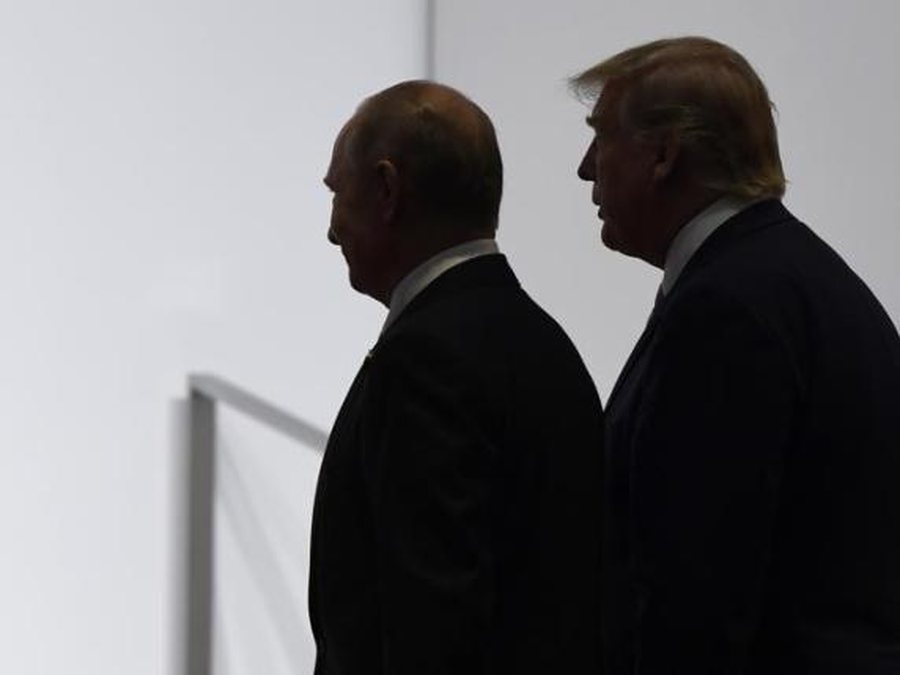
The US's anti-European leanings are pushing the 27 countries to seek new solutions: industrial pacts and a pragmatic approach with Beijing. But the sovereigntists pose a danger...
After trauma, it should be time for ideas and, at the same time, for proposals.
The "National Security Strategy" document, released by the White House on Friday, with its direct challenge to European institutions, requires a change of pace from Brussels and the governments of the Old Continent.
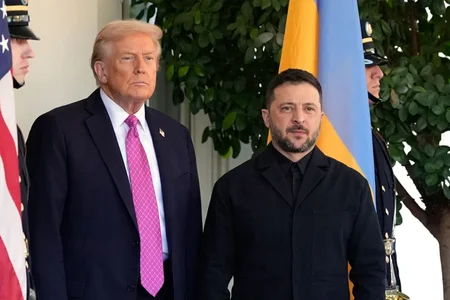
The most pressing issue remains the relationship with Vladimir Putin and support for the Ukrainian resistance. But mid- and long-term choices are also needed to refute the dire prophecy of Donald Trump, or more precisely of his vice president, JD Vance: "within 20 years, Europe will be unrecognizable, in danger of extinction."
The reports compiled by Mario Draghi and Enrico Letta have charted the course for boosting competitiveness in key sectors: energy, defence, digital and artificial intelligence. In particular, Draghi has recommended, as of September 2024, 383 measures that should be adopted as soon as possible.
However, to date, only 10% of the package has been implemented. The American change is reviving the debate, even over solutions with immediate effects.
The vast EU area
To begin with, a broader vision of Europe is gaining ground. Relations between the United Kingdom and EU countries are becoming increasingly close. Be careful, no one is imagining a dramatic return of Britain to the Union. The wounds of Brexit continue to fuel discontent in various departments within the European Commission. But at the political level, London seems to have put aside, at least for the time being, the plan for British self-sufficiency. The need to contain Putin's aggression has pushed Prime Minister Keir Starmer to create what appears to be a real strategic alliance with Paris, Berlin, Warsaw and Rome.
And not only that. The British have intensified their already regular contacts with the "Nordic-Baltic Eight", a group that unites Denmark, Estonia, Latvia, Lithuania, Finland, Iceland, Norway and Sweden. Therefore, the anti-Putin front is also expanding to include countries outside the European Union.
Moreover, unexpected signals are arriving from places as far away as Canada, New Zealand, Australia and Japan. There may be potential for growth in a kind of "broad field", centered on the European Union.
Funds and agreements
However, this political perspective is undermined by the rise of the soverigntist parties in Germany, France and the UK itself. Starmer and others will therefore be forced to accelerate. First, political agreements must be based on solid material foundations, built on trade and industrial agreements.
In the short term, one of the most interesting tests will be the management of "SAFE" (Security Action for Europe), the €150 billion fund created by the European Commission. The money will be used to finance defense investment plans submitted by at least two of the 27 EU member states, plus Ukraine and the four EFTA member states: Norway, Iceland, Liechtenstein and Switzerland.
The lobby for excluded countries has long been working to secure these resources. European diplomats are discussing whether to extend SAFE, for example, to the United Kingdom, and then, perhaps, to others. Industrial cooperation between the British and Europeans is a potential key to strengthening the defense of the entire continent. The conditions are there. The British Ministry of Defense, for example, is considering awarding a major contract to the Italian group Leonardo to replace its historic fleet of Puma attack helicopters.
China in the lead
The crisis with the United States is giving new impetus to advocates of greater openness towards China, such as, in Italy, Romano Prodi or the economist Giovanni Tria, a former minister in the League-Five Star Movement government. The issue is not just about diversifying trade flows. The figures show how strong the dependence on America still is. In 2024, transatlantic trade in goods and services reached $1.7 trillion, compared to $845 billion between the EU and China. A more mature cooperation is now being considered. Specifically, the European Union, like the United States, has a vital need for rare metals in Beijing's hands.
In exchange for these supplies, he could welcome Chinese high-tech investment. It is a bold thesis, one that would have been rejected just a year ago, as Europeans shared Joe Biden’s American stance: Chinese dynamism must be contained in every region of the world. But Trump wants to keep his hands free and negotiate with Xi Jinping as well. And so, in Germany, Spain, Greece and even Italy, a growing number of those are asking: if Trump can do it, why can’t we? /Adapted from Corriere/




Lini një Përgjigje