


 Shkruar nga Pamfleti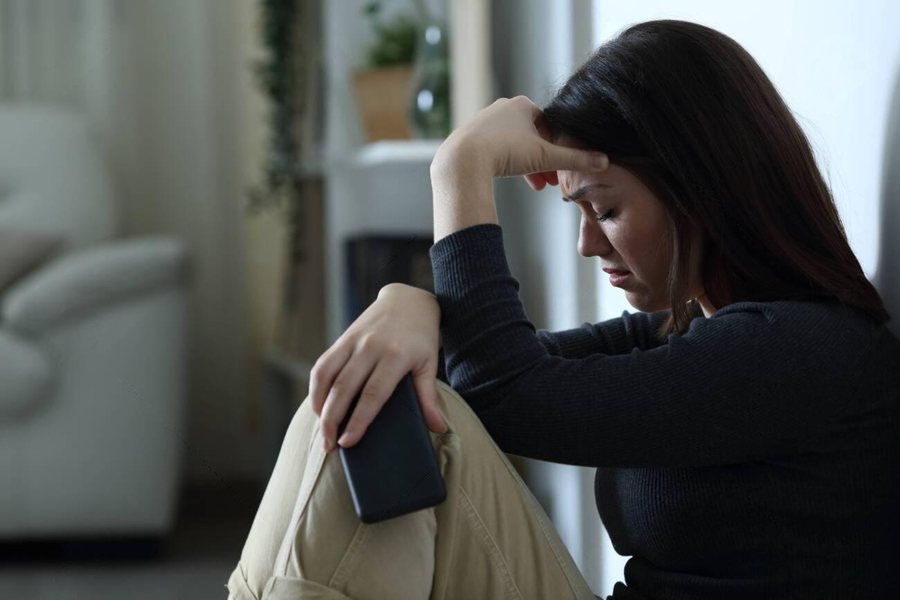
The research, published by Harvard University's School of Public Health and based on 542 influencers in North America, reveals a picture complicated by financial pressures, algorithmic instability and the lack of boundaries between private and work life.
Depressed, isolated, and even suicidal. A new study from Creators 4 Mental Health and Lupiani Insights & Strategies shows how content creators in the digital world are experiencing mental health issues at a much higher rate than the general population.
The research, published by Harvard University's TH Chan School of Public Health and based on 542 influencers in North America, reveals a picture further complicated by financial pressures, algorithmic instability and the lack of boundaries between private and work lives.
About 52 percent of them reported anxiety, 35 percent admitted to suffering from depression and 62 percent said they suffered from occasional or frequent fatigue. According to the findings of this study, the profession of online content creator lacks the mental health infrastructure found in traditional employment sectors, despite being the engine of an economy worth 200 billion dollars a year. Regarding this issue, Il Fatto Quotidiano spoke with Professor Federico Tonioni, psychiatrist and psychotherapist at the Xhemeli Polyclinic in Rome.
Why are influencers particularly vulnerable compared to other professional categories to emotional problems?
A content creator on social media is inevitably very connected. And online relationships, while absolutely real, are not “full.” So emotions are represented, if not presented.
This is somewhat offset by the tendency to over-interpret, thus paving the way for paranoia. Add to this the tendency towards disconnection that we all experience when we are in front of a digital screen, and the result is the possibility of developing psychopathological symptoms in those who spend a lot of time online. But there is more to it than that.
What?
Influencers and creators on the web have personal reasons for doing this work, which in addition to the profits, offers a powerful visibility with narcissistic traits. However, I believe that some of the psychopathology that affects this group may precede rather than follow the type of work they do.
So, is there already a basic predisposition?
I think the symptoms always have to do with something that didn't work in their early relationships with their environment when they were children. For example, for those who are socially withdrawn, this profession can become a way to rebuild themselves, a very ambitious path towards "healing" and achieving a more satisfying balance.
Among the greatest pressures many of them face is content performance. Is the need to constantly perform - in every field - one of the evils of the times we live in?
Performance is a consequence of expectations. The first thing we have to deal with are expectations from our parents. Because even before we are born, we exist in the imagination of our parents. Expectations are toxic, yet inevitable.
Can we talk about a form of digital performance addiction?
Yes, and it depends on self-esteem.
How can he grow?
Feeling loved by others even after you have disappointed their expectations. For example, if a child gets a bad grade in school for the first time, he should not be punished. On the contrary, he should be understood with the utmost tenderness and held very close. This increases self-esteem.
Why are we humans so afraid of failure?
Failure also comes from expectations. If someone tries hard, they have the right to fail from time to time. The more self-esteem you have, the more you can cope with failure.
Should social media platforms have intervention or reporting protocols for creators experiencing psychological distress?
Of course, attention and discipline are needed when it comes to bullying. Everyone, especially young people, oscillates between popularity and shame, where shame - especially for teenagers - corresponds to a division of identity, the intensity of which is proportional to visibility.
Should young people who want to become influencers be educated about the psychological risks they face?
Being creative in the world of social networks is a profession like any other. So it is not a profession that causes mental pain. It is likely that a person will seek a solution to his pain in one profession and not in another. But I do not see any specific danger in the Internet. The healthiest distance from young people is trust, not control./ Pershatti "Pamphlet" from " Ilfattoquotidiano.it"







Lini një Përgjigje