


 Shkruar nga Pamfleti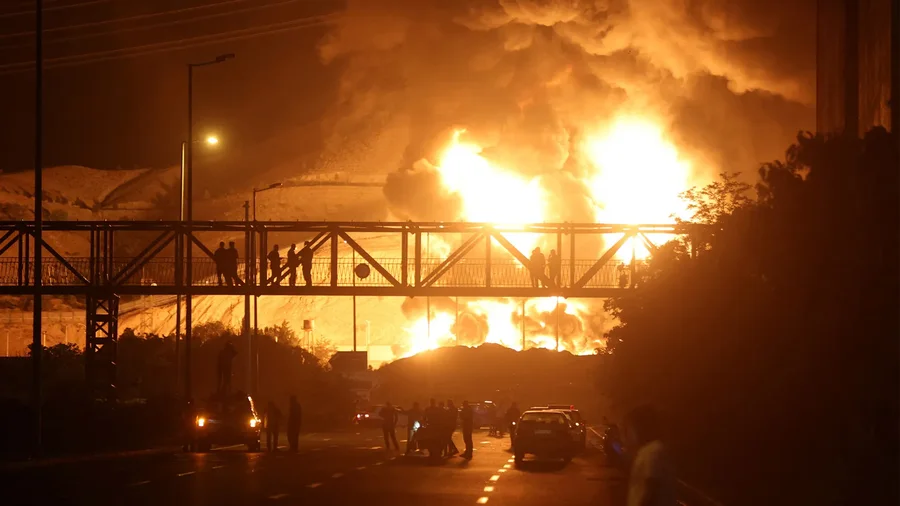
A widespread state of conflict, in different theaters, involving an ever-increasing number of countries in different scales and ways. It has already caused 600,000 deaths...
It is often said that the world is entering, or is at risk of entering, a Third World War. However, this idea is not entirely convincing. If the definition of “world war” remains that of the 20th century, a conflict between two opposing great alliances, then the current situation does not resemble such a scenario.
What is emerging is rather a widespread and persistent state of conflict in several parts of the world. As of 2022, over fifty countries have been involved in various ways in these conflicts. Each hotbed of conflict proves extremely difficult to resolve and finally extinguish. However, instead of clear military blocs, shifting and often temporary rivalries are emerging.
For example, Russia and Iran support different sides in the war in Sudan, but are on the same side against Ukraine. Saudi Arabia and the United Arab Emirates are in different camps in Sudan, while both are targets of Iranian missiles and drones. Turkey is one of the main buyers of Russian oil and thus indirectly supports Moscow's economy, but is also its rival in Libya. Meanwhile, the United States considers Russia a potential adversary because of its ties with China, but in practice the interaction between them remains complex.
A global, diffuse conflict
The current situation is therefore better described as a global, diffuse conflict, a state of ongoing conflict in multiple theaters simultaneously, involving an ever-increasing number of countries and where roles change according to the interests of the moment.
Since 2022, these conflicts have caused hundreds of thousands of casualties and have involved territories in Europe, the Middle East, Africa, and Asia.
Main sources of tension
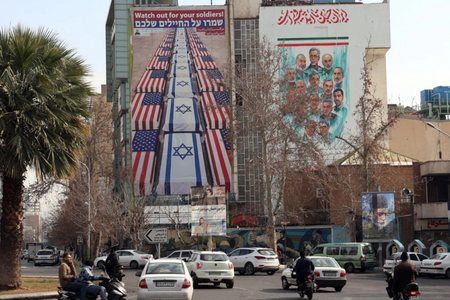
Among the most direct conflicts between states are the war between Russia and Ukraine and tensions in the Middle East over the future of Iran.
There are also other conflicts that erupt periodically or remain in constant tension, such as the disputes between Pakistan and Afghanistan, Pakistan and India, or tensions in Southeast Asia and in the area between China and Taiwan, where provocations and military maneuvers occasionally approach a major escalation.
Another category is conflicts that occur within states, but also involve external actors due to strategic or economic interests. Examples of such conflicts are the wars in Sudan and Libya, where the intervention of various powers is often linked to the control of natural resources.
The collapse of the old international order
If World Wars I and II were clashes between clear alliances, today's conflict is more related to the weakening of the international order that emerged after the end of the Cold War.
Events such as the war in Ukraine and changes in American foreign policy have accelerated long-standing tensions. In this context, several major international actors are seeking to review the balances established after the 1990s.
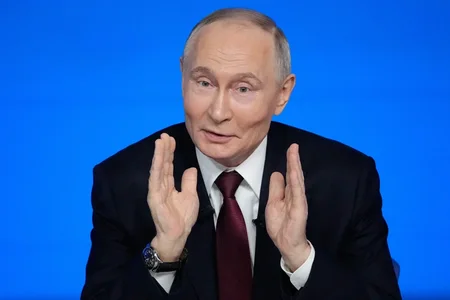
The United States faces the challenge of China's growing influence, while Russia seeks to reshape the security balance in Europe. China, on the other hand, is pursuing its own strategy to increase global influence and challenge the existing order.
A conflict involving billions of people
In this picture, over four billion people live in countries that are in one way or another connected to these conflicts. Some of them are territories where direct fighting is taking place, such as Ukraine; others are countries that supply weapons or military support; while still others face hybrid attacks, sabotage or ongoing tensions.
In the Middle East, the conflict has expanded from Gaza and Israel to a broader regional confrontation involving various actors, including Iran-allied militias in Lebanon, Syria, and Yemen.
In Africa and Asia, clashes over natural resources, territorial borders, and political influence also continue, while economic and trade tensions have become increasingly linked to strategic rivalries.
An unprecedented situation
The scope of these conflicts is considered by some analysts to be broader than any similar period before World War II. However, the lack of solid military blocs may be a factor preventing escalation into outright global war.
In this sense, the world faces an era of diffuse and interconnected conflicts, where local clashes are increasingly linked to global rivalries between great powers. / Adapted from “Pamphlet” by “Corriere Della Sera”



Lini një Përgjigje