


 Shkruar nga Pamfleti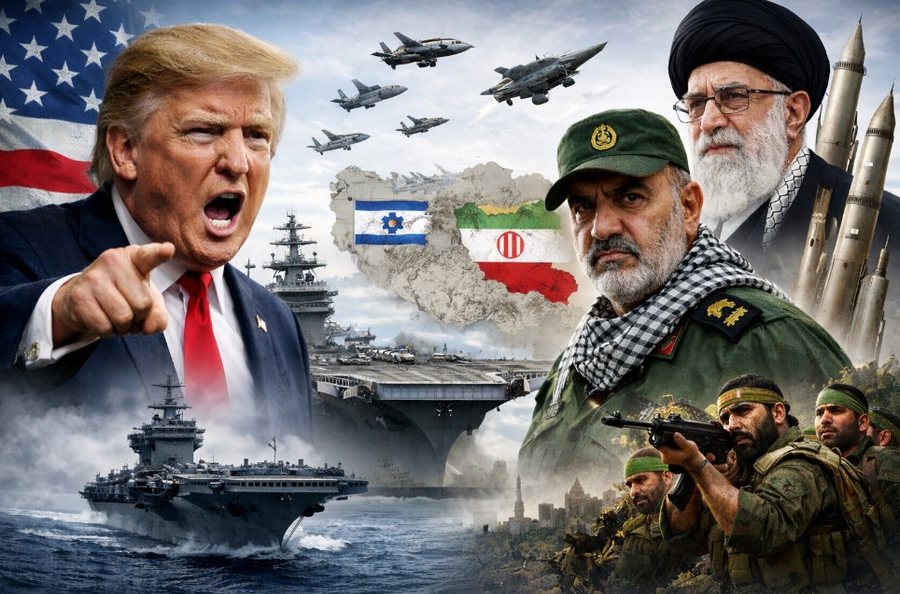
Fear in Tehran, wave of threatening messages against the US. Israel warns of attack by Americans...
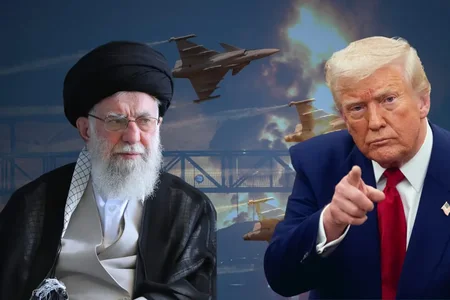
Tensions between the United States and Iran are at their highest point since the conclusion of the 2015 nuclear deal, as major military warnings and aggressive rhetoric escalate day by day, raising serious concerns about a possible conflict with regional or even global consequences.
Today, US President Donald Trump has openly threatened Iran, demanding that Tehran accept a new nuclear deal and warning that if Iran refuses, the US is ready to use military force much stronger than previous operations. He declared that a large US military fleet, an “armada” with the USS Abraham Lincoln and other forces, has been sent near Iran, with the aim of showing military readiness to force Tehran into a solution on Washington’s terms. Trump stressed that time for talks is running out and that the threat to Iran remains serious.
Israeli media also report that the US is considering a “broad move against Iran,” including options related to regime change in Tehran, an idea that has further alarmed international actors. This is perceived as one of the most radical possible scenarios, fueling speculation that tensions could lead to open conflict.
The Iranians have responded with very strong rhetoric to these threats. Through an official statement at the UN, Tehran expressed readiness for dialogue “based on mutual respect,” but also warned that it would respond like never before if it was hit by the US. Iran stressed that the experiences of the previous conflict in Afghanistan and Iraq show the high cost of foreign interventions.
Iranian Foreign Minister Abbas Araghchi underlined that the Iranian armed forces are always on alert, "with their finger on the trigger," indicating that Tehran is prepared to respond strongly to any aggression, while adding that Tehran does not seek nuclear weapons and that direct talks with the US are currently suspended.
Another senior Iranian adviser has warned that any US military action will be considered the start of a wider war, promising an immediate and unprecedented response, including strategic targets in the region beyond Iranian territory.
The situation is tense not only between the two countries, but also within the region itself. Several Gulf states such as Saudi Arabia and the United Arab Emirates have refused to allow the US to use their airspace for strikes on Iran, demonstrating internal divisions over how to manage the conflict.
Meanwhile, regional states and international actors such as Turkey are calling for solutions through dialogue and for the reduction of tensions, suggesting that the various issues should be addressed one by one to avoid a major conflict. /Pamphlet




Lini një Përgjigje