


 Shkruar nga Pamfleti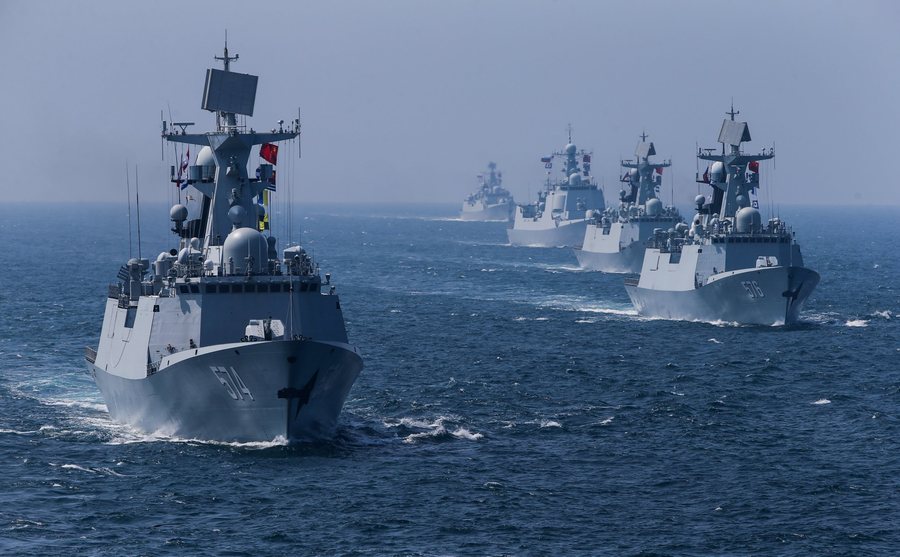
China has launched a military exercise in the water and airspace around the island of Taiwan, according to Chinese state media.
The state-run Xinhua News Agency said the People's Liberation Army's Eastern Theater Command began the drills at 7:45 a.m. this Thursday in the Taiwan Strait, north, south and east of Taiwan, as well as the area around Kinmen, Matsu Islands , Wuqiu and Dongyin.
Military spokesman Colonel Li Xi said the joint drills involving the army, navy, air force and missile forces were a strong punishment for separatist acts by Taiwan independence forces and a stern warning against interference and provocation by outside forces.
The show of force, codenamed Joint Order-2024A, comes three days after Taiwan's new president, William Lai Ching-te, took his oath of office and called on Beijing to halt its offensive on the island, which China claims as their own.
Beijing has not ruled out using force to achieve its unification goal.
Taiwan's Defense Ministry said it had put its military on high alert in response to China's drills, which it described as provocations and irrational actions that disrupt regional peace and stability.
After the start of the exercises, Lai Ching-te said that he will continue to defend the values of freedom and democracy in the face of external challenges and threats. He added that as commander-in-chief, it was his responsibility to protect the country.
A spokesman for Australian Foreign Minister Penny Wong also said Australia was concerned that China's military operations risked causing an accident or escalating tensions.
"The risk of an accident and possible escalation is increasing. Peace and stability in the Taiwan Strait are in all our interests," the spokesman said.
Bonnie Glaser, managing director of the Indo-Pacific program at the German Marshall Fund of the United States, noted that Beijing's response to Lai's election victory in January had been relatively subdued.
"China apparently decided to wait until he gave his inaugural address and then determine their response," she said.
"It is clear that Beijing strongly opposes what it sees as an attempt to develop an overarching narrative of 'Taiwan independence' with the aim of changing the nature of close relations. I expect them to implement a series of military, political and economic measures over the coming weeks and months ."
China's claims over Taiwan are not new – they have been around for decades.
While they remain trading partners, they no longer have an official channel of communication, and most of the world offers diplomatic recognition to China, but not to Taiwan.
Analysts say Beijing's claims have become much louder and more unwavering under Xi Jinping, who has repeatedly stressed that reunification will happen - even in December, just weeks before Taiwan's elections.



Lini një Përgjigje