


 Shkruar nga Federico Rampini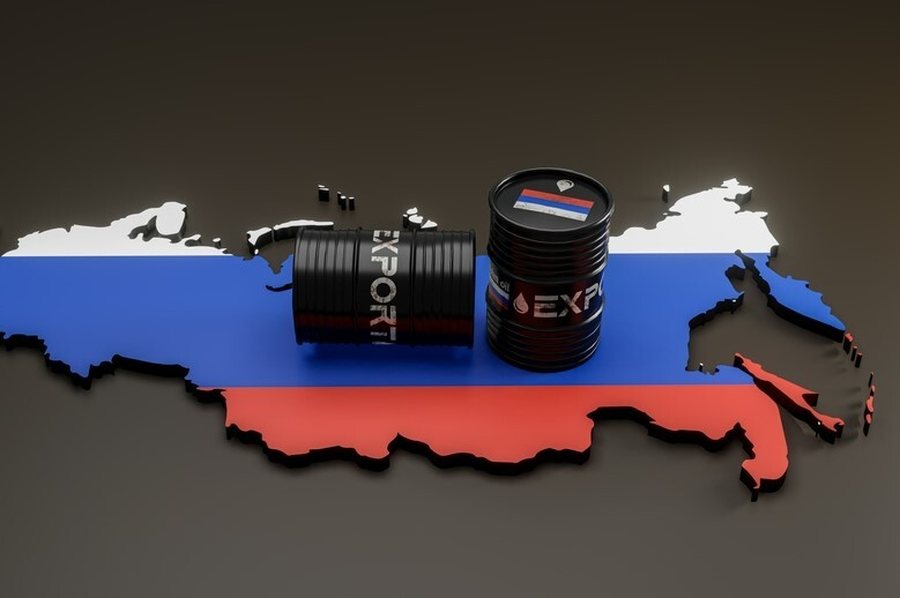
Europe talks about sanctions, but pays billions for Putin's oil
Eight years ago, American foreign policy was in the hands of Rex Tillerson, the former CEO of the giant Exxon, who became Secretary of State in Donald Trump's first term. Today, the Exxon connection is back in the spotlight, after a Wall Street Journal investigation revealed that during the recent summit in Alaska between Trump and Putin, Exxon's return to the Russian oil business was discussed. This comes at a time when Trump has imposed heavy tariffs on India, 50 percent on its oil imports, punishing it for violating sanctions, while America itself seems to be preparing for a post-sanctions future.
Europe makes the picture even more confusing. According to the official narrative, the European Union has turned off the Russian taps and, even at great cost, has given up its energy dependence on Moscow. But the reality is different. Imports of fossil fuels from Russia have never stopped. Three and a half years after the aggression on Ukraine and the announcement of sanctions, the European Union has paid Russia a full 23 billion euros just for the purchase of fossil fuels. And this figure does not include imports made through third countries such as India. The very India that Trump criticizes not only supplies itself with Russian gas and oil for its needs, but has also become the center of refining Russian oil that it then sells to Europe as car fuel. The real balance of sanctions is therefore very different from the one presented. Strong political language is accompanied by endless compromises and ambiguities. As a result, the front of countries that say they are friends of Kiev has never stopped financing Putin's war machine.
Back to the Wall Street Journal investigation. At the Anchorage summit in Alaska, Trump and Putin appeared before the cameras smiling and talking about more economic cooperation between the two countries. But behind closed doors, according to American sources, energy giants from both sides discussed reviving an old partnership, the Sakhalin-1 project, one of the largest oil and gas fields in the Russian Far East. Exxon Mobil had been part of it since 1995, but was forced to leave after the invasion of Ukraine in 2022, losing billions of dollars. Moscow blocked the sale of shares and effectively expropriated the investment. Now Exxon is considering a comeback, led by its top executives and with Trump’s blessing. For Putin, the return of an American colossus would be a major victory, as it would break the isolation and bring Western capital and technology to a strategic sector. For Exxon, it would mean recouping losses and securing stable supplies to large markets in Asia.
However, the outcome of these maneuvers remains uncertain. Russian industry still produces oil, but without new technological investment its capacity is declining. The economy is under pressure from inflation, high interest rates and arbitrary expropriations. Sales to Europe have fallen, while India and China buy at low prices and late payments. Everything depends on the outcome of the war. If Trump manages to impose a deal, Exxon could return. If Putin continues the war, then the hard line of Secretary of State Marco Rubio and congressional Republicans could gain ground and lead to new sanctions.
Meanwhile, the biggest paradox remains the European Union. Officially, it promotes sanctions, but in practice it remains dependent on Russian energy. This dependence was also exposed by Zelensky’s new military strategy. Recent attacks by the Ukrainian military on Russian oil infrastructure showed that Europe still relies on its pipelines. Kiev has repeatedly hit the Druzhba oil pipeline, the world’s largest, which supplies Germany, Slovakia and Hungary. Attacks by drones and American Himars missiles temporarily interrupted flows, endangering Berlin’s supply and causing shortages in Slovakia and Hungary. Hungarian Prime Minister Viktor Orbán reacted sharply, accusing Zelensky of also harming allies, and sent a letter to Trump expressing his dissatisfaction. Trump, however, defended the Ukrainian strategy, saying that the only way to win the war is to take it inside Russian territory. Zelensky responded by promising deeper strikes. This situation highlights the European contradiction. On the one hand, the 19th package of sanctions is being prepared, on the other hand, Russian oil and gas imports continue directly or through third routes such as India. Four years after the start of the war, the continent has still not managed to break away from Moscow. /Adapted from “Pamphlet” by “Corriere Della Sera”




Lini një Përgjigje