


 Shkruar nga Pamfleti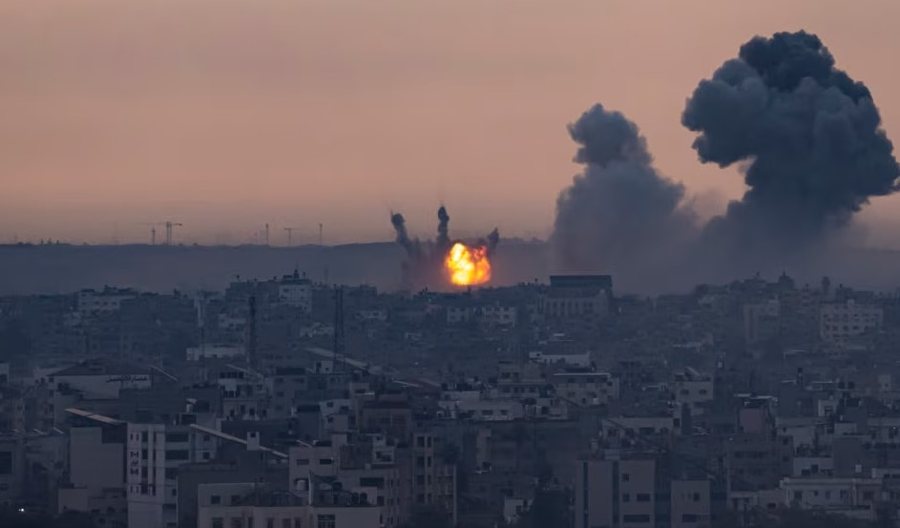
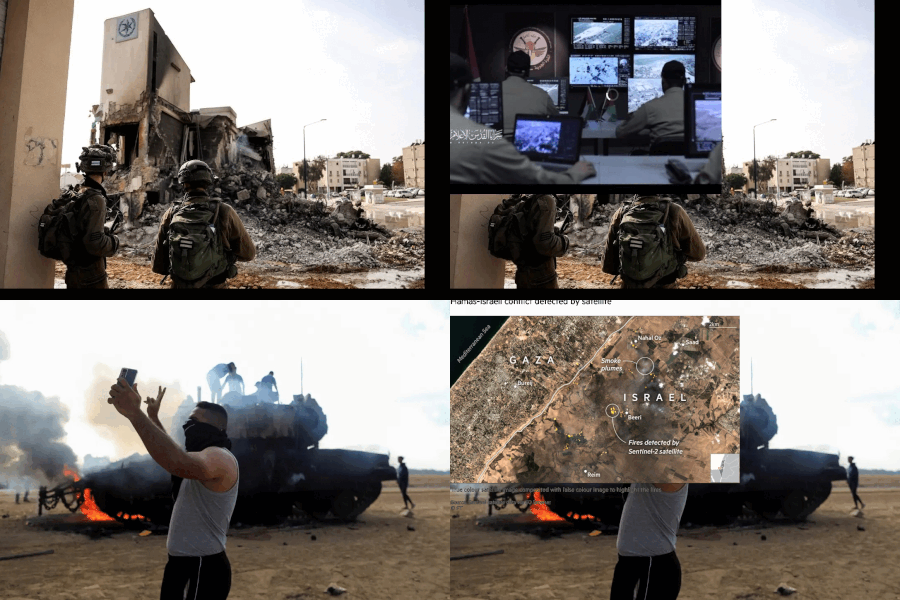
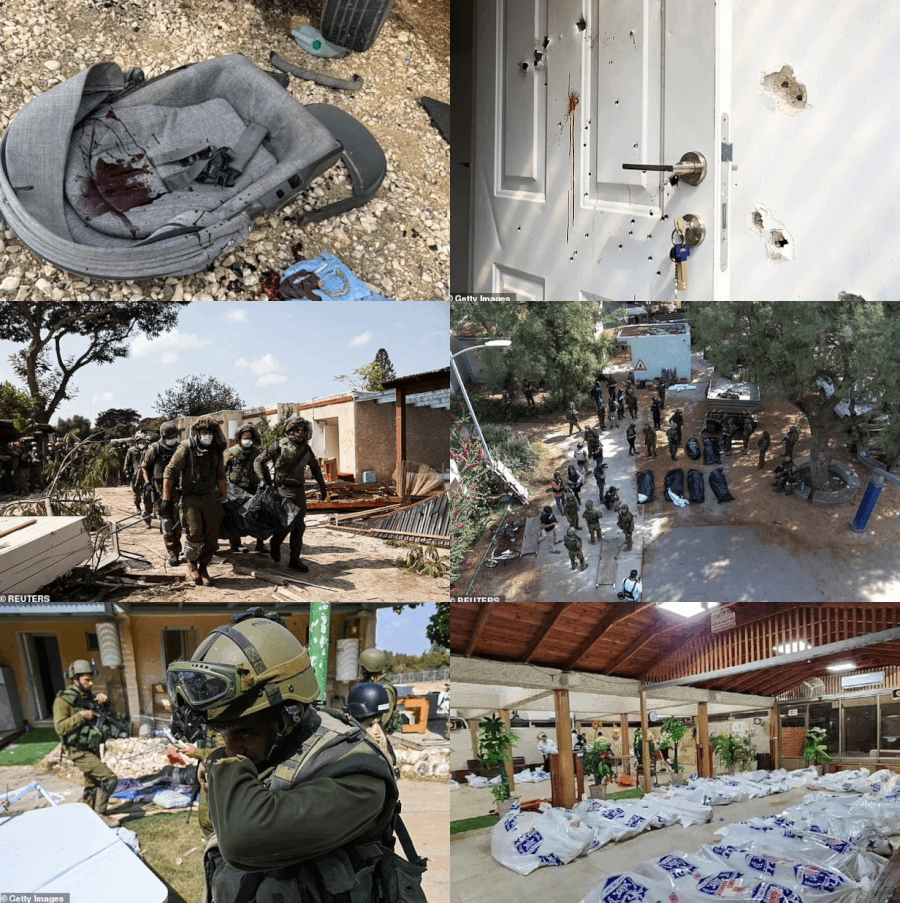
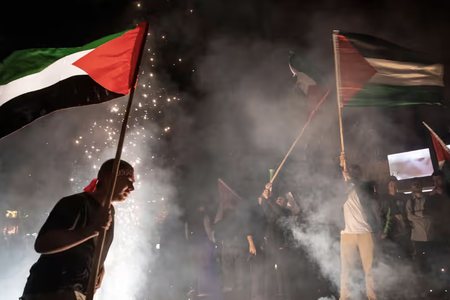
Iran's support for the Palestinian group Hamas has returned to the spotlight after Hamas militants carried out attacks on Israel, targeting civilians and soldiers, last Saturday.
Hundreds of Israelis and Palestinians have been killed as the conflict escalates rapidly. VOA correspondent Henry Ridgwell provides more details.
Hamas' attacks on Israel on Saturday caught most of the region's powers by surprise, but many analysts say Iran may have approved the attack in advance.
"For years, Iran has supported Hamas through funding, training and military equipment. Decisions for groups such as Hezbollah, Hamas and Islamic Jihad, or other groups, to enter the war can only be made with prior and explicit approval from Iran. But that is very different from saying that Iran ordered these groups to carry out the attacks," says Lina Khatib, from the SOAS Middle East Institute, University of London.
Iran has described the actions of Hamas as a "manifestation of resistance", but has denied any responsibility.
Israel's president, Isaac Herzog, blamed "an enemy axis based in Iran". Israeli officials say there is no direct evidence that Iran ordered the attack.
"This is an operation that was undertaken by a Palestinian group for reasons of the Palestinians themselves. Hamas does not act for, or represent, the regime of Iran. Although some of their interests may coincide", says Khaled Elgindy, from the Middle East Institute in Washington.
What would be Iran's role in rekindling the conflict between Hamas and Israel? Geopolitical alliances are moving fast. Saudi Arabia and Israel are trying to normalize diplomatic relations, supported by the United States. The Palestinian Authority, an opponent of Hamas, is participating in the negotiation process.
"The agreement includes talks between Saudi Arabia and the Palestinian Authority. Hamas was not part of the talks and felt the need to be part of any solution to the Israeli-Palestinian conflict first. Therefore, we are talking about a geopolitical context in which Hamas and its supporter, Iran, seek to determine the political agenda", emphasizes Mrs. Khatib.
Meanwhile, Tehran's talks with the West on Iran's return to the 2015 nuclear deal and the lifting of sanctions have stalled.
"I am not sure if Iran is looking for a bigger confrontation. Maybe it's basically seeking attention, it's trying to convince the major powers involved in the region, especially the United States, to take the Iranian role in the region seriously," says Khalil Jahshan from the Washington DC Arab Center.
Ms Khatib says Washington needs to review its policies towards Iran. "The foreign policy of the United States has focused on the nuclear issue and has underestimated Iran's role in the region. I say that now there is no doubt that Iran's regional role should be at the center of American policies".
US Secretary of State Antony Blinken said on Sunday that he had not yet seen direct evidence of Iran's involvement in the attack carried out by Hamas.
Meanwhile, Israeli Prime Minister Benjamin Netanyahu said Monday that his country's response would "change the Middle East." He did not elaborate on what that meant. / VOA



Lini një Përgjigje