


 Shkruar nga Antonio Bompani
Meloni has transformed her popularity into a political tactic, but without any perspective...
Today, Giorgia Meloni seems to many citizens, and not only Italians, as a credible international leader. While her institutional stance must be acknowledged, it is also legitimate to ask how this can be reconciled with the political methods through which, over the years, the consensus that brought her to Palazzo Chigi was built.
The strategy through which it achieved this success in fact undermined the very foundations of an effective, institutionalized and therefore responsible politics, fully aware of the external constraints and the limitations of reality during governance, with a propaganda model based mainly on demagogy and ochlocratic manipulation. Far from what was done later, this can be asserted today with reasonable certainty.
On the one hand, the mechanism certainly brings positive aspects, as it underlines once again the power of institutionalization, which is primarily the power of the rule of law - which, in a way, forces government leaders and political forces that have become the majority, even the most anti-establishment, to remain anchored in a core of responsible governance - which is nothing more than a framework for the overall stability of the country.
On the other hand, however, this reduces the toolbox and tactical instruments for consensus-seeking, while simultaneously prolonging the duration of an electoral contest in which, in effect, anything goes. The value of institutionalization, deprived of guiding principles, ends up building political models on assumptions different from those that originally inspired them, inevitably channeling them towards other goals, often linked to motivations of political survival and individual self-regeneration.
If it is clear that representative democracy tends to forget, one might wonder who the real Giorgia Meloni is: a sure-handed prime minister, almost a point of reference for Western leadership, or an opposition bulldozer capable of repeating stupidity after stupidity, just to gain people's attention. Meloni's dishonesty lies precisely in her calculating capitalism, which generates its own institutionalization as the end product, whether intentional or not.
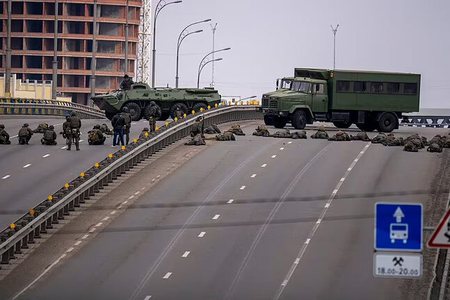
However, the time has come for all leaders to make concrete and final decisions, which must be followed through to the end. Here, Meloni's position seems to be clearly changing: consider the proposed security guarantee for Kiev, modeled after NATO's Article Five. The Prime Minister supports it in the event of aggression, but at the same time reiterates her lack of readiness to send troops to Ukraine for peacekeeping operations.
Again, the hesitations regarding common defense are well-known, as is the unwillingness to start an effective discussion on overcoming the unanimity rule, so dear, among others, to our friend Viktor Orbán (who continues, as a prime example, to block EU military support for the suffering Ukrainians), which paralyzes us Europeans, making us irrelevant.
Here, Meloni always stops short of making a real decision, highlighting her low ambition, the product of a lack of vision and fundamental political foresight. Thus, the prime minister can continue to limit herself by introducing into the debate and highlighting only those that help her gain immediate support.
It is precisely in the face of these weaknesses that an alternative political offer worthy of the name must come into play, an offer that can push it beyond its essentially immobile existence - with the known strength it has and a little ambition (which it lacks), it could actually do much more, if it wanted to play the role of a truly European leader: an opposition that shouts this seems to lack it itself so far.
Faced with a government that offers no answers for the economy and jobs, made up of modest ruling classes that choose to attribute the scarce resources available to the past instead of crafting a vision for the country for the future, those who must build a credible offer to counter it either lack the ability to build bridges between different families and political roots, or are unable to unite different social groups on a broad platform.
No one expects a force to emerge that presents itself in the elections as the pinnacle of populism and, once in power, implements all the reforms that Italy needs, in a hara-kiri of duty that could last, at best, five years. But a reformism that regains the trust of many people, beyond liberal or supposedly liberal ambitions, is certainly possible.
Reformism is the only political sphere that interprets the changing reality and seeks, or should seek, the appropriate means to manage it. Simply because this is what matters to people, in the daily conduct (or pursuit) of a dignified life. However, all too often the trap of focusing on distant issues, even treated in too superficial or, worse yet, ideological terms, prevails.
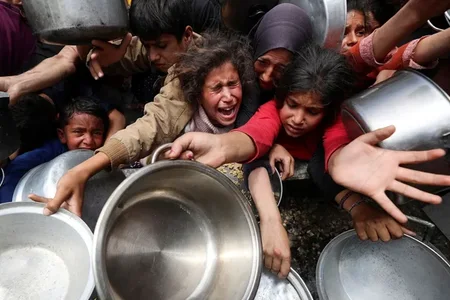
Focusing on Propal campaigns does not seem sufficient, although support for Palestinian civilians, if that is the case, is certainly a task, along with the search for sustainable solutions for that area of the world.
At every national level, there is a problem of alternatives: no one, not even those who manage to create a unified proposal, are then able to make that reformist impulse prevail and have a decisive impact on the real issues that matter to people. Without this momentum, the right will continue to win, in its inertia and mediocrity, because the counterproposal has not yet figured out how to compete./ Adapted from "Pamphlet" by "Linkiesta"



Lini një Përgjigje