


 Shkruar nga Pamfleti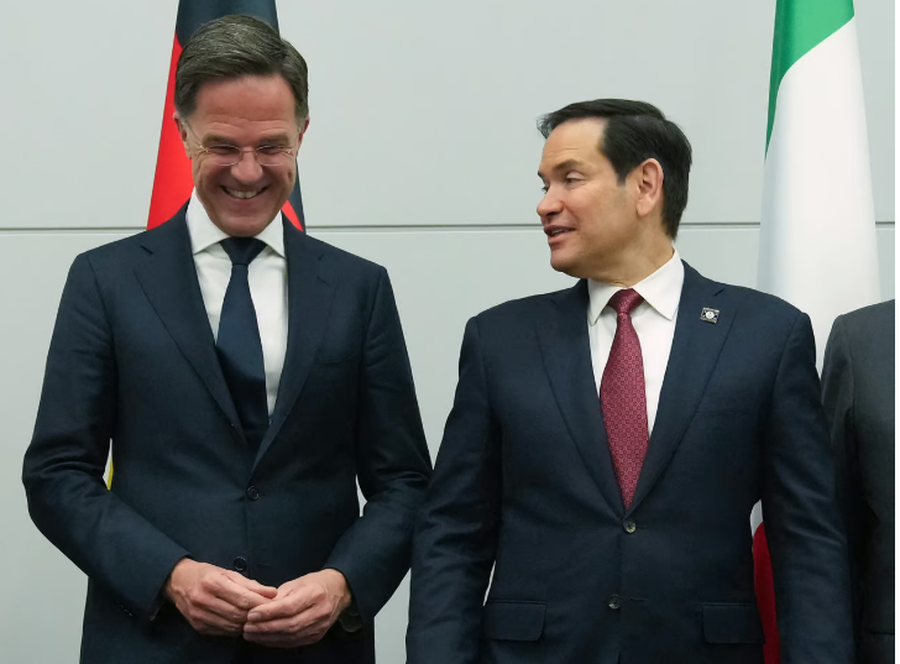
But this week's two-day meeting took place as the world scrambled to react to Trump launching a global trade war - with steep tariffs hitting NATO allies in Europe and Canada.
NATO is still alive after this week's meeting of foreign ministers. Despite declarations that the alliance is in good health, there were signs of trouble in Brussels.
NATO Secretary General Mark Rutte insisted on Friday that "we are united in our commitment to each other in this alliance" and that "the transatlantic relationship remains the cornerstone of European security and global stability."
"I know there has been some harsh language. I know there have been allies, for example, this side of the pond concerned about the long-term commitment of the US to NATO," Rutte said, adding that "the Americans have repeatedly stated: 'we are committed to NATO. We are committed to Article 5.'"
US Secretary of State Marco Rubio called the view that the US is pulling out of the alliance "hysteria and hyperbole". His stance was softer than that of US Defence Secretary Pete Hegseth, who warned in February during his first trip to Europe as Pentagon chief that US troops are not in Europe forever.
Polish Foreign Minister Radosław Sikorski said that US President Donald Trump assured NATO that the alliance's Article 5 collective defense commitment remains intact and that he will attend a summit of alliance leaders in June in The Hague.
But this week's two-day meeting took place as the world scrambled to react to Trump launching a global trade war - with steep tariffs hitting NATO allies in Europe and Canada.
Canadian Foreign Minister Mélanie Joly warned her European counterparts that the relationship with the US "will never be the same again."
Belgian Prime Minister Bart De Wever criticized the U.S. demand to increase defense spending by starting a trade war and insulting European allies. “It becomes a little complicated to ask for things from us after someone starts a trade war, because we are humiliated and insulted all the time,” he said before meeting with Rubio.
Allies have been spooked by other US moves over the past two months: cutting off military aid to Ukraine, taking a stand on Russia, Trump's warning that he may not defend NATO allies he believes are spending too little on defense, attacks on Canadian sovereignty, and threats to invade Greenland.
This led to Rutte having a very unpleasant closing press conference.
Despite his familiar style, Rutte had a hard time convincing the press that the tariffs imposed on allied countries would not affect their efforts to increase military budgets. Trump wants NATO to increase its defense spending target from 2 percent of GDP to 5 percent.
"Thank you for helping us reach the 5 percent target by bringing down the world economy," a member of the French delegation told his American counterpart during the closed-door meeting, according to an official who spoke on condition of anonymity to discuss the sensitive discussions and was present in the room.
"I don't think I'm helping this alliance by commenting on something that's not really part of the alliance's policy," he said.
Meanwhile, Rubio returned to Washington after canceling his final scheduled press conference, something the US delegation said was due to a change of plan.
Despite those discordant notes, the foreign ministers continued to insist that the alliance is still functioning.
“We all understand and feel the profound change in international relations, and in this situation, Czech policy is to keep America as much as possible involved in European security,” said Czech Foreign Minister Jan Lipavský. According to him, NATO’s presence is one of the unique tools to do this.
Other officials emphasized that they were complying with Trump's request to increase their military budgets.
“In a time of significant security challenges, first things first – of course we are prioritizing security and defense,” said Latvian Foreign Minister Baiba Braže, whose country aims to increase its defense spending to 5 percent of GDP by 2028. / Adapted from Politico/



Lini një Përgjigje