


 Shkruar nga Pamfleti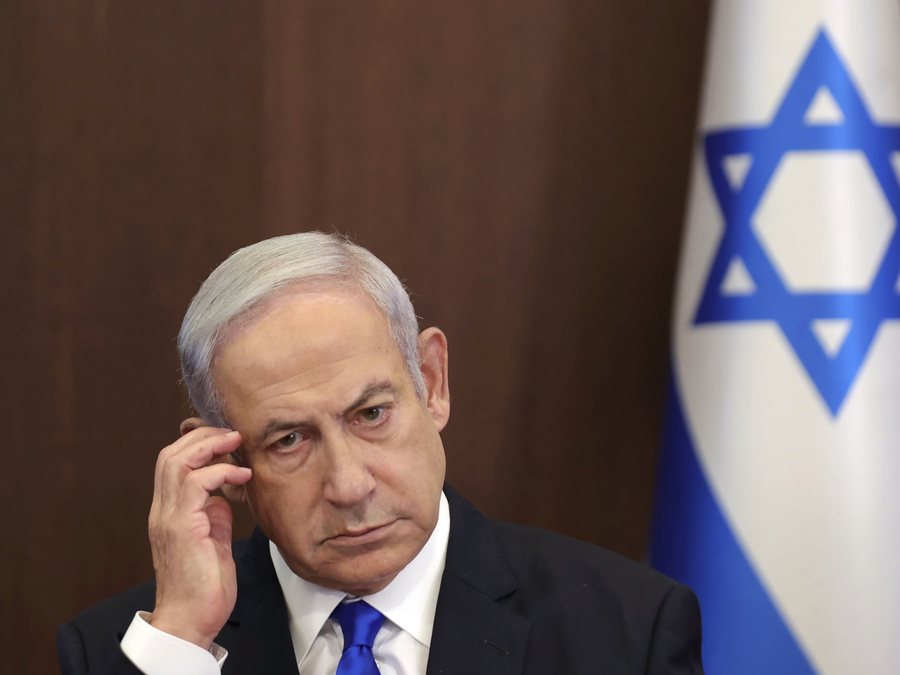
Netanyahu's failure to express regret for what many consider the worst disaster to befall the Jewish people since the Holocaust is puzzling to outsiders, but less so to Israelis who have watched their leader closely for years.
Israel's military and security chiefs have lined up to take some of the blame in the two weeks since Hamas militants from Gaza killed more than 1,400 people.
The head of military intelligence for the Israel Defense Forces said he took "full responsibility", the Shin Bet boss admitted his security agency had "given no warning" of the attack and the IDF chief of staff said the army "did not "succeeded" in carrying out his responsibility to prevent the attack.
Yet one senior Israeli leader has conspicuously avoided taking responsibility, let alone apologizing for it: Benjamin Netanyahu, the prime minister who has led the country for most of the past 15 years.
Netanyahu's failure to express regret for what many consider the worst disaster to befall the Jewish people since the Holocaust is puzzling to outsiders, but less so to Israelis who have watched their leader closely for years.
After initial shock in the days following the Hamas attack, Netanyahu has rediscovered his political base: issuing fiery speeches and posing for flattering images with Israeli troops. He also met relatives of some of the 203 people taken captive in Gaza.
However, his actions have attracted controversy. The prime minister had to deny that activists from his own party had been placed among the hostage families he met and he was also caught on camera holding the country's president so he could be the first to be photographed with Joe Biden -in this week.
" Netanyahu is completely shameless. He is fully aware that this is the greatest tragedy in the history of Israel and his political career. But in his mind an apology is the first step towards resignation, and he has no intention of resigning ," said Anshel Pfeffer, author of a biography of the Israeli leader.
A second person familiar with the Israeli leader's thinking said: " I think Netanyahu believes that if he says 'I am responsible ', it will be translated as ' I am guilty .'
Most analysts expect Netanyahu to seek to shift the blame to his security chiefs. A person familiar with the thinking within the Israeli military said the expectation was that many senior officers would resign - but only when the conflict ended. Netanyahu promised in a speech to the Knesset this week to "investigate everything thoroughly" and apply "immediate lessons", while also insisting the country's focus was on "rushing forward to victory".
However, nearly half of the country placed the main blame for October 7 on his government, according to a poll conducted last week by Agam Research.
Avi Halfoun, who has often voted for Netanyahu's Likud party, said he no longer trusted the prime minister or trusted him to keep Israel safe.
Another poll in the Israeli daily Maariv showed that 80 percent of Israelis think Netanyahu should publicly take responsibility, including more than two-thirds of Likud voters.
Benny Gantz, the former IDF chief last week drafted into Israel's war cabinet, has surpassed Netanyahu in suitability as prime minister as his National Unity party surged ahead of the slumping Likud in the polls.
Some Israelis, however, believe it is too early to write off a politician nicknamed the "wizard" for his ability to outmaneuver opponents, not least ahead of what many expect to be a long and unpredictable war.
Netanyahu had been governing with a slim majority since returning as prime minister in December at the head of the most extremist government in Israel's history. His right-wing administration has outlined plans to expand Jewish settlements in the occupied West Bank and has faced mass protests over its highly controversial efforts to overhaul the judicial system. He has also operated under the shadow of an ongoing corruption trial for several years.
Public criticism of Netanyahu and his coalition has recently expanded beyond his traditional critics on the left and center of the political map – not only because of the events of October 7, but also because of what many Israelis see as almost no government support in the weeks that followed.
On one occasion, his environment minister, Idit Silman, was chased out of a hospital by a doctor who shouted: "You've all ruined this country, get out of here!"
For now, Israeli Jewish society is united in shared anxiety over the Hamas onslaught and worries about an escalating war.
"This is not the time for politics, " a senior opposition official said when asked about the Netanyahu government./ Adapted 'Pamphlet' from 'Financial Times'



Lini një Përgjigje