


 Shkruar nga Pamfleti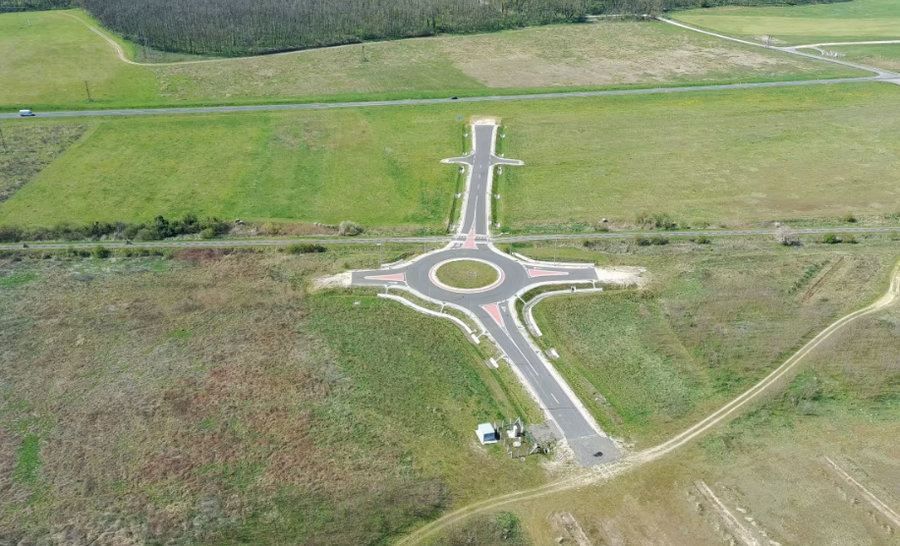
As Hungary heads to the polls, a dysfunctional roundabout exposes corruption and mismanagement of EU funds during Viktor Orbán's rule.
On the outskirts of the western Hungarian city of Zalaegerszeg, a sign shows a roundabout being built with about 500 million forints (about $1.5 million) in European Union funding. The project was intended to serve as a container terminal, part of a new railway line that would improve the region's trade links with the Adriatic Sea and beyond to Central Europe.
However, years after the roundabout was completed, the railway line still does not exist. The infrastructure lies unused in a field, awaiting the construction of the project that would give it function.
The case has become a symbol of the debate over how EU funds have been used in Hungary under Prime Minister Viktor Orbán. Critics argue that such projects reflect an economic model built on investments that do not always bring tangible benefits, while the government has benefited from large sums of European funds.
According to official data, the European Union has financed around 52,000 projects in Hungary during the 2014–2020 budget period. These funds were intended to help the bloc's less developed countries catch up with Western European standards.
However, experts and anti-corruption organizations question the effectiveness of these investments. István János Tóth, director of the Budapest Center for the Study of Corruption, describes the roundabout project as a “white elephant,” a costly investment that brings little or no practical value.
Transparency International ranks Hungary as the most corrupt country in the European Union, while Hungarian authorities reject these accusations and often accuse opponents of politicizing the issue.
Meanwhile, other similar projects have been reported in the media, including tourist structures with no real use, such as observation platforms built in areas without forests or symbolic towers with limited function.
The situation is further complicated by strained relations with Brussels. Since 2022, the European Commission has blocked around 18 billion euros in funding for Hungary due to concerns over the rule of law and the independence of the judiciary. This amount represents around 10% of the country's Gross Domestic Product.
The issue of European funds has become a central theme in the election campaign. The opposition, led by Péter Magyar, promises reforms to unblock the funds and fight corruption, accusing the government of misusing public resources.
On the other hand, Viktor Orbán and his allies accuse the European Union of interfering in Hungary's domestic politics, linking the blocking of funds to political pressure.
In Zalaegerszeg, meanwhile, the railway project that would justify the roundabout may not be completed until 2029 at the earliest. Until then, the infrastructure remains a symbol of a broader debate over how European funds are managed and their real impact on economic development. / Adapted from "CNN"



instalacion
Keta tanet do ta kishin bere per 9.5 milione, po mos ua shtini ne mend aman te keqen