


 Shkruar nga Pamfleti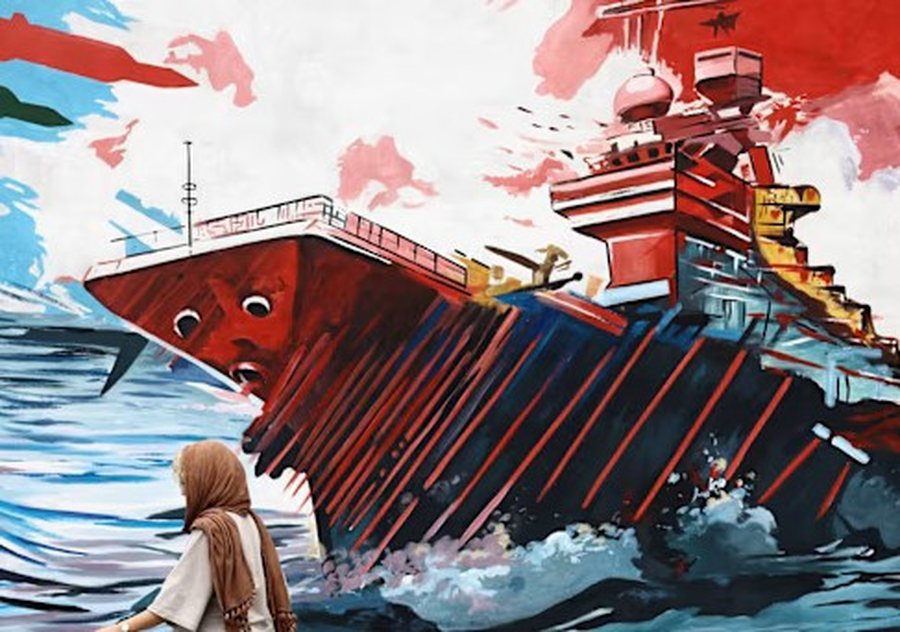
For US President Donald Trump, this development presents an unexpected challenge...
For decades, Iran has hinted that it could close the Strait of Hormuz if hostilities between the US, Israel or its regional rivals boiled over. Yet the ease with which it has finally done so has surprised not only its rivals but also members of the regime itself.
While regional tensions have long focused on Iran's nuclear or missile programs, this previously untested weapon has become its most significant point of influence, triggering the biggest energy crisis in decades and dealing an immediate blow to the global economy. A person close to the regime described the shutdown as a strategic breakthrough for the Islamic republic, which before the US-Israeli war was seen as being at its weakest point militarily in years.
For US President Donald Trump, this development presents an unexpected challenge. Having entered the war with the hopes of everything from toppling the regime to preventing Iran from acquiring nuclear weapons, something Tehran has long denied it is planning, Washington is now facing a problem that did not exist before.
In a sign of Trump's frustration, he ordered the US Navy to block the strait, through which roughly a fifth of the world's energy supplies pass. This is designed to prevent ships traveling to and from Iranian ports and disrupt Iran's oil exports, intensifying pressure on Tehran to negotiate a deal to end the war and reopen the waterway.
But Iran’s top military command threatened on Wednesday to use the country’s “full force” to halt trade not only in the Persian Gulf but also in the Red Sea and Gulf of Oman if the blockade continued. And Hamshahri, a hardline newspaper, published a cartoon of Trump bobbing in the strait. “Drowning in failure ,” the headline read.
Iran refused to reopen the strait even after a fragile two-week ceasefire announced last week, arguing that Israel's bombing of Lebanon, where it is fighting Hezbollah, violated the agreement. Opening the strait was Trump's main condition for the ceasefire.
Iranian politicians have articulated a broader vision of the economic and political role they hope the strait will play in the country’s future. Iran has previously said it expects oil tankers passing through the strait to pay up to $2 million in cryptocurrency, and its parliament is drafting legislation to regulate maritime passage, imposing taxes and restricting access to ships linked to “hostile states.” Some members of the Iranian parliament have suggested that Tehran needs the revenue to offset the costs of the war.
Hamid-Reza Hajibabaei, the deputy speaker of Iran's parliament, told state television that the waterway had become the country's main point of influence.
"When we have control over the Strait of Hormuz, no other country can impose sanctions on us. In this region, we were the only ones facing sanctions. Now... every country we impose will face sanctions," he asserted, referring to decades of US-led economic sanctions.
According to Iranian analysts, before the US blockade, Tehran's oil revenues almost doubled, while the country continued to export oil, most of which was destined for China. But the war and Iran's decision to close the strait have come at a significant cost to the regime.
US and Israeli airstrikes on industrial facilities have caused tens of billions of dollars worth of damage, and analysts expect the war to severely strain its already battered economy. Before the ceasefire, Trump had threatened to destroy Iran's "entire civilization" if it did not unblock the strait.
The prospect of Iran continuing to impose road taxes has caused alarm around the world.
This could harm not only neighboring countries, which Iran has repeatedly attacked during the war, but also important economic partners such as China, which imports most of its oil from the region. Gulf states worry that now that Tehran has proven it can close the strait, it is a weapon it could use against them in the future.
Alongside the long and difficult efforts to reach a deal that curbs Iran's nuclear program, convincing Tehran to allow the free flow of ships through the strait has become a key sticking point in talks between the US and Iran.
An initial round ended inconclusively in Islamabad over the weekend, and Trump said Tuesday that further talks could take place “over the next couple of days.” Gulf states fear the U.S. could agree to a deal that allows Iran to maintain some degree of control over the strait.
The Islamic Republic has continued to show opposition to Trump's blockade, but analysts say it may have to start significantly reducing oil production within two weeks if the blockade succeeds in halting its exports.
Tehran has signaled that it may seek to escalate the situation beyond the Strait of Hormuz. Senior regime figures have suggested that the strategic Red Sea crossing point, Bab al-Mandab, could be targeted by Iran-backed Houthi rebels, who have wreaked havoc on maritime trade by firing missiles at ships in the conflict that followed Hamas's attack on Israel on October 7, 2023.
Even if the blockade could cause significant damage to Iran's economy, the regime's supporters suggested the Islamic republic would have a higher tolerance for pain than Trump, who is under pressure to contain the domestic economic fallout ahead of the US midterm elections in November.
" How long can the US tolerate this for the coming months? " asked an insider in the regime.
According to individuals close to the leadership, the decision to close the strait gained momentum after Israel’s 12-day war with Iran in June, as the regime calculated it was in an existential battle. The risks extend beyond oil. The strait is a critical artery not only for energy but also for global supply chains. Iran relies heavily on the strait for imports, including grain and other foodstuffs.
Roughly a third of the world's chemical fertilizers pass through this route, along with significant volumes of helium, used in semiconductor production. Ali Shirinzad, a member of parliament, said on Monday that the Iranian obligations would apply not only to oil tankers but to "any ship."
Hard-line voices in Tehran have portrayed the closure of the strait as a historic turning point for Iran. And even moderate figures have surrendered to Iran seeking to maintain influence over the strait. Majid Hosseini, a reformist political economist at the University of Tehran, said he thought there was little chance of Iran backing down.
Even if the US targets infrastructure such as power plants, the priority for those in power is to win this battle with the Hormuz card. / Adapted from "Pamphlet" by "Financial Times"



Lini një Përgjigje