


 Shkruar nga Pamfleti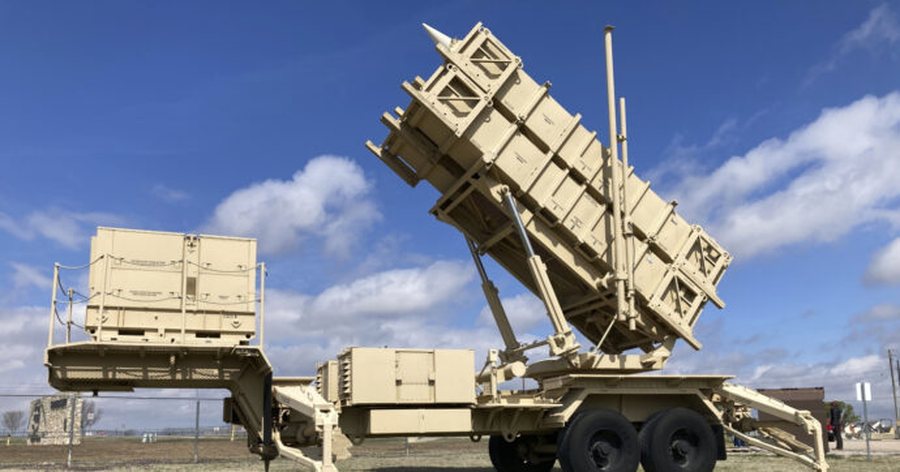
It is no coincidence that the idea of getting hold of $300 billion in frozen Russian assets stashed between Europe (approximately $200 billion) and the United States is circulating again among European governments...
From today onwards, American weapons will go to Kiev, but the bill will be handed over to US allies in Europe, members of NATO.
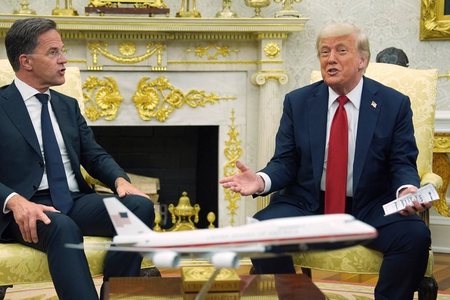
These are the conditions set by the White House to continue supporting Ukraine's war effort and to stop Russian advances and ambitions. Trump was clear: "we will send Patriot missiles, but Europe will pay for them."
But according to the New York Times, this is not entirely accurate: it will not be NATO or the EU that pays, but individual countries.
Germany has already offered to buy two Patriot batteries, and Norway one.
The fact remains that, in addition to money for rearmament, which should increase to 5% of GDP, Germany, France, Italy and others will also have to find more money to counter Moscow.
Moreover, French President Emmanuel Macron has said that “since 1945, Europe has never been in such great danger as it is now.” Faced with this real or perceived emergency, the inevitable sacrifices in public spending become irrelevant.
What numbers are we talking about? A single Patriot missile, manufactured by the American giant Raytheon, costs between 2 and 4 million euros depending on the configuration. A launcher (which can accommodate four) costs around 10 million euros. An entire battery, including radar, interception systems, transport vehicles, etc., is worth over 1 billion euros.
According to the Kiel Institute's Ukraine Support Tracker, since the start of the war in February 2022, the United States has spent a total of almost 115 billion euros in aid to Ukraine. Of this, almost 65 billion euros have been allocated to the supply of nuclear warheads.
Approximately 20 billion euros per year for weapons alone, for a period that we hope will be as short as possible, but it is difficult to predict. To date, the European Union has spent about 60 billion euros on Kiev, mainly in the form of financial aid.
It is worth remembering that Italy is, so far, one of the countries that has committed the least to Ukraine, with a financial outlay of just over two billion euros, compared to Germany's 16 billion euros, the United Kingdom's nearly 20 billion euros, the Netherlands' 8 billion euros, and France's 7 billion euros.
The costs of the war will be followed by the costs of reconstruction, a golden opportunity for many private companies, but which will require at least 500 billion euros, according to calculations by the European Commission and the World Bank.
It is no coincidence that the idea of getting hold of $300 billion in frozen Russian assets stashed between Europe (approximately $200 billion) and the United States is circulating again among European governments.
But there is a reason why this action has not been taken in the past three years. The disadvantages are significant. The first is the “precedent risk.” The money Moscow has stashed in Europe is money earned by selling gas and oil to EU countries, not war proceeds. If a signal were given that legitimately held funds could be seized by European political choice, countries around the world would take note. Chinese, Arab, or other capital would likely seek safer havens, fearing that any geopolitical move undesirable to the West could trigger a similar seizure.
This is why even institutions like the European Central Bank have always been very cautious about this possibility. Then there is the diplomatic aspect. The "freeing" of currently frozen assets is a strong factor in any negotiations with Moscow. However, if the money were to be spent, it would make Russia even more reluctant to sit down at the negotiating table. /Adapted from Pamphlet by ilfattoquotidiano/




Lini një Përgjigje