


 Shkruar nga Monica Perosino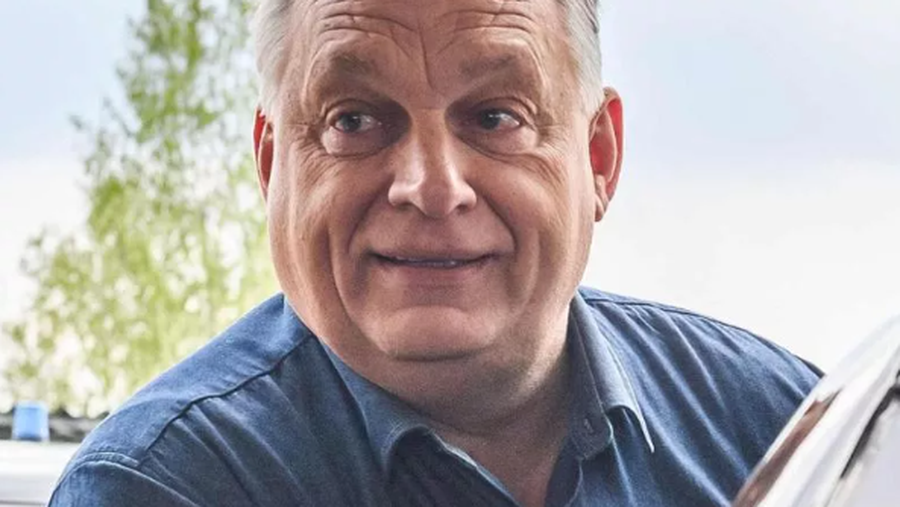
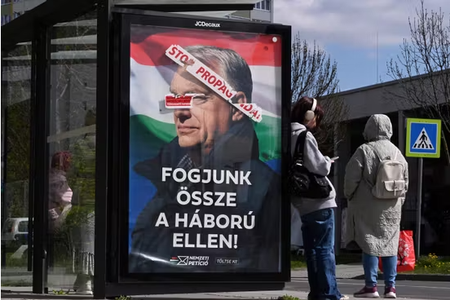
An investigative documentary reveals how an organized network of pressure and bribery is turning votes into a market commodity, calling into question the freedom of Sunday's elections in Hungary's poorest areas...
The vote, converted into a currency of exchange for basic food and vital services, constitutes one of the most cynical mechanisms of political control in Hungary. In this grim reality, poverty is not simply a social consequence, but a deliberate instrument for maintaining power.
In many rural areas, citizens are faced with a false choice: vote according to their conscience or secure their daily survival. For 10 days, this system has ceased to be a vague rumor, but a widely documented scheme, made public to millions of voters preparing to decide the political future of the country. What was once considered a doubt has now taken the form of a tangible political fact, with a direct impact on the electoral process. The fear of manipulation is no longer abstract; it weighs heavily on every vote cast.
A key role in exposing this scheme was played by the documentary “A svajat ára” (“The Price of Votes”), directed by Áron Timár. The film went viral and was watched by a significant portion of the population, highlighting a reality that non-governmental organizations and international observers have been denouncing for years.
Through direct footage and authentic testimonies, the documentary penetrates the poorest areas of the country and shows how voting becomes a means of survival. The mechanism of vote buying is as simple as it is effective.
Intermediaries, often influential local figures or those connected to power structures, distribute modest aid such as a few kilos of potatoes, a bottle of vodka, or promises of access to public services.
In return, they demand concrete proof of loyalty: a photograph of the ballot showing the requested choice. This practice has become even easier since, as of 2023, photographing a vote is no longer considered a criminal offense.
In villages like Nyírbogát, the system operates through a complex web of dependencies. The mayor may also be the only doctor in the area, employment is often controlled by local authorities, and social benefits are distributed selectively. In this context, voting is no longer a right, but a tacit obligation.
The pressure is not always direct; it often manifests itself through fear and insecurity. As Timár points out in his documentary, “money is only the surface; the key word is fragility.”
It is precisely in these poor areas, where opportunities and institutional support are lacking, that the system finds the ideal ground to take root. Citizens no longer see voting as a free democratic act, but as a means to secure basic needs.
According to local observers, this phenomenon is of considerable magnitude. In the 2022 elections, it is believed that hundreds of thousands of votes were bought, while for the current elections an even higher number is expected.
In a polarized political system, such influence can translate into a decisive difference in the final results. These practices are not unknown to international organizations.
Institutions such as Unhack Democracy and Tasz have repeatedly reported on economic pressures, assisted voting, and organized transportation to polling stations. In some cases, the allegations go even further, including threats to cut off basic services or pressure on the most vulnerable families.
European political representatives have also raised the alarm. MEP Tineke Strik has described the situation as an “electoral autocracy”, stressing that the system is structurally biased.
The problem is not limited to vote buying, but also extends to media control, the use of public resources, and the lack of independent institutions. International observers point out that the elections may appear formally free, but in practice are affected by a widespread climate of pressure.
The evidence from inside the system is equally shocking. A police officer, speaking on condition of anonymity, describes the situation as a corrupt structure where large sums of money circulate and where the law often remains in the shadows.
On election day, these mechanisms become even more visible. Organized voter transportation, the presence of intermediaries near polling stations, and requests for visual proof of votes are just some of the practices reported.
Perceptions of power play a key role. The stronger a political force appears to be, the more its influence on voters increases. However, small signs of change are emerging. In certain communities, public discussion has increased and fear has begun to fade.
For many citizens, hope lies in the opportunity to vote according to their convictions, despite the pressures. And perhaps, for the first time in a long time, some of them may see voting not as an obligation, but as a real right.
In Nyírbogát, says Eva, a local resident, now the only thing people talk about is the documentary and the fear is disappearing. On Sunday - and this is the 65-year-old's hope - maybe someone will actually vote for themselves./ Pamphlet from "La Stampa"


Sic duket, Mjeshtri i Madh Rama i ka dhene sistemin, sesi fitohen zgjedhjet, bashke me PATRONAZHISTET.Kemi filluar te eksportojme eksperience vella, nuk eshte shaka.