


 Shkruar nga Pamfleti
The risk of nuclear conflict between major powers is growing. The biggest concern is tensions between the US and Russia, as strategic competition increasingly shifts to the depths of the ocean…
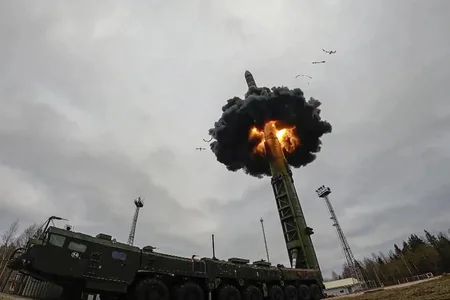
The risk of nuclear conflict between the great powers is growing. The latest work on the subject by the Stockholm International Peace Research Institute (SIPRI) has highlighted the emergence of a new and dangerous nuclear arms race, especially at a time when nuclear arms control regimes have been severely weakened.
Rising international tensions are certainly not helping to limit the damage; on the contrary, they are amplifying it in a constant game of escalation.
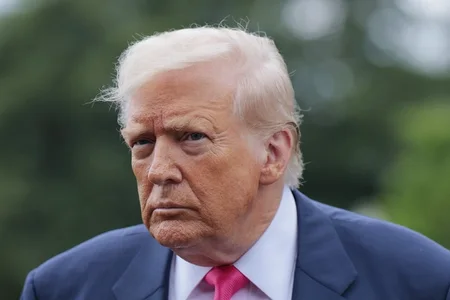
The United States and Russia are the players being monitored most closely, as demonstrated by the recent verbal warnings exchanged between Donald Trump and Dmitry Medvedev.
However, be careful, because unlike in the past, the big nuclear game is now being monitored under the sea.
The risk of nuclear war is increasing
The figures are clear: there are 12,241 nuclear warheads in the world. About 10,000 of them are in bunkers (not immediately operational): 5,177 in the United States and 5,459 in Russia. Those that are ready for use, SIPRI explained, are 3,912. These nuclear warheads are placed on aircraft and missiles: 2,100 are on permanent alert (1,700 in Washington). As if that were not enough, almost all 9 nuclear-armed states have continued intensive nuclear modernization programs in 2024, updating existing weapons and adding new ones.
Since the end of the Cold War, the gradual dismantling of decommissioned nuclear warheads by Russia and the United States has generally outpaced the deployment of new ones, resulting in an overall annual decline in the global nuclear weapons inventory. This trend is likely to reverse in the coming years, as the pace of dismantling slows and the deployment of new nuclear weapons accelerates.
"The era of nuclear arms reductions in the world, which has lasted since the end of the Cold War, is coming to an end," said Hans M. Kristensen, senior associate fellow in SIPRI's Weapons of Mass Destruction Programme and Director of the Nuclear Information Project at the Federation of American Scientists (FAS). Instead, he said, we are seeing a clear trend towards growing nuclear arsenals, stronger nuclear rhetoric and the abandonment of arms control agreements.
Head-to-head confrontation between the US and Russia
One variable to keep an eye on is undoubtedly artificial intelligence. The use of this unpredictable element will, in fact, make the human factor less and less decisive in the decision to use nuclear weapons against an emerging threat. What does this mean? Simple: generals and senior military officials will no longer decide, case by case, whether or not to respond to the enemy with nuclear weapons as a last resort; instead, the artificial intelligence algorithm will do this.
An even more revolutionary scenario will be underwater. In the depths of the oceans, Russia and the United States are racing to secure the ultimate weapon. In 2022, Moscow launched the Belgorod, a 178-meter-long, silent and difficult-to-detect submarine equipped with two nuclear engines. The ship carries six large nuclear-powered torpedoes.
They are Poseidon, underwater weapons capable of traveling at 140 kilometers per hour even at a depth of one thousand meters. They can carry atomic warheads 150 times more powerful than the Hiroshima bomb, reach the shores of a rival country, explode and release a radioactive tsunami.
The United States' response centers on the Xluuv, a small jewel equipped with a dozen tubes through which cruise and anti-ship missiles, mines, and intelligence equipment can be launched.
Its task? To oppose Poseidon if they are ever used. In short, nuclear tug-of-war has entered a new era. / Adapted from Il Giornale Pamphlet/


Lini një Përgjigje