


 Shkruar nga Pamfleti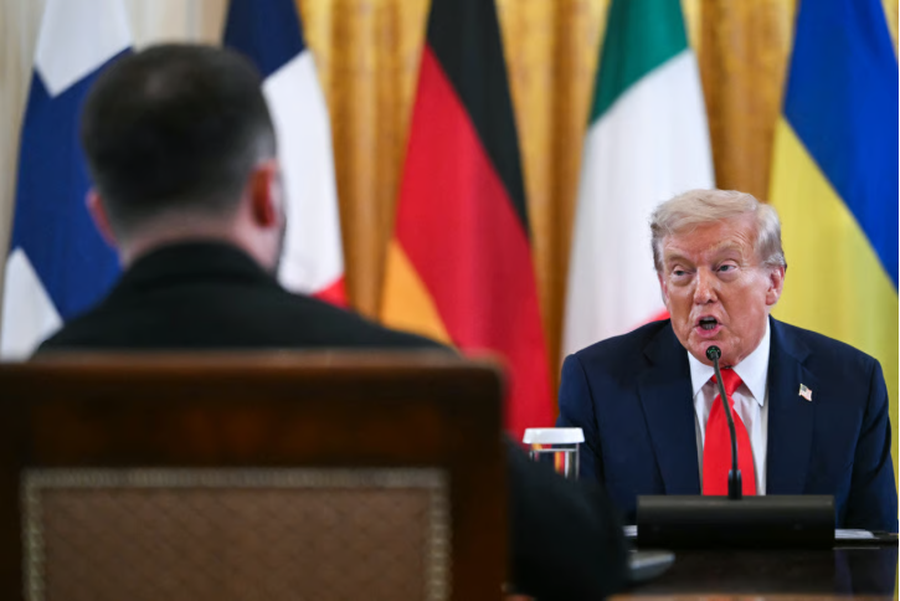
Vladimir Putin is focusing on a deal that would give him Ukraine's main defensive lines, just as Adolf Hitler secured Czechoslovakia's fortifications in 1938...
Handing over massive lines of fortifications to an expansionist neighbor bent on destroying your state tends to be a bad idea.
In 1938, the cession of the Sudetenland and its dense network of fortifications, forests and trenches led to the rapid decline of Czechoslovakia's ability to defend itself against Nazi Germany. There are fears in Europe that Kiev's ability to resist Russia will be similarly destroyed if Donald Trump, persuaded by Russian President Vladimir Putin, pressures Ukraine to surrender key defensive lines in its eastern Donbas region.
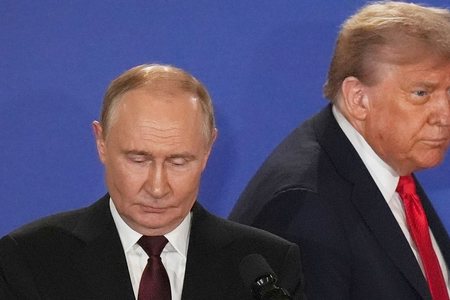
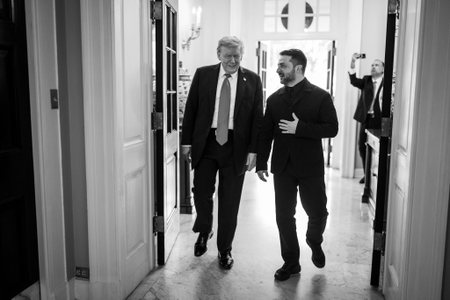
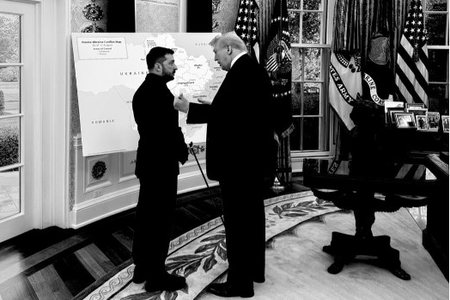
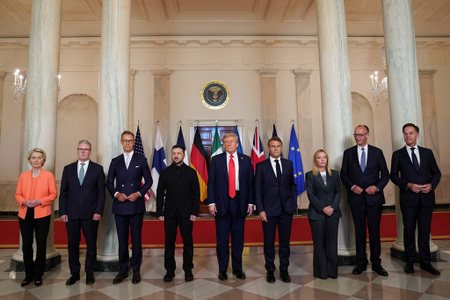
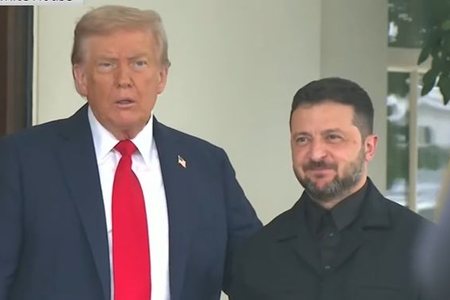
That risk was front and center for Volodymyr Zelensky as he met with Trump in Washington on Monday, following the US president’s meeting with Putin last week. While Trump may see part of Donbas as a “bone” to throw to Putin to secure a deal, Zelensky knows that such a concession would represent less of a peace agreement and more of a springboard for the Russians to strike further into the heart of Ukraine.
“It is essential that Europe does not turn this into another Munich or Yalta moment,” says Tomas Kopecky, the Czech government’s commissioner for the reconstruction of Ukraine, referring to the Western betrayal of the Czechs at the 1938 Munich summit and the sale of Central and Eastern Europe to Joseph Stalin at Yalta in 1945.
Trump said he believed Putin would agree to a peace deal that would end the war if Ukraine surrendered all of Donetsk and Luhansk provinces in the east; Russia occupies almost all of Luhansk and three-quarters of Donetsk.
"We will not leave Donbas. We cannot do this. Donbas for the Russians is a springboard for a new offensive in the future," Zelensky told reporters in Kiev last week.
Military analysts also warn that any concessions in Donbas could have devastating consequences on the battlefield.
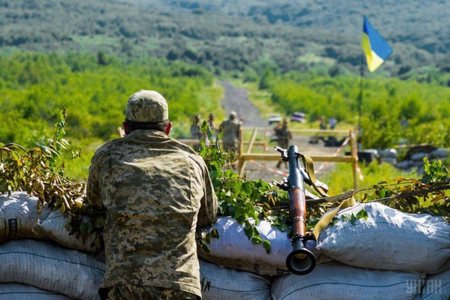
According to the Institute for the Study of War, the Kremlin is demanding that Ukraine surrender what Ukrainians call the "fortress belt," a defensive line based on heavily fortified towns running through hills, forests, and along rivers, which has served as the backbone of their defense since 2014.
"Ukraine has spent the last 11 years investing time, money and effort in strengthening the fortress belt and creating important industrial and defensive infrastructure in and around these cities," the institute said.
Nëse kjo ndodh, Rusia do ta zhvendosë vijën e saj të frontit afërsisht 80 kilometra më në perëndim, ndërsa Ukraina do të detyrohet të ndërtojë mbrojtje të reja në terren të sheshtë dhe të hapur në Kharkiv dhe Dnipropetrovsk fqinjë, shumë më të vështira për t'u mbajtur sesa qytetet e fortifikuara që kontrollon tani.
“Nëse sot largohemi nga Donbasi, nga fortifikimet tona, nga terreni ynë, nga lartësitë që kontrollojmë, padyshim që do të hapim një urë për përgatitjen e një ofensive nga rusët”, paralajmëroi Zelenskyy.
ISW është dakord. Një armëpushim sipas këtyre kushteve do t’i jepte Moskës “një pikënisje shumë më të favorshme për një ofensivë të ardhshme” dhe tregon “mosinteresimin e vazhdueshëm të Putinit në negociatat me mirëbesim”.
Ministria e Mbrojtjes e Mbretërisë së Bashkuar vlerësoi se do të duheshin mbi katër vjet luftime që i kushtuan Rusisë 1.9 milion ushtarë të vdekur dhe të plagosur për të pushtuar plotësisht katër rajonet që i aneksoi ilegalisht nga Ukraina.
Nuk është hera e parë që fuqitë e jashtme janë të gatshme të miratojnë një marrëveshje potencialisht të pafavorshme për të parandaluar një luftë.
Në shtator të vitit 1938, Adolf Hitleri argumentoi se dorëzimi i rajonit Sudetenland me shumicë etnike gjermane te Rajhu do të kënaqte ambiciet e tij dhe do t'i jepte fund kërcënimit të luftës në Evropë. Franca dhe Britania ranë dakord dhe e detyruan Pragën të pranonte. Hitleri, fjala e të cilit ishte po aq e besueshme sa ajo e Putinit, tha se nuk kishte ambicie të mëtejshme territoriale.
Çekosllovakia kishte kaluar disa vite duke ndërtuar mijëra bunkerë dhe fortesa në rajonin pyjor dhe malor, të pasuara nga një ushtri modern, e armatosur mirë, prej 1.2 milionë ushtarësh. Gjermania i mori të gjitha pa qëlluar asnjë të shtënë.
Në mars të vitit 1939, trupat gjermane pushtuan pjesën tjetër të vendit, ndërsa ushtria çeke nuk ishte në gjendje të bënte rezistencë.
Kievi synon Mynihun
Ukrainasit janë shumë të vetëdijshëm për atë që u ndodhi çekëve 87 vjet më parë.
“Pa garanci sigurie, ngrirja e luftës do të thotë një Mynih i dytë i vitit 1938”, paralajmëroi Olexiy Haran, profesor i politikës krahasuese në Akademinë Kombëtare të Universitetit Kiev-Mohyla, në një koment për Qendrën Federale të Edukimit Qytetar të Gjermanisë .
Kjo është një referencë për garancitë e supozuara të sigurisë për Kievin, të cilat negociatori i Trump për luftën në Ukrainë, zhvilluesi i pasurive të paluajtshme Steve Witkoff, ka thënë se janë të ngjashme me dispozitën e mbrojtjes së përbashkët të Nenit 5 të NATO-s, megjithëse Trump e ka përjashtuar vazhdimisht bashkimin e Ukrainës me aleancën shumë më të besueshme Atlantike.
Haran argued that “if we sign a ceasefire agreement or even hold elections without security guarantees, Putin could resume his aggression the very next day.” Such an agreement, he said, would “de facto recognize Russia’s control over Ukrainian territories for an indefinite period” and repeat the mistakes of 1938, when concessions to an aggressor only led to further escalation.
Yaroslav Hrytsak, a Ukrainian historian and professor at the Ukrainian Catholic University, warned that the danger goes beyond another Munich-style betrayal. “It’s also a Yalta moment,” he said.
There is also a human element to changing borders.
Europe has had a long history of this. During World War II, the Germans and Soviets carried out massive programs of ethnic cleansing on their captive populations. In 1945, millions of ethnic Germans were expelled from Czechoslovakia and Poland.
If Ukraine is forced to cede all of Donbas to Russia, Hrytsak argued, it would give Moscow the right to “decide the fate of the people living in the countries of the former Soviet bloc.” This would be done against the will of the local population, he added, “using only the status of the right of a large, powerful state to rule over smaller, weaker states.”
The postponement to Moscow
Diplomats and governments on NATO's eastern flank warn that Russia is trying to achieve through peace talks a strategic advantage it has not gained on the battlefield in 3 and a half years of bloody fighting that has cost it over a million casualties.
“Russia is likely aware that it currently does not have sufficient military capabilities to achieve its maximalist goals on the battlefield alone,” the Latvian intelligence agency wrote in its latest report. Instead, Moscow is “trying to force Ukraine to make concessions through various measures of influence.”
Yet, despite concerns that Trump will hand Ukraine over to Putin, there are notable differences between 2025 and 1938.
When the Sudetenland deal was reached, Czechoslovakia was not invited to the negotiating table. This time, Zelensky is in the White House talking to Trump, and he has made it clear that he wants a ceasefire based on the current front line between Ukrainian and Russian forces.
Some European officials remain cautiously optimistic that the US will not betray Europe.
Kopecky, the Czech special envoy for Ukraine, said he "doesn't see this happening," noting that Trump is talking to Zelensky and European allies.
“This is not what Munich and Yalta looked like,” he added. / Adapted from Politico /


Lini një Përgjigje