


 Shkruar nga Pamfleti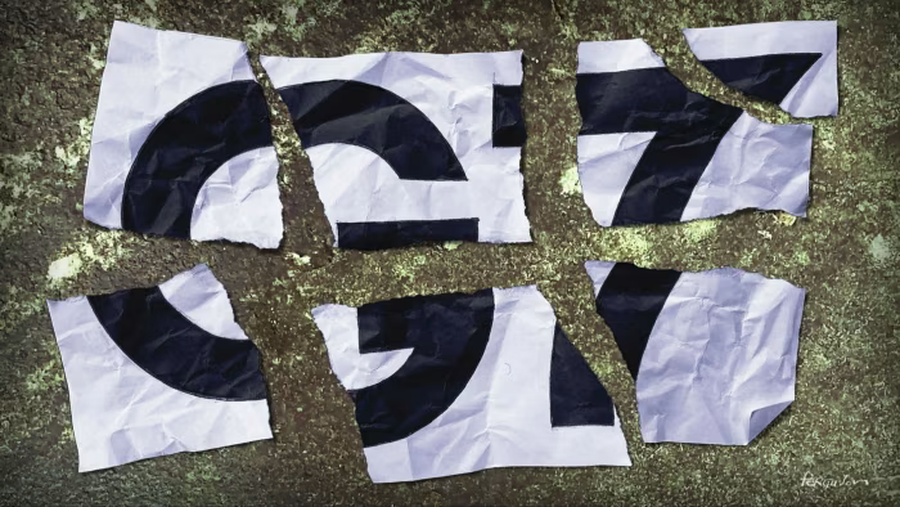
Most G7 governments are now so burdened with domestic political problems that they are incapable of running their own countries, let alone the free world.
The G7 is "the steering committee of the free world," according to Jake Sullivan, national security adviser to President Joe Biden. If so, the free world has a problem. Most G7 governments are now so burdened with domestic political problems that they are incapable of running their own countries – let alone the free world.
Consider the political situations in France, Germany, Canada, Japan and South Korea (the latter is not officially a member of the G7, but routinely attends summits). In France, the government recently collapsed after being unable to pass a budget. A new prime minister is in power, but will face the same problems. There is much speculation that Emmanuel Macron will step down as president before the planned end of his term in 2027.
Germany is heading for elections after the fall of the "traffic light" coalition led by Olaf Scholz. Japan's recent election saw the ruling Liberal Democratic Party lose its majority for the first time since 2009 - with another poll likely next year. In Canada, Justin Trudeau's nearly decade in power is coming to an undignified end. With his party trailing in the polls, the prime minister is under intense pressure to resign.
The pièce de résistance of democratic decline is South Korea, where President Yoon Suk Yeol's political position became so desperate that he declared martial law. Popular protests soon forced him to back down and led to his impeachment.
Outside of the US, the only two G7 countries that can claim to have a stable government are the UK and Italy. Britain's Prime Minister, Sir Keir Starmer, won a huge majority in this summer's election. But his poll ratings have since plummeted. In fact, Starmer is now more unpopular after five months in office than any UK prime minister in four decades. Only Italy's Giorgia Meloni can make a credible claim to be viewed favorably by her voters and the markets.
So what is the G7? As always, local context matters. In Japan, corruption scandals have weakened the LDP. Macron and Trudeau are both leaders who have lost their luster after many years in office.
But there also seem to be two big overarching factors that are making it very difficult for almost all G7 democracies to maintain stable governments. The first is the decline of the political center and the rise of populist parties. The second is a fiscal squeeze created by slow growth, aging societies, the pandemic, the 2008 financial crisis, and demands for increased defense spending.
Populism and fiscal problems are feeding each other and making governance increasingly difficult. France's government collapsed after trying to cut spending and raise taxes to combat a budget deficit of 6 percent of GDP. Since a large part of the French parliament is in the hands of the extreme left or the extreme right, it is extremely difficult to broker political compromises.
Starmer's large majority in Britain enabled his government to do what the French could not - raise taxes in an attempt to balance the balance sheets. But the tax hike has contributed to Labour's decline in popularity. The difficulty of finding money in hard times also played an important role in the political crises in Canada and Japan.
Donald Trump's return to the White House is likely to contribute to the atmosphere of political instability across the G7. Instead of trying to help the governments of his Democratic allies, Trump and his current favorite, Elon Musk, seem content to pile on the pain. Maga Republicans especially like the bait of center-left leaders like Trudeau, Scholz and Starmer.
Trump has gone out of his way to humiliate Trudeau, referring to Canada as America's 51st state and its prime minister as its "governor." Musk has made headlines across Europe by posting on X: "Only the AfD can save Germany." He has also held a well-publicized meeting with Nigel Farage, the leader of Britain's Reform - who made it clear he is hoping for Musk's financial backing.
Trump's Republicans no longer regard traditional conservatives in Europe as their sister parties. Kemi Badenoch, the leader of Britain's Conservatives, and Friedrich Merz, the leader of Germany's Christian Democrats, can only watch with dismay as Trump and Musk reach the country of the radical, nationalist right. Christian Lindner, the leader of the pro-business Free Democrats in war-torn Germany, made a plea to Elon, informing him that the AfD was an "extremist far-right party". Touchingly, he seemed to believe that would push Musk away.
Merz's CDU is currently well ahead of the AfD in the German election polls. But far-right and populist parties across the G7 already have a friend in the White House. Musk could help parties like AfD and Reforma with publicity and possibly money. But his support can also backfire at times. Nationalist parties like France's Rassemblement National have a strong anti-American tradition and will be wary of looking like the tools of wealthy foreigners.
Trump's interventions may not ensure that he can install ideological comrades around the rest of the G7. Instead, he could create a situation in which the leaders of many of America's closest allies will consider the American president not as a friend, but as a dangerous political enemy. / Adapted "Pamphlet" from "Financial Times" "




Lini një Përgjigje