


 Shkruar nga Pamfleti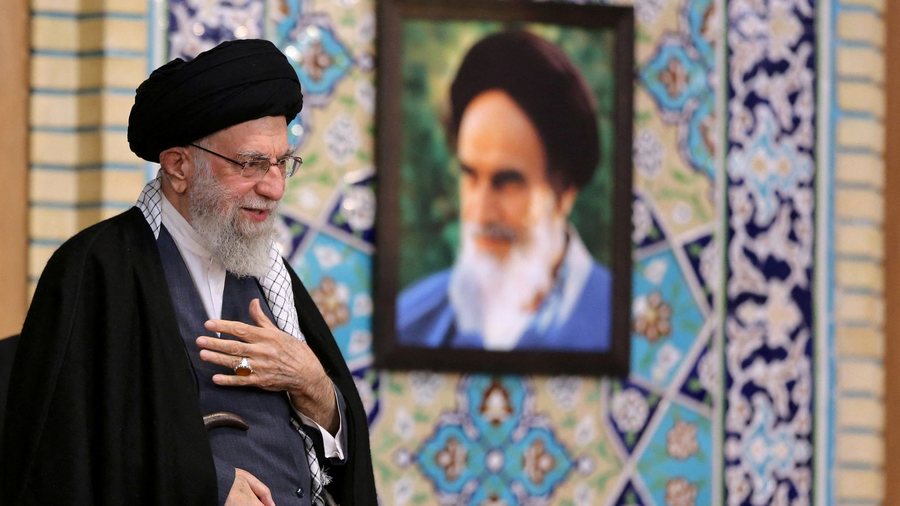
The dictatorship has so far survived thanks to a complex hybrid of religious, political and judicial power developed after the 1979 revolution to withstand pressure at home and abroad...
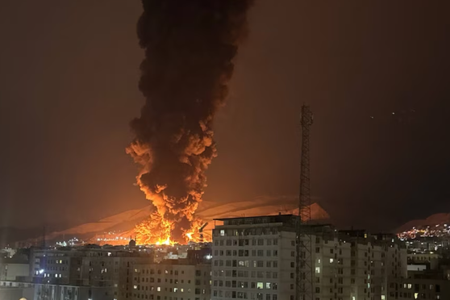
Nine days after the start of the war, the Iranian regime remains intact and, at least to some extent, in control of the country. Street protests have yet to materialize, no doubt as the opposition movement waits to see if the US will stay the course. A sudden withdrawal from Washington would leave the protesters exposed and at the mercy of any remaining state power.
Why, then, after the assassination of Supreme Leader Ali Khamenei on the first day of the conflict, has the regime not collapsed as happened with other dictatorships in Libya, Syria, and Iraq?
Its survival, so far, can be attributed to a complex hybrid governance structure developed after the 1979 revolution to withstand external or internal challenges. The system is deliberately designed to be larger than one man, meaning that if you kill the Supreme Leader, you don't kill the regime. Electricity is distributed across several institutions, most of which are still functional, almost. It is unlike any other government in the world.
-Supreme Leader
The Supreme Leader is the ultimate political and religious authority in the country, a role created after the 1979 revolution. He is a senior religious cleric, elected by the Assembly of Experts, an 88-person body, and appointed for life.
The Supreme Leader has a hand in everything: the head of intelligence, the military, and other sensitive roles must all be approved by him. There have only been two Supreme Leaders in the country's history: Ayatollah Ruhollah Khomeini and Ayatollah Ali Khamenei.
-Assembly of Experts
The Assembly of Experts is a group we will hear a lot about in the coming days. It is made up of 88 men, and its main role is to select and appoint the Supreme Leader. That is what they will try to do now, after the death of Ayatollah Ali Khamenei. In theory, they can also remove the Supreme Leader if he is deemed unfit, but in reality they rarely intervene.
-Council of Guardians
Under the leadership of the Supreme Leader, the Guardian Council is one of the most powerful institutions. It consists of 12 members: six Islamic clerics chosen by the Supreme Leader and six jurists appointed by parliament.
The Guardian Council reviews laws passed by parliament, ensures compliance with strict Islamic rule and can decide who runs for parliament, giving it vast power over Iranian politics.
-Judiciary
Headed by a Chief Justice appointed by the Supreme Leader, the judiciary is a formidable body in Iran. It not only oversees the courts and selects prosecutors, but also interprets the strict conservative Islamic law, giving it great influence over Iranian society.
-President
The president, currently Masoud Pezeshkian, is elected every four years and heads the government, appoints ministers and proposes the budget. Like parliamentarians, he must be approved by the Guardian Council.
-Adaptation Council
The role of the Council of Convenience is to advise the Supreme Leader. They can also resolve disputes between the parliament and the Guardian Council.
-Iranian Army
The Iranian army, known as the Artesh, has existed since the time when Iran was a monarchy. Its main role is to protect Iran's borders.
-Islamic Revolutionary Guard Corps
The IRGC was created after the 1979 revolution because Ayatollah Khomeini distrusted the Artesh, fearing they were loyal to the deposed Shah. They answer directly to the Supreme Leader and exist to safeguard the Islamic Republic. The IRGC grew in size and capabilities during the eight-year Iran-Iraq War that began in September 1980.
In addition to having a naval and air force branch, the IRGC controls the feared Basij militia, responsible for violently suppressing protest movements, and the Quds Force, the IRGC's international arm, which developed a network of proxies across the Middle East - including Hamas, Hezbollah and the Houthis.
The IRGC today is an extremely tough and brutal force. They are also wealthy and extremely influential in Iranian politics - it will be crucial to see what role they play in appointing the next Supreme Leader.
In the event of the death of the Supreme Leader, as is currently the case, the Chief Justice of the Supreme Court, the President and a member of the Guardian Council jointly and temporarily assume the duties of the Supreme Leader, although not in name./ SkyNews


NGA GJITHE KJO SKEME UNE SHQUJTA SI PARALELE ATE QE KA NDERTU AJETOLLAH EDVIN KRISTO RAMA QE I KA LEJU VETES TE EMEROJ MINISTRTAT, DREJTUESIN E SHERBIMIT SEKRET INFORMATIV SHISH, TE POLICISE, ATE TE DOGANAVE, TE TATIM-TAKSAVE, DREJTUESIT E TE GJITHA INSTITUCIONEVE ETJ. MADJE TE KOMANDOJE DHE PARLAMENTIN E SUNDUAR ME SHUMICE VOTASH NGA EUNUKET E PARTISE SE TIJ QE DREJTON. LUS QE PAS SHKERMOQJES SE ALI KHAMENEIT JARABI I VJEN FUNDI DHE KETIJ AJATOLLAHUT TONE EDVIN KRISTO RAMA.