


 Shkruar nga Fabrizio Dragosei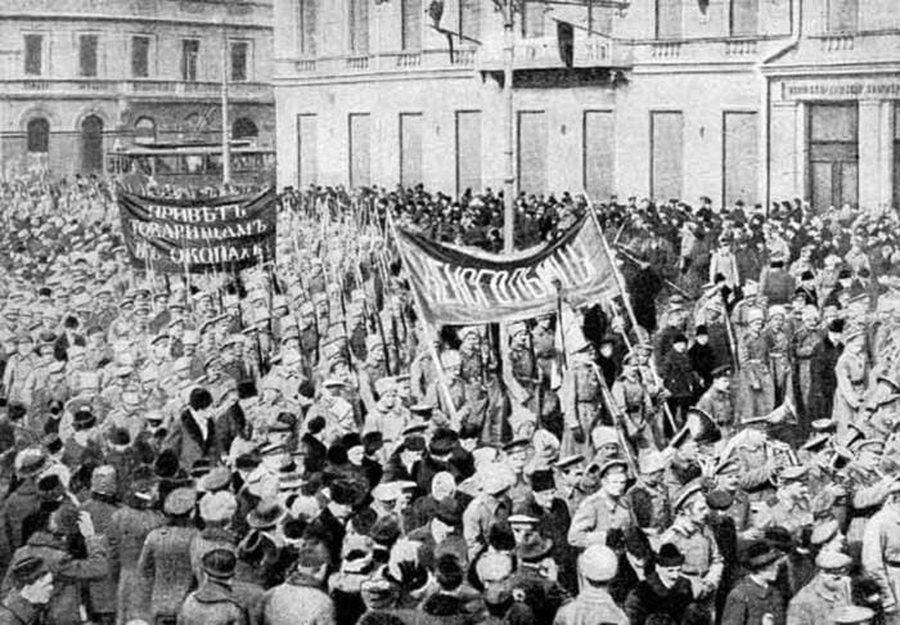
Even in the Soviet era, the state found itself facing very dire situations on various occasions. In 1921 it was the sailors of the Kronstadt garrison, in the Baltic, who rebelled against the Bolshevik government and started very violent clashes, which were resolved only after bloody fighting...
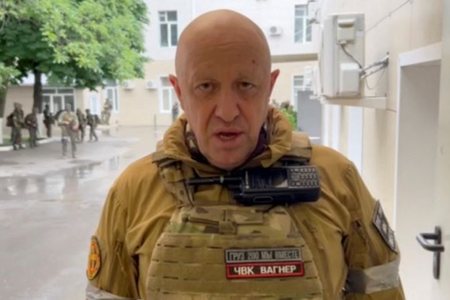
Vladimir Putin called Prigozhin a terrorist and recalled the events of 1917, when the Bolsheviks, he said, stabbed the army fighting in the First World War in the back.
The head of the Russian state, however, did not say a fact of that time, where the revolutionaries were successful only because they were able to exploit the great discontent that existed at the front and at home, due to the military failures and incompetence of the Moscow generals. Practically the same accusations that Prigozhin, often supported by ultra-nationalist military bloggers, has been advancing for months and which are really the origin of his current revolt.
As in other cases, faced with sudden and very serious crises, Putin waited a few hours before intervening. This happened in August 2000, for example, when the Kursk submarine disappeared at the bottom of the sea.
Then this morning he went on TV and seemed to want to repeat the 1999 scenario against Chechen "terrorists" who had attacked part of Russian territory. In military jargon, he then said that he would follow them to the end of the world and kill them. Thus he won the hearts of the Russians who in 2000 confirmed him in a plebiscite as president, a position he had taken from Boris Yeltsin on December 21, 1999, when he resigned.
Today the head of the Kremlin used more measured, presidential tones, but he made it clear that he would use his usual inflexibility that the spectators like so much.
Even from his words, it became clear that the current crisis is one of the most serious crises in Russian and Soviet history of the last century. Certainly the most difficult since Vladimir Vladimirovich has been in power. His predecessor Boris Yeltsin had to face a very serious challenge in October 1993, when the Supreme Soviet of the newly formed Russian Federation rebelled against him. The leaders of the rebellion barricaded themselves in the White House, the building in Moscow where the Parliament (Supreme Soviet) was located.
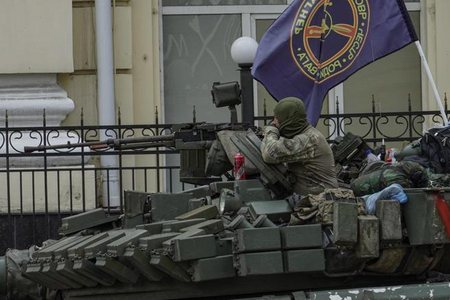
Yeltsin solved the problem by sending tanks and from the river bank they attacked the building with cannon fire. Then special forces tracked down the rebels. Two years earlier, in August 1991, the integrity of the state had been called into question by the coup d'état attempted by the conservative Communist Party against Mikhail Gorbachev, president of the USSR and General Secretary of the party. The putschists included the head of the KGB, the minister of the interior and the minister of defense and therefore could count on the entire apparatus of "force" of the USSR. But they moved very badly and did not count on Yeltsin himself, who had the Muscovites with him and stopped the coup d'état.
Even in the Soviet era, the state found itself facing very dire situations on various occasions. In 1921 it was the sailors of the Kronstadt garrison, on the Baltic, who rebelled against the Bolshevik government and started very violent clashes, which were resolved only after bloody fighting. In 1962, with Nikita Khrushchev in power, it was the workers of Novocherkassk, in the Rostov region, who organized a strike and peaceful demonstrations (unheard of in Stalin's USSR). Moscow chose the path of brutal repression, sending in the army and KGB special forces who used machine guns against the crowd. / Adapted "Pamphlet" from "Corriere della Sera"


Lini një Përgjigje