


 Shkruar nga Pamfleti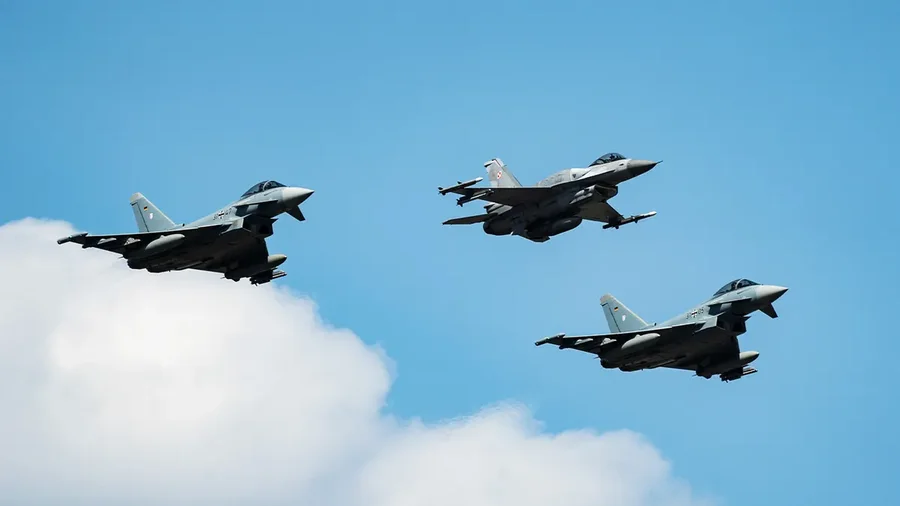
Air raids are testing NATO's will to resist...
On September 10, NATO suffered its worst violation of its airspace since its founding more than 75 years ago, when 19 Russian drones penetrated Polish skies. The alliance’s secretary general, Mark Rutte, called the response “a great success,” noting that Italian tanker aircraft and German Patriot batteries were involved in the operation.
However, Polish and Dutch aircraft managed to shoot down only a small number of them. Three days later, on September 13, Romania reported that another Russian drone had entered its airspace. On the same day, President Donald Trump played down this test of NATO’s credibility, declaring that the conflict in Ukraine “is not Trump’s war.” This raises the big question: is NATO capable of defending its skies from the Kremlin?
The alliance's air defense consists of several layers. The first task is to detect threats. NATO has a fleet of 14 AEWC aircraft based in Germany, capable of monitoring Russian aircraft, drones and missiles as far as the airspace of Ukraine and Belarus. They are supplemented by RQ-4D Phoenix drones, which launch from US bases in Sicily and carry out long-range missions at high altitudes. Poland has also signed a contract worth about $1 billion to buy US aerostats with advanced radar and identification systems, while US forces are testing acoustic sensors to detect the sounds of approaching drones. A second layer of defense consists of fighter jets deployed on the eastern flank.
In rotation, Italy, Spain and Hungary patrol the Baltic states, Italy also over Romania, while the Netherlands and Norway keep watch over Poland. Precisely for this purpose, Emmanuel Macron announced on September 11 the sending of three Rafale aircraft to Poland. The third layer consists of ground-based air defense systems. The Eastern European countries have their own radars and weapons, but they are reinforced with the Patriot systems of the US and Germany, capable of stopping aircraft, cruise missiles or ballistic missiles. Germany has already deployed them in Poland, while the Netherlands and other countries intend to do the same. In addition to them, the US and European allies also operate warships with radars and long-range interceptors, as well as ground-based radars in Romania and Poland.
All these systems are partly linked into an integrated network called IAMD (Integrated Air and Missile Defence), which is commanded by NATO’s air headquarters in Ramstein, Germany, under the direction of an American general. Below in the hierarchy, two combined air operations centres cover NATO space: one in Germany for northern Europe and another in Spain for the south. On paper this seems like a powerful shield, but the reality is different. A large part of the modern systems have been sent to Ukraine, leaving gaps on the continent. Germany, under pressure from Trump, agreed to send two more Patriot systems to Kiev, while a Swiss order was also redirected there. Rutte has admitted that NATO needs to increase its air defence capabilities by 400% to cover Europe.
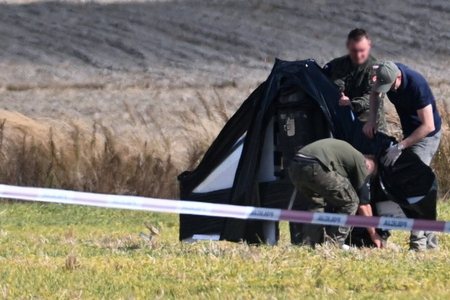
Another problem is the nature of the Russian attacks themselves. Many of the drones are small and cheap, often made of Styrofoam and designed as decoys, making them almost invisible to radar. Violations of NATO airspace have been recorded several times: debris in Romania in September 2023, missiles that passed over Poland in March 2024, a drone that was shot down in Latvia in September 2024, and several other incidents this month. In one case, a missile that fell in Poland was accidentally found by a woman riding a horse months after the incident. Poland says that on September 10 it shot down only drones carrying warheads, ignoring the majority that were decoys. Moreover, using Patriot missiles to shoot down drones is disproportionately costly and unsustainable. European countries have yet to develop short-range anti-drone systems with lasers, cannons or small missiles on a large scale, leaving them unprepared for the type of war being waged in Ukraine.
In addition to the technical problems, there is also a political dilemma. The defense of European skies depends on the US, which under Trump is shifting its focus to other theaters. Although European air forces have hundreds of aircraft on standby, the chain of command remains dependent on American expertise. Trump downplayed the incident, saying: “It could have been a mistake.” Ukraine has often criticized NATO for deliberately downplaying some violations to avoid escalation. Recently, Poland changed course, openly declaring that the latest attack was intentional by Russia, which constitutes a significant turn of events.
However, European states remain reluctant to follow the model of Israel, which, with the help of the US and its allies, has intercepted massive waves of Iranian drones before they entered its airspace and has carried out preemptive strikes across the border. Under current NATO rules, the alliance cannot shoot down projects over the airspace of Belarus or Ukraine without unanimous approval from its 32 members – something that Hungary and Slovakia are likely to block. In the event of a major conflict, these rules would certainly change. But for now, Europe remains on the defensive and uncertain. / Adapted from “Pamphlet” by “The Economis”





Lini një Përgjigje