


 Shkruar nga Pamfleti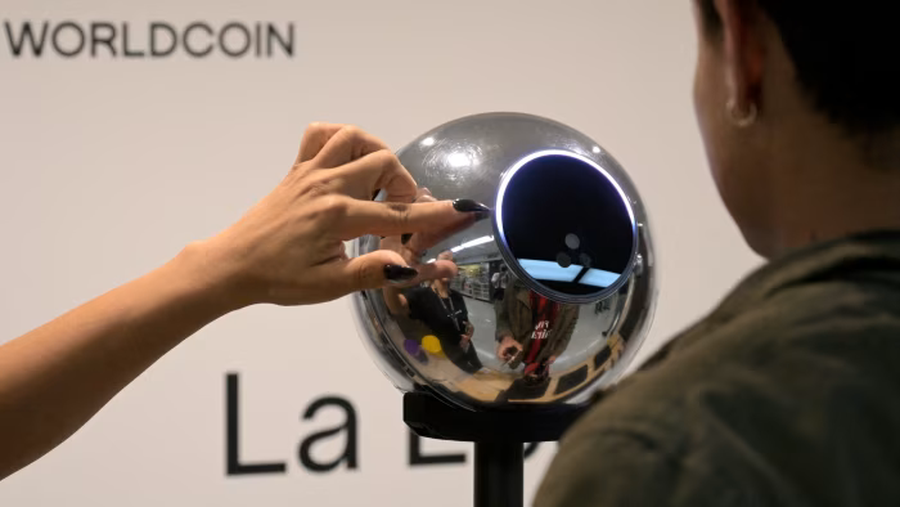
Sam Altman's digital ID project "World" has launched in the US, bringing controversial iris scanning technology and cryptocurrency to the country, as Donald Trump's administration embraces the digital asset sector.
The group aims to make the US its primary market after the product first launches abroad in 2023, in part due to the Joe Biden administration’s more hostile approach to crypto. Altman, who is also the CEO of $300 billion artificial intelligence company OpenAI, lamented at the time that his company, which recently rebranded from “Worldcoin” to “World,” was “the world without American currency.”
Since then, Trump has vowed to make America the "cryptocurrency capital of the planet."
Announcing the US launch during an event in San Francisco on Wednesday evening, Altman said:
"I'm very proud to be an American. I think America should lead innovation, not fight it."
He added that the 'World' technology was "a way to ensure that people remain central and special in a world where the internet is full of AI-generated content."
“There were very good reasons why we initially focused on making the product work worldwide before coming to the United States. Some of them have to do with regulatory changes,” said Adrian Ludwig, lead architect at Tools for Humanity, the lead developer behind the 'World' project.
Altman and Alex Blania founded Tools for Humanity in 2019. So far, it has raised about $200 million from well-known investors like Andreessen Horowitz, Khosla Ventures, LinkedIn co-founder Reid Hoffman, as well as FTX founder Sam Bankman-Fried, who was sentenced to 25 years in prison for fraud last year.
Altman and Blania argue that a reliable method for distinguishing humans from computers is essential as AI becomes increasingly advanced.
World makes spherical eye-scanning devices called “orbs,” which generate unique IDs that can be used to access the Worldcoin token. The devices are about the size of a basketball, but World is working on smaller, handheld models and aims to integrate the technology directly into computer cameras or mobile devices in the future.
The group aims to build up to 10,000 orbs for the US market within the next 12 months, about five times the current global supply. According to Ludwig, a new factory is currently being built in Richardson, Texas, to assemble the devices.
The launch of advanced AI models that can accurately mimic human interaction has opened up real-world applications for World's technology and made the company's mission more understandable and less like science fiction.
These patterns have paved the way for sophisticated fraud, phishing schemes and online manipulation. On Wednesday, the World announced a partnership with online dating company Match Group to verify users of apps like Tinder. Ludwig said the technology could also be used in government and community services.
He added that the technology could also increase trust and security in social networks. OpenAI, which is said to be developing its own social network, could be a future partner, although Ludwig stressed that World's technology could also be used by competitors such as Elon Musk's X or Meta.
World has yet to turn a profit and has faced opposition in several countries over security and privacy concerns. Last year, the group was banned by Spain's data protection authority, which raised concerns that the company was collecting personal data from minors. It has also faced bans, investigations or fines in Portugal, Hong Kong, South Korea and France.
Ludwig said World, which offers eye scans in about 20 countries, ensures that all biometric data is anonymous.
He predicted that within “about 18 months, we will start to see the costs of operating the network start to be covered by the tariffs that are generated by it.”/ Financial Times







Lini një Përgjigje