


 Shkruar nga Pamfleti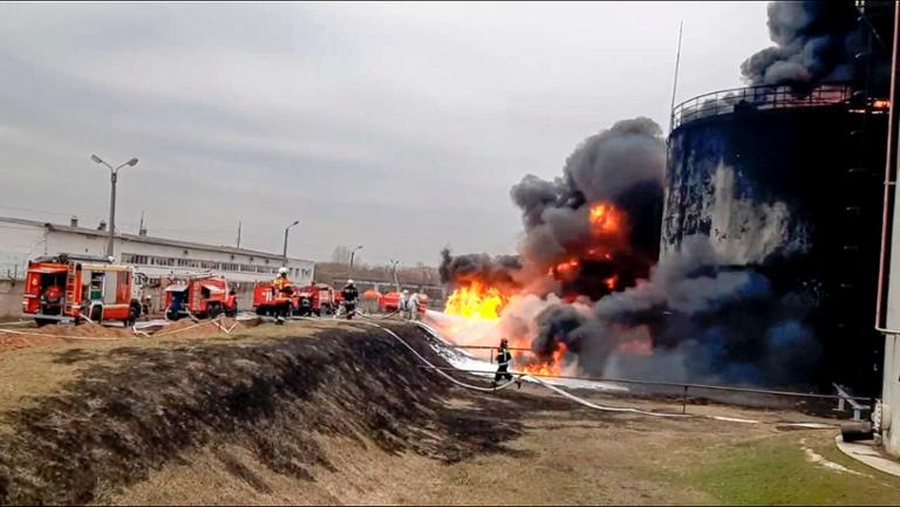
Black smoke over Yaroslavl, empty gas stations and desperate drivers: Kiev is hitting Putin where it hurts most, in the war chest
Russia’s war funding is faltering: The black smoke rising from the burning oil refinery in Yaroslavl symbolizes the scale of the country’s economic crisis. Systematic Ukrainian drone attacks on the oil industry are forcing the Kremlin to drastically increase taxes. Figures from the research group Energy Aspects, which they shared with the Financial Times, speak volumes: 16 of Russia’s 38 oil refineries have been hit by Ukrainian drones since August, including one of the country’s largest fuel processing plants in Ryazan near Moscow.
The attacks disrupted more than a million barrels per day of Russia’s refining capacity, the research group reported. Oil exports are set to fall to their lowest monthly level since 2020 in September, according to tracking firms OilX and Vortexa, according to the Financial Times. As a result, Russia has imposed a ban on fuel exports until the end of the year because gas stations across the country are empty, CNN reported.
"It seems to be the most effective campaign that Ukraine has undertaken so far," explains Benedict George, head of European oil product pricing at Argus. Russia is the world's second-largest oil exporter, with about half of its cargoes going to Turkey.
Turkey has already turned to India and Saudi Arabia to fill the supply gap.

According to DPA, the Russian budget deficit had grown to 43 billion euros by August alone. To cover the huge war costs, the government now has to raise the value-added tax from 20 to 22 percent, a violation of Putin's promise to keep taxes unchanged until 2030.
According to the Finance Ministry in Moscow, the tax increase aims to provide 180 billion euros out of total annual revenues of 411 billion euros, while 40 percent of all government spending already goes to defense and security.
The reaction among the Russian population is clear. "People didn't plan for this. And this is worse than VAT itself," complains the owner of a small IT business anonymously. An increasing number of Russian regions, including the occupied territories, are suffering from gasoline shortages, while wholesale prices have risen by more than 40 percent since January.
Oil prices have risen this month to around $25 to $30 a barrel above Brent crude, the highest level since the summer, when Israel’s war with Iran sent prices to a 15-month high. According to the Kyiv Independent, US President Donald Trump called on the EU to completely ban Russian energy imports and accused NATO countries of “funding a war against themselves.” Uncertainty about oil and crude oil supplies is supporting prices at a time when many analysts had predicted a price decline.
The impact of the attacks on the markets took its time, given Russia's size, explains Amrita Sen of Energy Aspects.
Western sanctions are making repairs significantly more difficult, as it takes about three weeks for a refinery to produce and for oil to arrive at the port. Securing spare parts and equipment from China is becoming increasingly difficult. Ukrainian President Volodymyr Zelensky has highlighted the success of the strategy.
The most effective sanctions are fires at Russia's oil refineries, its terminals, and oil depots.
Ukrainian drones continue to attack Russia. They fly about 1,400 kilometers and also hit the Gazprom Neftekhim Salavat oil refinery in Bashkortostan.
Governor Mikhail Yevrayev, however, refuses to confirm the fire in Yaroslavl, saying that "no drone attack was detected today."
The cloud of smoke over the Russian economy tells a different story. /Adapted from Pamphlet by Fr.de/





Lini një Përgjigje