


 Shkruar nga James H.Armstead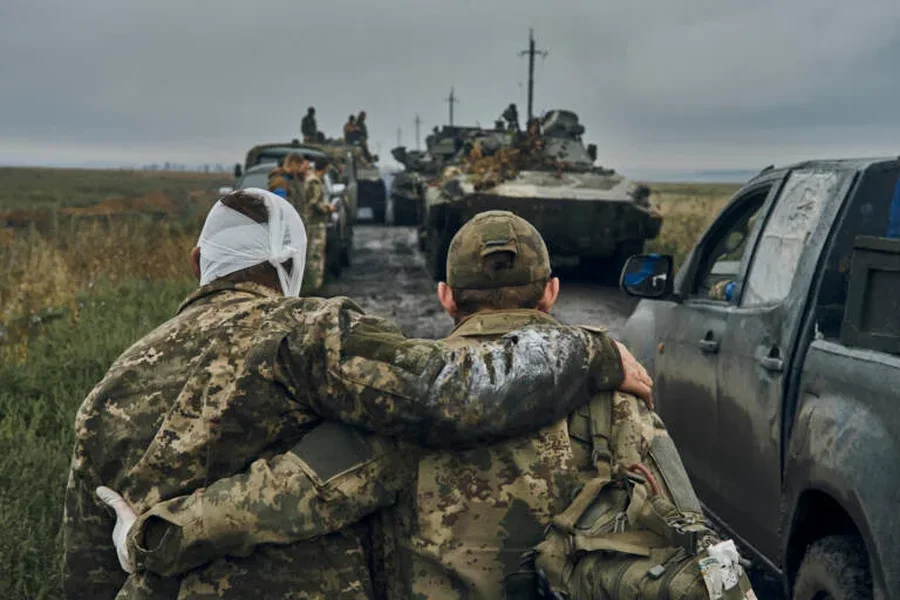
The valuable lessons that history teaches us...
Eighty years ago, World War II ended in Europe. With the unconditional surrender of the Axis powers, the war was over, Hitler was dead, and the guns fell silent. American General Dwight D. Eisenhower, Supreme Allied Commander Europe, sent a simple message to the Allied governments: “The mission of this Allied Force was accomplished on 7 May 1945, at 3 a.m. local time.”
With this brief declaration, combat operations on the old continent ended. The next day in Karlshorst, Berlin, General Field Marshal Wilhelm Keitel, Chief of Staff of the German army, the Wehrmacht, signed a somewhat redacted document of capitulation.
Nearly 80 million human beings had died in a war that had cost over $4 trillion, the most destructive conflict in human history. It was truly a monumental event in human history.
As difficult as that great effort had been to accomplish, it paled in comparison to achieving a lasting and effective peace between the warring parties and later between the former allies.
But we succeeded: “A harsh and bitter peace,” JFK called it. From the ashes of the most destructive conflict in human history, we created a new world order, based on the concepts of collective defense, and by establishing international courts to provide legal responses to disputes between states, as well as to punish war criminals.
We also created international economic forums to deal with currency, trade, and post-colonial change. Perhaps most importantly, we created the United Nations as a permanent forum to address cooperation, develop consensus, facilitate planning, and foster understanding among the world community.
Although our interactions after 1945 led to the Cold War, I would argue that a great-power conflict was avoided, or at least degraded to something less than a thermonuclear war, a scenario that would have brought unimaginable destruction.
Although our differences simmered beneath the surface in that bitter 50-year standoff, nuclear war was successfully avoided. Western nations have twice attempted to create a long-term (and sustainable) international order after previous large-scale conflicts.
The Treaties of Vienna (1814-1815) and Versailles (1919) were credible, if flawed, efforts. Both were weakened and thwarted by the rising forces of absolutism, mercantilism, and nationalism.
While the widespread, though not universal, growth of liberal democracy focused modern political energy, we must recognize that our new world order, from which the rule of law is a logical consequence, saw our allies in Europe develop into a new super-confederation with parliaments, common legal declarations, and human rights courts, which could perhaps serve as a model for other regions of the world.
While no act of political trickery can eliminate long-standing disputes, a model for resolving disputes based on shared interest, peaceful conflict resolution, and equitable resource allocation is an initial step toward addressing our many conflicts in a truly rules-based order.
While I am not necessarily suggesting a copying of the evolution of the Common Market in the European Union as a single model, I would say that it is an immediate example of our human civilization progressing into the modern era.
Since the Seven Years' War, Europe has been at the center of world conflict. The competition of colonial empires, modern leadership in technology, and rapid industrialization placed Europe in an unenviable position to start a global conflict.
From 1756 to 1990, major, all-encompassing global conflict was the exclusive domain of European capitals. Effective solutions to the persistent and damaging problems of modern political competition can therefore be examined from a pan-European perspective.
Future historians may take a long-term view and identify the thread that connects a transnational political regime between Vienna-Versailles-Brussels, evolving over 3 centuries as developmental stages towards the post-modern era of political development.
Yes, Europe can be considered the region "responsible" for the problematic elements of the modern political order. But perhaps within it, there also lies a core of solutions and hope for the future.
A group of smaller states have joined with traditional great powers in a confederal body, supported by law, without the expansion of earlier times or the hegemony of more modern eras. The light at the end of the darkness, may be a sunrise. / Adapted from "Pamphlet" by the "Center for European Policy Analysis"
*Note: James Armstead, professor at the U.S. Naval War College



Lini një Përgjigje