


 Shkruar nga Pamfleti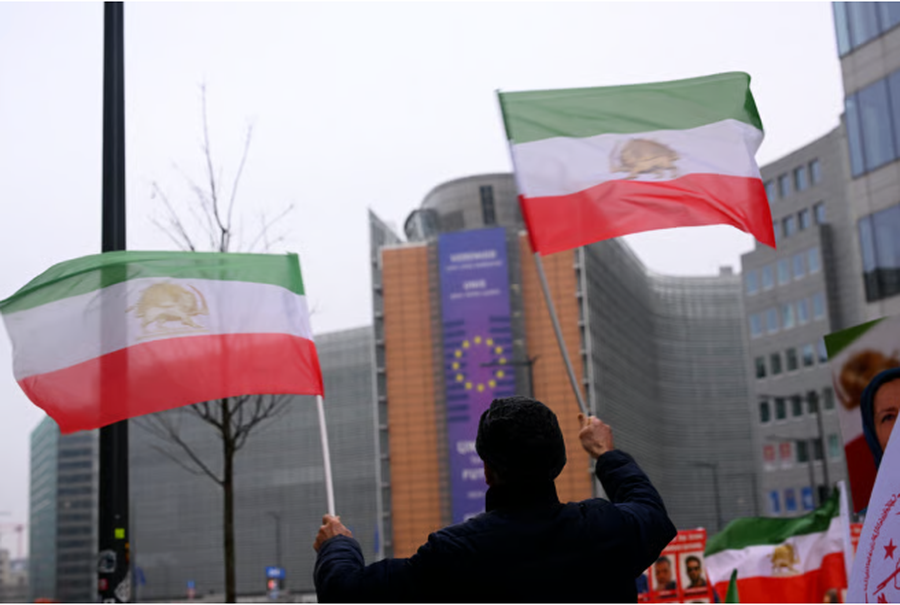
As more and more capitals joined the initiative, the pressure on France increased significantly...
The European Union's decision to designate Iran's notorious paramilitary force a terrorist organization was the result of a political recalculation by several European governments, where the need to respond to Tehran's brutal repression outweighed diplomatic risks.
For weeks, a group of major EU capitals, led by France and, until recently, Italy and Spain, had warned that inclusion on the blacklist would destroy the little diplomatic influence Europe still had over Iran, increase the risk of retaliation against European citizens and complicate negotiations on the nuclear program.
This stance began to waver as soon as the Iranian regime lifted its internet blockade and shocking images of Islamic Revolutionary Guard Corps violence against protesters began to circulate. By Wednesday afternoon, the capitals supporting the resolution, including Berlin, had managed to detach Italy and Spain from France, leaving Paris increasingly isolated.
“While there was an internet blockade, the situation was not clear. But when the atrocities became visible, it became clear that Europe had to react strongly ,” said the EU’s top diplomat, Kaja Kallas, when asked by POLITICO what had changed the positions of capitals.
The President of the European Parliament, Roberta Metsola, also stressed that the images of the regime's continued violence made European action necessary.
"The horrific images that came out of Iran demanded a response ," she told POLITICO.
French Foreign Minister Jean-Noël Barrot acknowledged that Paris had reconsidered its position due to the unwavering courage of the Iranians, who have been the target of this violence. As more and more capitals joined the initiative, the pressure on France increased significantly.
" They did not want to be the only ones blocking the decision and supporting such a regime. The political and moral cost became too high ," said a European Parliament official.
Domino effect
Dutch Foreign Minister David van Weel told POLITICO that the release of new video evidence of killings and violence by regime forces had crossed a “red line” for many member states. The Netherlands has been among the strongest supporters of designating the Revolutionary Guards as a terrorist organization.
Italy was the first to publicly announce the change of position. Foreign Minister Antonio Tajani said on Monday that the loss of civilian lives during the protests required “a clear response.”
An EU diplomat, from a country that had pushed for the Guard's inclusion on the list ahead of a meeting of foreign ministers in Brussels, said the images of parents searching for their children in body bags were particularly shocking and had played a decisive role, along with reports of tens of thousands of casualties.
On Wednesday afternoon, Spain also signaled a change of stance, telling POLITICO that it supported the designation, which places the Revolutionary Guard in the same category as al-Qaeda, Hamas and ISIS.
The last resistance remained Paris.
French officials had argued that including such a large organization, with over 100,000 members, on the terrorist list would significantly limit opportunities for dialogue on nuclear non-proliferation and other issues, as many of Europe's interlocutors are linked to the Revolutionary Guard.
France, along with Germany and the United Kingdom, is part of the E3 group negotiating with Iran on the nuclear issue. Although the E3 had recently activated sanctions on Tehran for its lack of cooperation with the International Atomic Energy Agency, Paris still hoped for a diplomatic solution.
According to a European diplomat, keeping the Revolutionary Guard off the terrorist list preserved the possibility that the E3 could play a role if nuclear negotiations resumed.
Another factor was the fate of two French citizens, Cécile Kohler and Jacques Paris, recently released from the notorious Evin prison and currently under house arrest at the French Embassy in Tehran.
However, without the support of allies, Paris gave up the opposition. Barrot declared that the deaths of thousands of protesters could not "go without consequences."
The United States, which designated the Revolutionary Guard a terrorist organization in 2019, had also pressured the EU to follow suit. A French presidency official acknowledged that Paris had had “many exchanges” with the Americans on Iran.
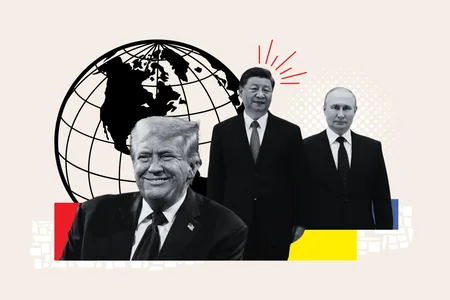
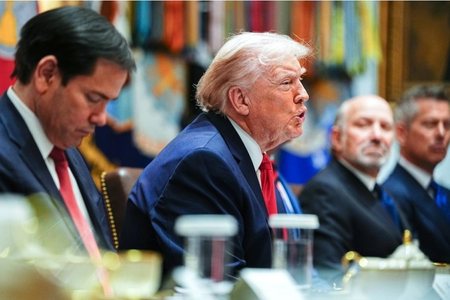
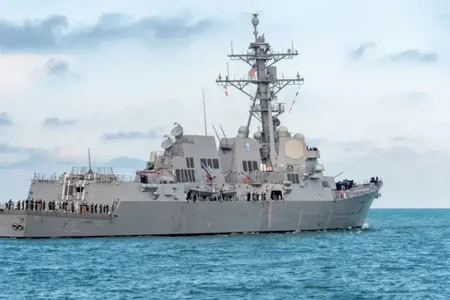
US President Donald Trump warned on Wednesday that "time is running out" for the Iranian regime and that a "massive armada" was moving "with speed, force and determination" towards the region. /Adapted from "Pamphlet" by "Politico"




Lini një Përgjigje