


 Shkruar nga Nick Malkoutzis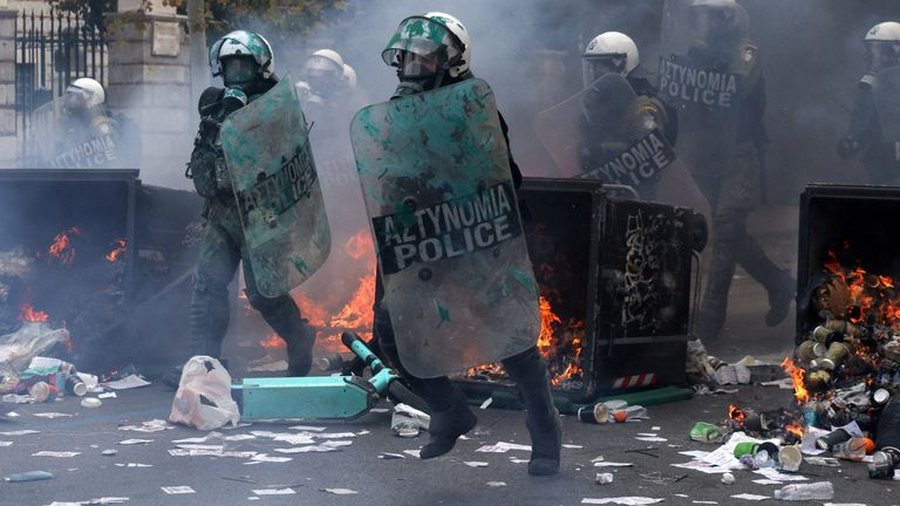
Opinion polls show that three-quarters of Greeks believe the government is involved in hiding the truth...
University students from across the country and hundreds of thousands of other citizens protested in the streets and squares of Greece on Friday. The mass protests were held on the second anniversary of the serious train accident in Tempi in central Greece, which killed 57 people.
It was the worst disaster of its kind in Greece, and a moment that shocked the nation. But what followed has compounded the human tragedy and precipitated a political crisis. The accident occurred when a passenger train traveling from Athens to Thessaloniki derailed on the same tracks as a freight train traveling in the opposite direction.
Although the fatal error appears to have been committed by an employee with minimal training, the collision was not solely due to human error. It was the result of a systemic failure. Because the investigation found that the signaling on the stretch of line in question was not working, a remote monitoring and safety system had not been installed, and communication was problematic.
So it's clear that this is not the normal railway system of a European Union member state in the 21st century. And it's understandable why the Greeks were looking for answers. Why was the railway system, partially privatized during the debt crisis, in such a dilapidated state?
Why was an EU-funded scheme to install an automatic protection system, linked to the European Train Control System (ETCS), not completed even though it was several years after it was scheduled to be put into operation? Who was responsible for this chaos?
The failures that led to the terrible Tempe accident date back many years, and are not the sole responsibility of the current administration, or even of any government.
But the fact that the accident occurred months before parliamentary elections prompted Prime Minister Kyriakos Mitsotakis to act in a way that would protect his New Democracy party from taking any blame.
The government immediately exaggerated the role of “human error” and downplayed any other shortcomings in the system. Authorities intervened at the crash site only days after the accident, clearing the carriages and the charred ground before a full forensic investigation could be conducted.
Mitsotakis also immediately ruled out the possibility that the freight train had been carrying any flammable cargo, even though the collision between the two electric trains caused a large explosion and fire, which some experts believe may have caused most of the deaths.
Ndërkaq konservatorët në pushtet, bënë çmos që të mbyllej sa më parë një hetim parlamentar mbi aksidentin. Gjatë 2 viteve të fundit nuk është dënuar askush, dhe veprimet e dyshimta të autoriteteve janë sfiduar nga partitë opozitare, por më ashpër nga familjarët e 57 viktimave.
Të udhëhequr nga Maria Karystianou, e cila humbi në aksident vajzën e saj 20-vjeçare, ata janë mbështetur tek puna e ekspertëve të pavarur për të ngritur pikëpyetje rreth asaj që ndodhi. Si për shembull, nëse në bordin e trenit të mallrave kishte një ngarkesë kimikatesh të paregjistruar zyrtarisht.
Sondazhet e opinionit tregojnë se treçereku i grekëve, besojnë se qeveria është e përfshirë në fshehjen e të vërtetës. Ndërsa familjarët e viktimave, kanë tërhequr vëmendjen mbi mangësitë e dukshme në mënyrën se si funksiononte hekurudha greke, dhe se si është kryer hetimi i aksidentit, ata kanë konstatuar se edhe publiku mendon njëlloj si ata.
Po sondazhet tregojnë gjithashtu se shumica e grekëve, nuk i besojnë sistemit të tyre gjyqësor. Zemërimi mbi aksidentin dhe mënyra se si u trajtua, kulmoi në ato që ishin ndoshta protestat më të mëdha në Greqi në më shumë se një dekadë që u mbajtën në të gjithë vendin më 26 janar. Demonstratat e 28 shkurtit ishin akoma më të mëdha. Në dallim nga skandalet e tjera të kohëve të fundit, ai i Tempit është një nga ato, ku në një farë mënyre grekët u ndjenë të prekur drejtpërdrejt. Sepse shumica e familjeve në Greqi, kanë të afërm apo njohin dikë që e përdor linjën hekurudhore Athinë-Selanik, e cila është mënyra më e lirë për të udhëtuar midis dy qyteteve kryesore të vendit.
Pastaj ndikoi edhe fakti që shumë nga viktimat ishin të rinj, kryesisht studentë. Ndërkohë ka qenë jetik roli i familjeve të viktimave në ndërgjegjësimin dhe mbajtjen në fokus të debatit publik të kësaj çështje. Dhe kjo e ka bërë më të vështirë për ata që janë në pushtet, që ta cilësojnë atë si një mosmarrëveshje politike.
Dimensioni jo politik, ishte një faktor kryesor në pjesëmarrjen masive në mitingjet e 26 janarit por edhe të premten. Kjo krizë është gjithashtu unike, edhe sa i përket mënyrës se si Mitsotakis e ka gjetur veten direkt në syrin e ciklonit. Gjatë krizave të mëparshme, qeveria ka qenë në gjendje të krijonte një mur mbrojtës efektiv rreth kryeministrit.
Por këtë herë, ai është i pambrojtshëm nga akuzat. Njollosja e imazhit të Mitsotakis është domethënës, sepse popullariteti vazhdimisht i lartë i kryeministrit, ka qenë një jelek shpëtimi për qeverinë e Demokracisë së Re, që u ringjit në pushtet në vitin 2019.
Vlerësimet dhe reputacioni i tij i fortë e mbrojti dhe kundër atyre në krahun e djathtë të partisë, që e shihnin me dyshim për shkak të prirjeve të tij liberale. Nëse Mitsotakis nis të bëhet një udhëheqës jopopullor, partia e tij humbet policën e saj të sigurimit, dhe ai e humbet kordonin e tij të sigurisë.
In fact, it seems that the “Tempi” issue has already begun to cause major damage to the government’s image, as well as the prime minister’s popularity. A ProRata poll published on February 25 shows that support for New Democracy has fallen from 25.5 percent in December to 22.5 percent now. The poll found that justice and transparency are currently considered the second most important issue by Greek voters, after inflation. For now, Mistotakis is helped by the fact that the main opposition party has not gained ground. The ProRata poll shows that since December, support for PASOK has fallen by one point, to 15 percent.
Her efforts to hold the government and the judiciary accountable have been ignored by a public angry at the traditional parties. In these circumstances, the parties that have benefited most from this fiery anger are those that consider themselves anti-establishment. On the far right, the ultra-nationalist Greek Solution party has increased its support by 3 percentage points, reaching 11 percent.
Meanwhile, the other nationalist party, Voice of Reason, has increased from 4 to 6 percent. On the far left, Freedom Course, a populist force, has doubled its support, reaching 9 percent. There is a risk that Tempi could radicalize some voters in Greece, especially young Greeks.
They have seen many of their peers killed on a normal train journey, on a substandard rail network, and followed by what they perceive as a cover-up. These events have likely left them with the impression that they live in a country that doesn't care much about their present or future.
Failure to address this perception would be a grave mistake. / Adapted from “Pamphlet” by “International Politics and Society”







Lini një Përgjigje