


 Shkruar nga Pamfleti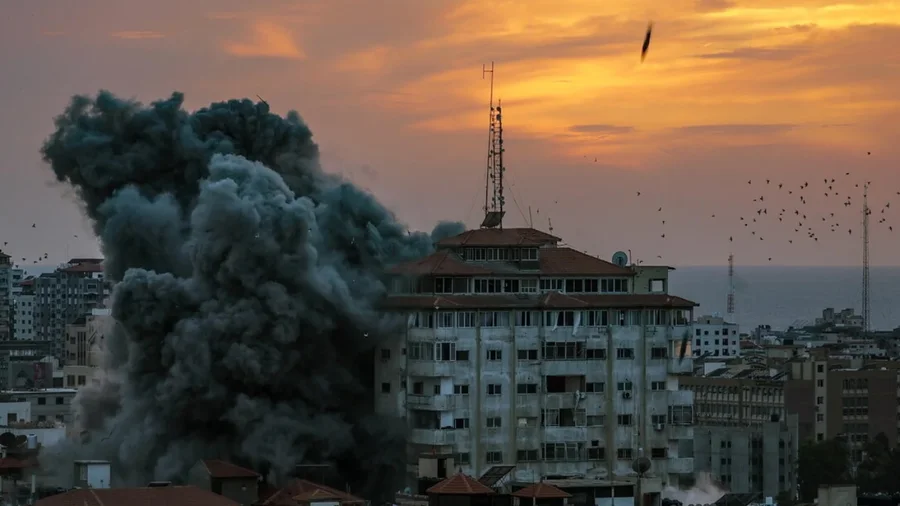
Russia and China both aspire to a role in Middle East peacemaking, neither has much power or credibility to take it. The European Union may position itself as an honest mediator, but it is not taken seriously...
Trying to plan for the future, world leaders are looking to the past.
"When this crisis is over, there should be a vision of what comes next, and in our view it should be a two-state solution," said Joe Biden, America's president, in one of his many public statements. for nearly a month-long war in Gaza. Rishi Sunak, the British Prime Minister, has made similar comments; so does Emmanuel Macron, the French president. An emergency meeting of the Arab League last month ended with a call for "serious negotiations" towards a two-state solution.
When Israel pulled out of Gaza in 2005, uprooting some 8,000 Jewish settlers from a territory it had controlled since 1967, no one knew exactly what to make of the decision. Some hoped that Israel's willingness to release occupied territory would be a trend, a step toward a final settlement with the Palestinians. Others saw a sly ploy: relinquishing control of Gaza could help Israel tighten its grip on the West Bank. The last view turned out to be correct.
Similar confusion has emerged since October 7, when Israel began planning a ground invasion of Gaza after Hamas, the Islamist militant group that controls the territory, massacred 1,400 Israelis. Palestinians fear the war will lead to a second catastrophe, citing the mass displacement that accompanied Israel's birth in 1948. Far-right Israeli ministers hope it will offer a chance to regain control of Gaza and rebuilt the disbanded Jewish settlements. Some hopeful types, Mr. Biden among them, hope it will offer a chance to revive the comatose Israeli-Palestinian peace process.
For now, this is a distant dream: Israeli generals expect months of fighting. But both they and many foreign powers hope to eventually transfer control of Gaza to the Palestinian Authority, which governs parts of the West Bank, possibly with a peacekeeping force brought in to help the transition. And they doubt that Mahmoud Abbas, the Palestinian president, would return to Gaza without a guarantee of meaningful talks on Palestinian statehood.
In other words, any plan for "tomorrow" in Gaza must consider the possibility of a two-state solution. The broad outline hasn't changed much in decades. A Palestinian state would be formed in Gaza and the West Bank; Israel would exchange parts of its territory with parts of the West Bank where it has built large settlements. Jerusalem would be divided, with some sort of shared control over the old city. A small number of Palestinian refugees may return to Israel, while the rest will be resettled either in Palestine or in their current homes elsewhere. Israel would expect a Palestinian state to be demilitarized.
After two decades of serious talks – from the hopeful era of the Oslo accords in the early 1990s, through a failed effort under Barack Obama – the peace process stalled in 2014. There have been no serious negotiations since.
Negotiators cannot pick up where they left off. At the end of 2021, there were 465,400 Israeli settlers living in the West Bank, up from 116,300 when the Oslo accords were signed in 1993. They are a growing obstacle to peace. Most are concentrated in areas that would probably be given to Israel in a deal, but their political power (they would oppose giving up land they don't even live on) has grown along with their population.
Context is everything
The regional picture is also more complicated. In 2002, the Arab League approved a Saudi proposal promising Israel normal relations with Arab countries after a two-state solution: by ending its conflict with the Palestinians, Israel could end all its regional conflicts. The Arab Peace Initiative was meant to be a powerful stimulus. Israel may be more willing to take the boots off the Palestinians if it thinks other threats will then disappear.
But the region has changed since 2002. Some armies, from Hezbollah in Lebanon to the Houthis in Yemen, are now more powerful than the states they call home. It would not be enough for Arab governments to end their conflicts with Israel: non-state actors would also have to agree to do so.
Other things may be easier. A two-state solution would be costly. Even before the war, the Palestinians would have expected help to rehabilitate Gaza; the bill will be much higher now. At the failed Camp David summit in 2000, negotiators discussed a $30 billion fund to compensate Palestinian refugees for lost property. Gulf states such as Saudi Arabia and the United Arab Emirates (UAE), which have strengthened ties with Israel in recent years, may be more willing to pony up the cash to show they have not abandoned the Palestinians.
Problemi më i madh, megjithatë, nuk mbeten detajet e një zgjidhjeje, por vullneti politik për të negociuar dhe zbatuar një të tillë. Nuk do të ketë asnjë proces serioz paqeje me koalicionin e politikanëve të ekstremit të djathtë dhe fetar të Binyamin Netanyahu. Ky koalicion nuk ka gjasa të mbijetojë shumë kohë pas luftës së Gazës, dhe kundërshtarët e Netanyahut shpresojnë se qeveria e ardhshme do të jetë më e përshtatshme për bisedimet me palestinezët. “Ne morëm një mësim që duhet të ndahemi prej tyre në një mënyrë të mirë,” thotë një ligjvënës izraelit i qendrës. “Është koha për të filluar atë diskutim.” Por politikanët izraelitë nga qendra dhe e majta e kanë shmangur këtë çështje në publik për më shumë se një dekadë.
Në anën palestineze, Hamasi ka qenë gjithmonë i etur për të luajtur spoiler. Sulmet e para vetëvrasëse të saj në vitet 1990 ndihmuan në prishjen e procesit të Oslos dhe masakra që shkaktoi gjatë intifadës së dytë (“kryengritjes”) nga viti 2000 deri në 2005 e ktheu një brez izraelitësh kundër idesë së kompromisit. Ndoshta Hamasi do të zhduket pas luftës në Gaza, por një grup tjetër mund të zërë vendin e tij.
Njerëzit e zakonshëm nga të dyja palët kanë humbur besimin në zgjidhjen me dy shtete. Një sondazh në shtator 2022 nga Instituti i Demokracisë së Izraelit, një institut kërkimor jopartiak, zbuloi se vetëm 32% e hebrenjve izraelitë do të mbështesnin një të tillë, nga 47% pesë vjet më parë. Arabët izraelitë, të cilët përbëjnë një të pestën e popullsisë, ende e mbështesin idenë, megjithëse mbështetja e tyre gjithashtu ka rënë, nga 87% në 2017 në 71% në 2022. Një shumicë hebrenjsh izraelitë preferuan status quo-në.
Mbështetja ka rënë edhe më tej në mesin e palestinezëve. Një sondazh në qershor 2023 nga Qendra Palestineze për Kërkimin e Politikave dhe Anketave zbuloi se vetëm 28% ende mbështesin një zgjidhje me dy shtete. Rreth 53% e tyre e mbështetën idenë dhjetë vjet më parë, megjithëse vetëm 39% e menduan atë të realizueshme.
Optimistët shpresojnë që këto rezultate të jenë të mprehta: njerëzit nuk kanë gjasa të mbështesin diçka që ata e mendojnë të pamundur. Një proces kuptimplotë paqeje mund të rrisë shifrat e anketave. “Unë nuk mendoj se populli ynë do të refuzonte një shans për t’i dhënë fund okupimit,” thotë një ish-ministër palestinez. Por ngjarjet e javëve të fundit mund të forcojnë të dyja palët kundër idesë së kompromisit.
Si gjithmonë në Izrael, disa nga mbështetësit më të fortë të përfundimit të okupimit janë njerëzit e ngarkuar me drejtimin e tij. Pas sulmit të Hamasit, pak izraelitë po flasin publikisht për zgjidhjen me dy shtete – ose ndonjë zgjidhje tjetër për konfliktin. Por zyrtarët e mbrojtjes po e diskutojnë atë në dhoma të mbyllura. Kjo është pjesërisht për shkak se gjendja e dëshiruar përfundimtare e luftës do të formësojë vetë luftën dhe sepse qeveria Netanyahu është e paaftë të zhvillojë një debat serioz mbi strategjinë afatgjatë të Izraelit.
Then there is the question of who will play mediator. Although Russia and China both aspire to a role in Middle East peacemaking, neither has much power or credibility to take it. The European Union may position itself as an honest mediator, but it is not taken seriously.
This leaves America. Mr. Biden spent the first three years of his presidency trying to ignore the conflict. He will have other things on his mind in 2024 – and neither the Israelis nor the Palestinians are likely to start a peace process with a president who may soon be gone. If Mr. Biden wins in 2024, he may try to lead the effort.
Donald Trump would be a different story. In January 2020, after years of chasing a supposedly serious peace plan drawn up by Jared Kushner, his son-in-law, he finally unveiled it. The plan, almost laughably biased in favor of Israel, was dead on arrival. This would have given the Palestinians only 75% of the occupied West Bank, in three cantons connected by highways. Israel would have kept the Jordan Valley, the breadbasket of the territory, and would compensate the Palestinians for their loss by ceding parts of the barren Negev desert. The capital of Palestine would have been limited to a few poor suburbs of east Jerusalem. The Palestinians, surprisingly, refused to even discuss the proposal. /The Economist




Lini një Përgjigje