


 Shkruar nga Pamfleti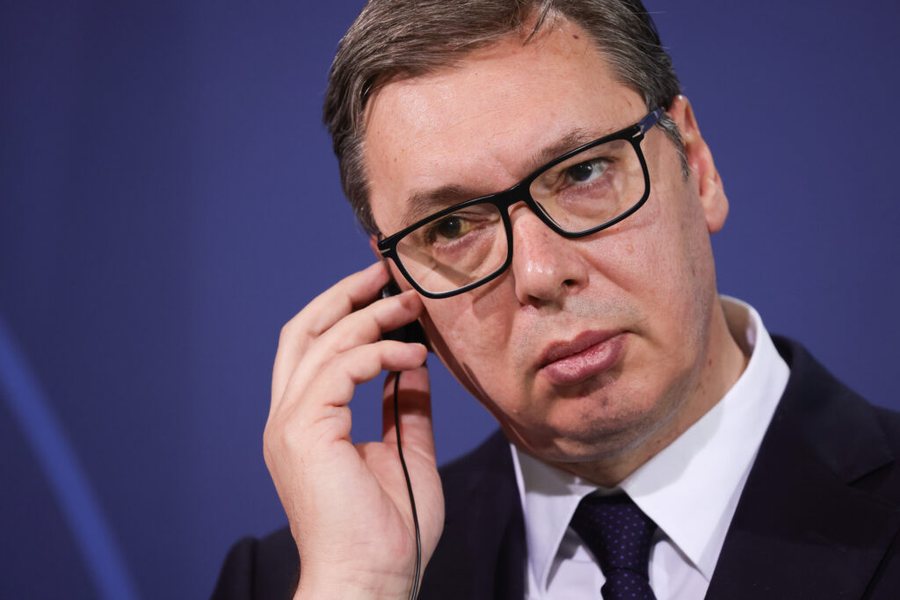
However, the article says that the December 17 elections in Serbia were far from being the "cleanest and most honest" in the history of this country, as Vučić considered them. This is because the OSCE had a different position.
The British newspaper "The Guardian" has dedicated an editorial to the situation after the elections in Serbia and the position of the president of this country, Aleksandar Vucic, in relation to the neighbors.
In this article, the British newspaper says that the winning party of the elections is that of President Vucic, SNS, which it says is wrongly called the Progressive Party.
However, the article says that the December 17 elections in Serbia were far from being the "cleanest and most honest" in the history of this country, as Vučić considered them. This is because the OSCE had a different position.
" The December 17 election, said a statement from his international observer team, was conducted under 'unfair conditions', marred by "bias in the media, pressure on public sector workers and misuse of public resources. Cases of intimidation and "serious irregularities" including vote buying and ballot box stuffing were noted. Other accusations have been made that Bosnian Serbs were bussed en masse to vote fraudulently in Belgrade," writes "The Guardian".
The newspaper further says that the violation of democratic norms and the rule of law in Serbia has gradually accelerated since the SNS took power over a decade ago – "a textual process of state capture overseen by the president since 2017." .
Vucic , an autocratic nationalist whose political instincts were forged in the Milosevic era, also uses his power and influence to foment discord in the Western Balkans, where ethnic Serb secessionist campaigns are backed by Belgrade. But the ambition to draw Serbia into the EU's orbit – and away from Russian influence has softened Western criticism to a compromising degree, especially since the invasion of Ukraine .
It also says that the softening approach of the West towards Vucic may end soon.
He then mentions warnings of renewed regional conflict which he says promise to force a tougher line in Brussels and Washington.
In November, Mr Vučić ominously predicted that 2024 would bring "a lot more conflict and turmoil" in both Kosovo and Republika Srpska - the ethnic Serb entity in Bosnia and Herzegovina . In the latter, Bosnian Serb separatist leader Milorad Dodik has threatened to tear up the 1995 Dayton peace accords in the name of Serbian national unity. In Kosovo - whose independence Belgrade continues to refuse to recognize - serious outbreaks of conflict in the ethnic Serb north have raised fears of a future secession attempt," writes "The Guardian" in this editorial.
Hopes that the prospect of EU membership will persuade the Serbian government to adhere to democratic norms in the country, and to refrain from undermining neighboring states, "The Guardian" says, have turned out to be unfounded.
"But the strategic goal of isolating Russia - also unfulfilled - means that the West continues to allow Mr. Vučić a lot of space to pursue his authoritarian, ethno-nationalist agenda," says the editorial team of this British medium.
But the paper says the EU can put pressure on Serbia "if it wants to", as it is one of the main investors in Serbia's growing economy.
"So far, it has chosen not to do this, through an understandable fear - like that of the Joe Biden administration - to leave the Balkans even more open to the influence of Moscow and Beijing. But as he gets even deeper into the EU's eastern backyard, treating Mr. Vučić as some kind of troublemaker who will eventually get better doesn't work," the Guardian concludes.




Lini një Përgjigje