


 Shkruar nga Pamfleti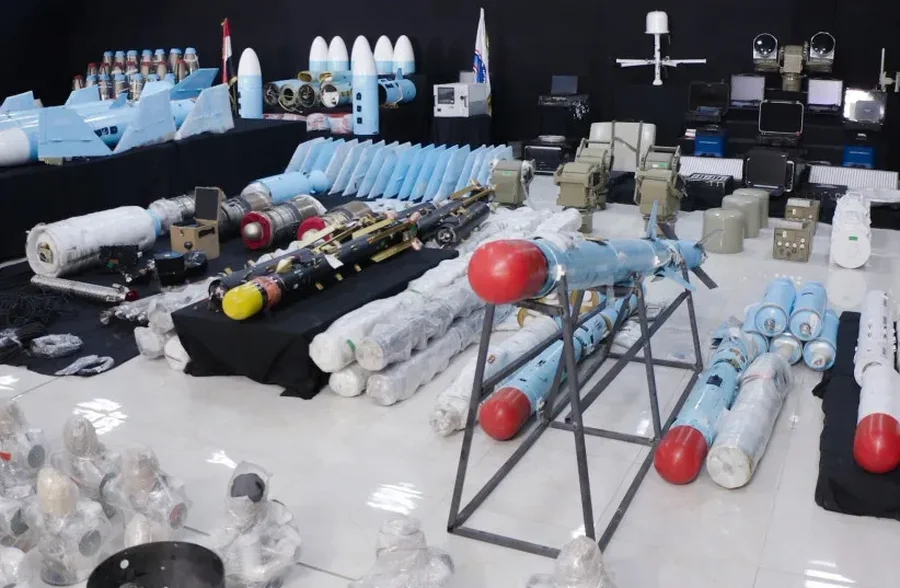
A large, well-equipped army, ready to deploy, could solve this problem once and for all. This army has 480,000 active-duty soldiers and another 325,000 reservists. It has an annual budget of about $70 billion, a large fleet of advanced attack aircraft, nearly 1,000 tanks, and thousands of armored personnel carriers. It's Israel, right? No...
There is a Middle Eastern army that can crush Yemen’s Houthi terrorists, stopping their deadly attacks on vital shipping lanes in the Red Sea and their rocket attacks on Israel. The Houthis are far more dangerous than a single ballistic missile launch that sets off air raid sirens and Israeli anti-missile systems, sending millions of people into bomb shelters in the middle of the night.
Most important is the disruption of global shipping by Houthi missile attacks on ships in the Red Sea. Last month, Houthi terrorists sank two ships, killed several sailors, and took others captive. In response, carriers are sending their ships on a long route around Africa, bypassing Egypt’s Suez Canal and Israel’s port of Eilat, adding millions to shipping costs, not to mention the time it takes.
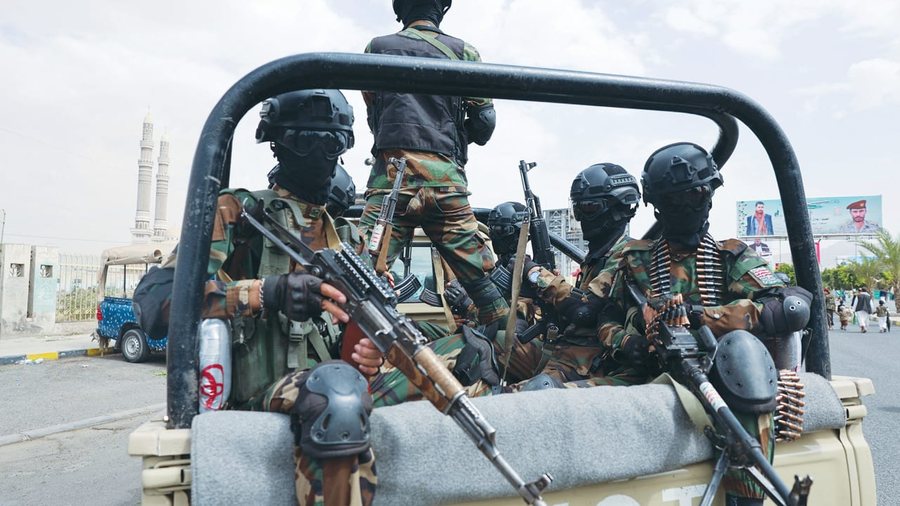
All this because of a band of violent extremists backed by Iran, with no more than 20,000 armed fighters, occupying half of their country, the half that controls the Bab el-Mandeb Strait at the bottom of the Red Sea.
Despite a ceasefire with the US, the Houthis continue their attacks on cargo ships in the Red Sea, as well as their rocket attacks on Israel, which is not covered by the flawed US ceasefire. In response, Israel has carried out dozens of airstrikes on targets in the Houthi-controlled part of Yemen, blowing up seaports and military installations.
But air strikes are only the first step. Ground troops are needed. A large, well-equipped army, ready to deploy, can solve this problem once and for all. This army has 480,000 active-duty soldiers and another 325,000 reservists. It has an annual budget of about $70 billion, a large fleet of advanced attack aircraft, nearly 1,000 tanks, and thousands of armored personnel carriers.
It's Israel, right? No, it's Saudi Arabia next to Yemen.
Saudi Arabia has about 4 times the population of Israel, almost three times the defense budget of Israel, three times the number of regular army soldiers, and almost as many reservists. That doesn't mean it has a better army than Israel's, but it is bigger. Big enough for the tasks at hand.
We usually only hear about the Saudi military when the US announces its latest multi-billion dollar arms deal with the kingdom, and Israel and its backers stand up and scream. But after all, all that advanced military equipment is there and ready to be used if Saudi Arabia has the motivation to use it. Saudi Arabia has already fought the Houthis once. Cross-border fighting broke out in 2009 and has continued on and off for a decade.
The Houthis fired missiles into Saudi Arabia, including one that hit the main airport, and the Saudis sent some forces into Yemen to root out the Iranian-backed terrorists. The Saudis withdrew, tails crossed, after a ceasefire agreement in 2018. The defeat was not due to a lack of firepower. The Saudi failure reflected a lack of commitment.
So what has changed? What would motivate the Saudis to try again and get fully involved this time?
Enough: Iran, Saudi Arabia’s arch-enemy, has been significantly weakened in its wars against Israel, losing its proxies in Lebanon and Gaza and suffering a humiliating defeat from Israeli and American airstrikes on its homeland. In parallel, a new axis is forming in the Middle East, complicating the old picture of Saudi-led Sunni Muslims against Iranian-led Shiites. Turkey is playing as a regional power alongside Iran. Turkey is a once-secular Sunni nation led into extreme Islamism by its president, Recep Tayyip Erdogan. This presents both a danger and an opportunity for Saudi Arabia and its far-sighted leader, Mohammed bin Salman.
Iran's continued support for terrorist groups
On the one hand, Iran continues to arm the Houthis, while the Turkey-Iran axis poses a threat to Saudi Arabia’s other front. On the other, it is a chance for MBS, as the Saudi crown prince is known, to assert Saudi leadership in the region in response to the new axis. Why would he do that? Why not just sit back and watch the potential threats that may or may not explode in his face?
Since he can, MBS wants to have influence. And that's where Israel comes into play.
For Saudi Arabia to take a positive regional stance, MBS must agree to join the historic Abraham Accords, peace agreements between Israel and several Arab nations close to Saudi Arabia. This would create a coalition as a clear leader in the region. For this to happen, the war in Gaza must end. Given the potential benefits to Israel of a moderate Saudi-led Arab force replacing the Iranian terrorist front, ending the war should be Israel’s top priority rather than the unattainable “total victory” and endless and fruitless hostage “negotiations” with Hamas terrorists, who have no interest in letting the Israelis out of the international mudslide they have caused.
A price for Saudi involvement would be a “political horizon” for the Palestinians, a signpost towards a Palestinian state. The current Israeli leadership would never agree to this, although the Palestinians have repeatedly proven that they do not want a state that lives in peace with Israel. They want a state that lives in peace without Israel. So this horizon is so far away that even the Hubble Space Telescope could not discern it.
A moderate coalition, led by Saudi Arabia, could take on the rehabilitation of Gaza and the control of terrorists. This could even lead to a permanent solution between Israel and the Palestinians, imposed by the coalition, hopefully with Israeli cooperation. The first step in this process would be to eliminate the Houthi threat and reunite Yemen under Saudi protection. Not bad for a first step. /Adapted from The Jerusalem Post Pamphlet/




Lini një Përgjigje