


 Shkruar nga Pamfleti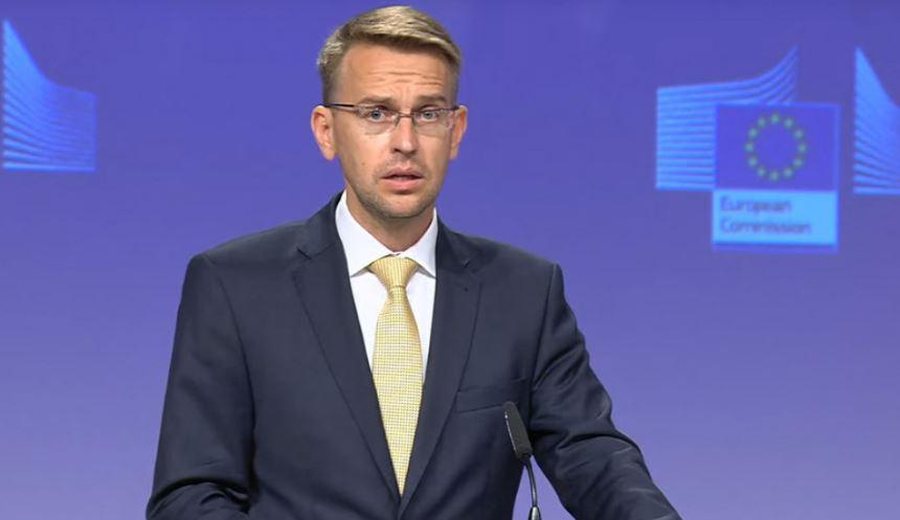
Yesterday, parliamentary elections were held in Montenegro. The EU has chosen not to speak about the event, until the electoral observation mission of this institution has a report on them.
The spokesperson of the EU, Peter Stano, has stated that the Union will not enter into debates or calculations about who should form the new Government in Podgorica, as according to him, this is an internal issue of Montenegro.
"Montenegro is a very important partner and candidate for EU membership. As the high representative of the EU for foreign policy and security, Josep Borrell, said after the meeting with the President of Montenegro, Jakov Millatovic, Montenegro is the most advanced candidate state and for this we have followed with attention to the elections", said Stano.
Asked what the consequences could be for Montenegro, if there is a pro-Russian party in the new executive and the country changes its foreign policy course, Stano said that he does not want to speculate, but expects that Montenegro continue with full alignment with the EU's foreign and security policy.
"Let's focus on facts and not speculations about what could happen. We calculate that the same course will continue to be maintained and this also means the continuation of full adaptation to the EU's foreign policy. Montenegro has a long history of 100 percent alignment with EU foreign policy. We expect this to continue. We know that this also comes at a price, because this way the country becomes the target of hybrid attacks and attempts to intervene from outside", said Stano.
He added that Brussels expects Podgorica to continue fulfilling the criteria arising from the EU enlargement process, especially in the area of the rule of law.
We remind you that the Europe Now movement won the elections in Montenegro, with 26 percent of the votes, followed by the pro-European Democratic and Socialist party with 23.8 percent of the votes. The conservative Alliance for the Future of Montenegro, led by the pro-Serbian and pro-Russian Democratic Front, won 14.7 percent of the vote. Meanwhile, the other pro-EU coalition, which includes the Democratic Party and the URA Movement of outgoing Prime Minister Dritan Abazovic, came in fourth place with 12.3% of the vote.



Lini një Përgjigje