


 Shkruar nga Pamfleti
In the name of "cleansing the administration," the government is directly intervening in local government, turning decentralization into a farce and Albania into a republic of directors, a model that distances the country from Europe and brings it closer to autocracy...
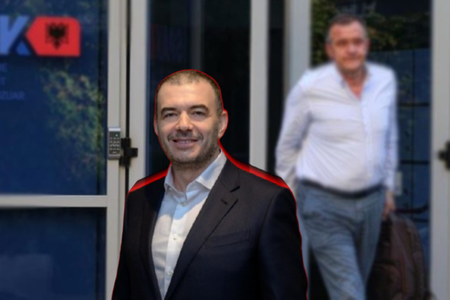
Prime Minister Edi Rama has decided to give Minister Blendi Gonxhe the leadership of a process that is not related to the portfolio of the Ministry of Economy, Culture and Innovation, but which extends deeply into the competencies of local government: the selection and evaluation of management structures in the country's municipalities.
In the name of a “reform” of the local administration, Rama has ordered the creation of evaluation committees for the administrators of the units, deputy mayors and directors of the municipalities who have resigned en masse. These committees are composed of SP MPs and mayors, but at the head of the entire process is Minister Blendi Gonxhe, one of the closest figures to the prime minister and a man with direct influence in the party structures.
This is not just a common strategy to reorganize people into functions, but a serious institutional aberration, which violates the separation and functioning of powers, centralizing everything in the hands of a central government ministry, which contradicts the very spirit of decentralization and the principles of the European Charter of Local Self-Government.
Essentially, this is an overlap of powers: the executive is taking direct control over another decentralized power, such as the local one. And this is not reform, but political concentration and centralization of administrative control, a feature of authoritarian governments, not of functional democracies that claim EU integration.
And if this is called "meritocracy selection," citizens know well that it is a redistribution of positions with old names or new names, but always within a controlled political circle.
The commissions created to re-evaluate dismissed officials or appoint new ones are formal, because the real decisions are made by Minister Gonxhe. He will be the authority to decide who will be reinstated, who will be appointed, and who will be transferred elsewhere. Meanwhile, many of those who have been dismissed are expected to be recycled into the central administration.
The announcements for vacant positions in the municipality are a facade to create the perception that everything is happening in accordance with the law. In fact, it is a maneuver to undo the political "storm" of forced resignations, which more than reform has been a maneuver to avoid the blow from SPAK and to refresh the administration with better-controlled figures.
This “reform” model completely excludes local government itself from its constitutional function. How can one talk about decentralization, when the central government appoints the directors and administrators of municipalities through a ministry? How can one seek European integration, while Albania is moving towards a model where local government becomes an extension of the will of the executive?
If the goal is to meet EU standards for an impartial and functional administration, then reform must start at the central level: by cleaning up ministries, national agencies, state-owned enterprises and public tender boards. If a system that functions with merit is truly desired, those who are currently under investigation should be removed, not by changing directors in municipalities to be replaced with other obedient people./ Pamphlet



Lini një Përgjigje