


 Shkruar nga Pamfleti
Producers, especially processing factories for export, have raised concerns in recent months that the fall in the value of the euro in exchange for the lek is bankrupting them.
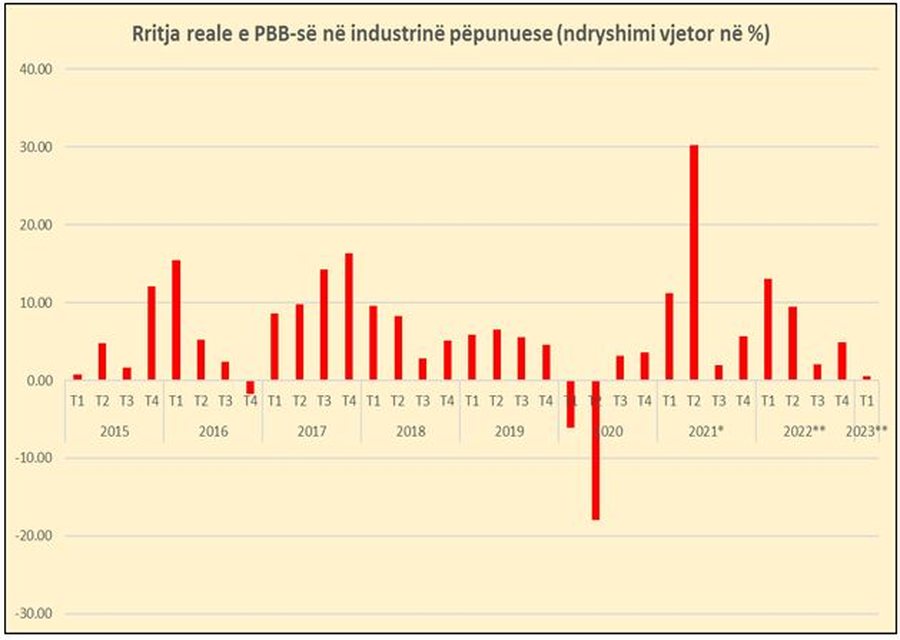
This concern is also reflected in the official data, where the data on the Gross Domestic Product in the first 3 months showed an increase in the manufacturing industry by only 0.5%, the lowest level since the second 3 months of 2020 where the country was under strict restrictive measures due to the spread of the Covid-19 pandemic.
In 2022, in the same quarter, real growth in the processing sector was 13%. Looking at the production cycle in the processing industry sector, it can be seen that the first and second quarters of the year have higher growth as a result of the work and production cycle, but the first quarter of 2023 was an exception. The production remained in place count an unusual situation in this period.
Other data show the difficulties the manufacturing industry is going through. INSTAT data indicated that in the first quarter of 2023 total employment experienced an annual increase of 4%, but in the industry sector it decreased by -2.7 percent compared to the first quarter of last year and with a decrease of 1.8 per percent with the last 3 months of the year.
The Pro-Export association, which represents garment and shoe factories, said losses from the exchange rate have canceled plans to raise wages and invest in technology. But the most serious social consequence seems to be unemployment, which has started to appear.
Exporters experienced a boom in activity until last year. The Covid-19 pandemic and the war in Ukraine fueled the increase in demand from Europe to produce in Albania. With ample job offers and a qualified workforce, Albanian factories began to choose between products with high market value.
Official data revealed that the value of exports reached over 135 billion lek (1.1 billion euros) in 2022 with annual growth of over 20%, the highest since 2015. Factories started to raise wages for employees as a means of prevented the emptying of factories by the new workforce.
But the events in the exchange rate have turned the plans upside down. The losses alone will not enable wage increases, but the sector risks further lowering existing wages. The first signals were given in the first quarter of the year.
In the first quarter of the year, the average wage in the economy reached 66,014 ALL, marking a decrease of 2% compared to the end of the year.
In general, in the last quarter there is a higher increase in the average salary due to year-end bonuses, but the drop on a quarterly basis in the first months of this year is higher than in the same period a year ago, when it fell by only 0.5%, while in the first quarter of 2021 the trend had been upward compared to the end of 2020, by 1.9%.
Exporters' associations claimed that the losses created by the exchange rate are hindering technological progress. Factories producing for export were making forced investments in technology due to labor shortages.
Despite offering wages in the low segment, at the limits of the minimum, the processing industry offers employment to the most vulnerable part of society, unemployed women in urban areas./Monitor








Lini një Përgjigje