


 Shkruar nga Con Coughlin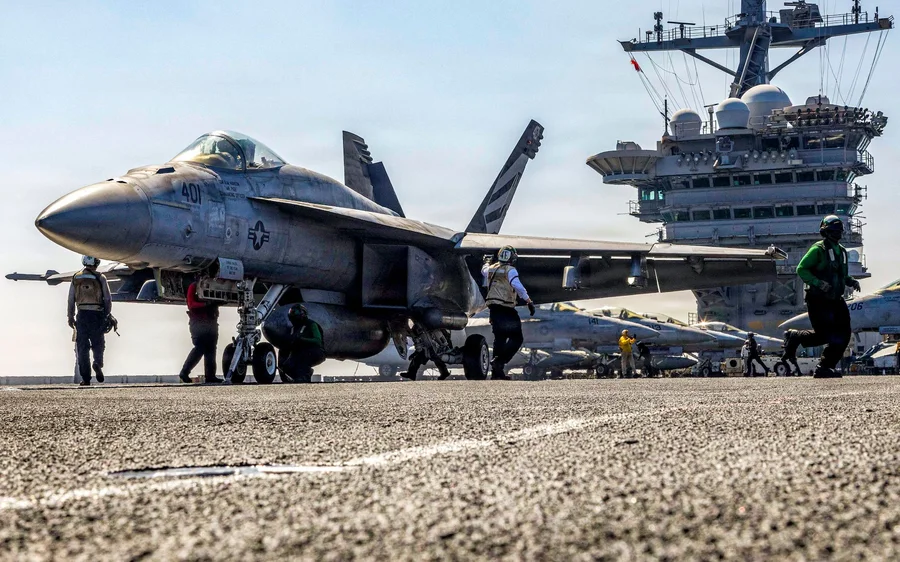
A targeted American military action could topple the theocratic dictatorship of the ayatollahs
As the Trump administration continues its massive buildup of military forces in the Middle East, it is not just the long-suffering Iranian people who hope that a regime change in Tehran will significantly improve their fortunes.
Although Donald Trump declared in his speech on Tuesday that he prefers to resolve the standoff with Tehran over its nuclear ambitions through diplomacy, the size of the US force being amassed in the region, the largest since the invasion of Iraq in 2003, suggests that some form of military action is imminent.
Moreover, the likelihood that the US will launch a new wave of attacks against Iran will remain high as long as Iranian negotiators continue to insist on the country's inalienable right to conduct uranium enrichment activities, which the Western intelligence community believes are aimed at producing nuclear weapons.
This is a condition that Trump is unlikely to accept, given his pledge in the speech: “I will never allow the number one sponsor of terrorism in the world… to have a nuclear weapon.”
Iran's latest confrontation with the US comes at a time when the Islamic Republic is at its weakest point since the Iran-Iraq war in the 1980s, when Iraqi dictator Saddam Hussein, with Western support, came close to overthrowing the ayatollahs.
With the Iranian economy in critical condition and the regime struggling to contain the tide of anti-government protests, there is a possibility that a careful and targeted military action by the US could topple the entire structure of the ayatollahs' theocratic dictatorship.
In fact, according to reports, the US has prepared a list of targets that includes key figures in the regime, such as Iranian leader Ayatollah Ali Khamenei and his son, to eliminate as part of a "beheading" strategy aimed at regime change in Tehran.
If the departure of the ayatollahs were welcomed by the vast majority of Iranians who have endured nearly five decades of despotic rule, the fall of the Islamic Republic would have consequences that extend beyond Iran's borders.
While the Middle East, which has borne the brunt of Tehran's hostile activities, would be the most obvious beneficiary, a radical change of governance would also have profound geopolitical consequences in other regions.
In particular, Russia and China, which have built strategic commercial and military partnerships with Iran in recent years, would see their global position significantly weakened. This outcome could explain recent reports suggesting that Moscow and Beijing are prepared to offer Tehran sophisticated weaponry.
Russia would be hit hardest by a regime change, as Iran has proven a valuable ally in support of Vladimir Putin’s war effort in Ukraine, consistently supplying the Russians with drones and ballistic missiles. Given that it lost another key ally in Venezuela this year with the ouster of former President Nicolás Maduro, Putin’s efforts to create an alternative axis of power vis-à-vis the US would appear weakened.
China would also face pressure if it could no longer rely on a steady supply of cheap Iranian oil, with 90 percent of Iran's oil exports going to Beijing at reduced prices to support its economy. The communist leadership in Beijing would also be aware that any change of leadership in Tehran could negatively affect the ambitious "One Belt, One Road" initiative, a key part of the partnership pact signed between the two countries in 2021.
However, the most immediate benefits from a regime change in Tehran would be felt in the Middle East, where the intricate network of armed groups that the Islamic Republic has created over decades will have to survive without the military and financial support provided by Iranian sponsors.
Without the ayatollahs, Hamas would have a hard time resisting the Trump administration's demand to completely disarm and dismantle its infrastructure in Gaza, a key demand of Trump's 20-point plan to bring peace to the enclave. Meanwhile, in Lebanon, it is doubtful whether Hezbollah, the Iranian-backed Shiite group that has dominated the country's political scene for decades, could survive in its current form without Tehran's support.
Iraq would also benefit, as Iran continues to support a number of Shiite militias there that aim to challenge Washington's presence in the region. Yemen, where Iran is the main military backer of the Houthi rebels, would be another beneficiary, as it would deny the Houthis - designated a terrorist organization by the US - the opportunity to continue their costly campaign to disrupt shipping in the vital Red Sea trade corridor.
Trump may still be considering whether to take military action against Iran. But as he weighs his decision, the American leader should understand that removing the ayatollahs would benefit not just the Iranian people, but the entire world. /Adapted from The Telegraph /




Lini një Përgjigje