


 Shkruar nga Thoma Gëllçi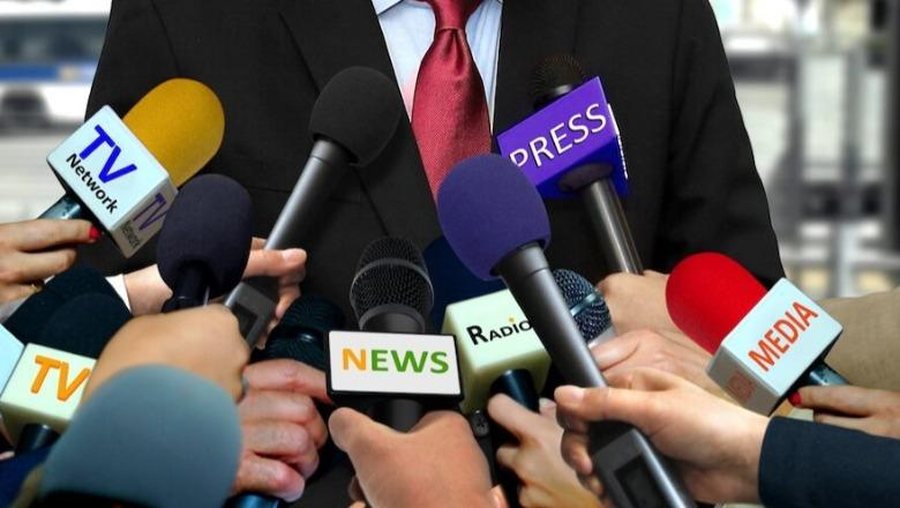
The decision by the Trump administration and the US Congress to cut $1.1 billion in funding to the Corporation for Public Broadcasting (CPB) is not just a number in a state budget...
The decision by the Trump administration and the U.S. Congress to cut $1.1 billion in funding to the Corporation for Public Broadcasting (CPB) is not just a number in a state budget. It is a direct blow to one of the most trusted institutions of American public life, a blow not seen in nearly six decades. This act doesn’t just wipe a line from the federal budget, it erases an entire chapter in the history of public service media.
Historically, public media is not a luxury—it is a national necessity. Since CPB’s founding in 1967, its mission has been clear: to ensure equal access to information, education, and culture for every corner of the country, regardless of economic power or geography. In urban areas, NPR (National Public Radio) and PBS (Public Television) provide spaces for civil debate and in-depth reporting; in rural and impoverished areas, they are often the only reliable information channel, especially for emergency alerts and educational programs for children.
To deny this role is to forget that the United States, like every other democratic country, has built its public service media on the model that has worked for decades in Europe. The BBC in Britain, ARD and ZDF in Germany, France Télévisions in France — all are publicly funded because they serve the public interest, not the market and not political parties. If a country like the United States, with a long tradition of press freedom, decides to cut off the head of its public media, what message does it send to other countries that look to America as a model?
Critics justify this budget cut by claiming that NPR and PBS are “biased” and “an unnecessary expense for taxpayers.” But the facts are stubborn: a Harris Poll survey shows that 66% of Americans support federal funding for public radio — including 58% of Republicans themselves. And, despite the political narrative, the bulk of NPR’s budget does not come directly from the state; federal funds primarily support local stations, especially those serving marginalized communities.
The closure of CPB is not simply the closure of an office. It is the disruption of a vital chain that provides information, education, and culture to millions of citizens. It is the severing of the thread that connects a child in a remote community to PBS educational programs, or a farmer in an isolated area to accurate news and emergency warnings. And history teaches us that when public media is curtailed or controlled, the empty space is quickly filled by misinformation and propaganda.
In the 1930s, as some European countries allowed public broadcasting to deteriorate for political reasons, the consequences were disastrous: the monopolization of information and the decline of public debate. In contrast, where public service media was protected and funded, citizens remained better informed, more engaged, and more resistant to manipulation.
International experience clearly shows that the funding and independence of public service media are not gifts, but investments in democratic stability. In the UK, the BBC is financed through a compulsory licence fee for every household owning a television, providing a stable source of income and a strong shield against political pressure. In Germany, public service broadcasting fees are guaranteed by law and cannot be easily affected by the government, making ARD and ZDF among the most trusted platforms in Europe. In Scandinavia, public service media such as NRK in Norway or SVT in Sweden are financed through special taxes and have a legal obligation to cover even the most isolated areas with high-quality service.
The dangers to public media in semi-authoritarian countries are obvious, and Albania is no exception.
RTSH, theoretically independent, faces ongoing challenges from political influence, party appointments, and pressure over the editorial agenda. In other Eastern European countries, such as Hungary and Poland, ruling parties have used control over public media to stifle opposition and manipulate the national narrative. Often, these interventions begin with justifications similar to those used in the US: accusations of “bias,” demands for “reforms” or “budget savings,” which then morph into mechanisms of control and censorship.
In Albania, the risk is twofold: not only the lack of sufficient funding, but also the lack of strong legal guarantees that would protect public media from the next political power. When the parliamentary majority, but also the opposition, is not elected but appointed, independence remains on paper. And when there is no stable funding, public media becomes dependent on tenders, sponsorships and editorial compromise.
Today, America risks entering that dark page of history that several other countries have already written: the weakening of public service and paving the way for the monopolization of information. There is no healthy democracy without a free, independent, and accessible media. And when this media is public, it does not serve stocks, advertising, or private owners — it serves only the citizen.
Closing CPB won't immediately kill NPR or PBS, but it will erode the foundation on which they stand. And when the foundation falls, the walls don't stand.
Albania does not have the luxury of making the same mistake. In a country where the media market is concentrated in a few hands, where commercial and political interests often blur the lines between news and propaganda, the role of RTSH is more vital than ever. Without a strong, independent and sustainably funded public media service, the Albanian citizen remains at the mercy of channels that sell news as a commodity and portals that live on sensationalist headlines.
The American experience today is a warning to us: the funding and independence of public media should not be taken for granted. They must be defended every day, not only by politicians, but also by the very public they serve. Because when public media is silent, not only is a voice lost — a fundamental civic right is lost: the right to be informed. And when citizens are not informed, the government no longer fears them.




Lini një Përgjigje