


 Shkruar nga Ilir Çumani
Elections in Kosovo are not seen as a war to destroy the opponent, but as a legitimate mechanism to seize and exercise power. Defeat is accepted as part of the democratic order, while victory does not automatically turn into institutional arrogance.
The elections in Kosovo presented us with a model of simple democratic normality that, instead of being the same for Albania, has become a reflection of a cyclical and deep political and moral crisis.
The irony is great and significant: Kosovo, a new state, still in the process of international consolidation, manages to hold elections with order, clarity and within a reasonable time, while Albania, with 113 years of statehood, is in a vicious circle and still continues to produce uncertainty, procrastination and permanent conflict.
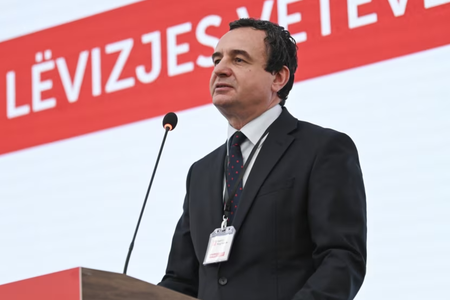
This contrast is no longer just institutional. It has also taken clear form through the two models of political leadership, which are today embodied by Albin Kurti in Kosovo and Edi Rama in Albania. Two figures, two styles, two completely different ways of doing politics and of relating to the opponent, to the institution and to power.
Albin Kurti, the “little brother” in the Albanian state chronology, leads a new state, with open historical wounds and constant political pressures. However, he has built a more disciplined relationship with the democratic process. Elections are not seen as a war to destroy the opponent, but as a legitimate mechanism to seize and exercise power.
Defeat is accepted as part of democratic order, while victory does not automatically turn into institutional arrogance. This attitude does not make Kosovar politics perfect, but it makes it functional.
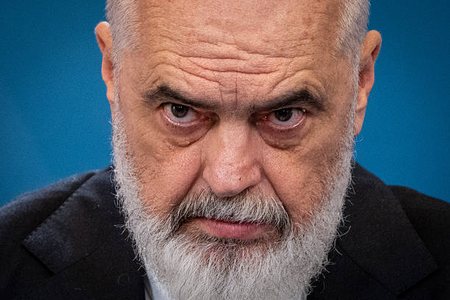
On the other hand, Edi Rama, leader of a state with over a century of history, displays a leadership model built according to a neo-Ottoman typology, on constant conflict and intrigue, on extreme personalization of power and open contempt for political opponents.
In Albania, elections are not experienced as a normal democratic act, but as an existential battle, where the winner takes all and the loser is delegitimized. This model of political behavior has produced a culture of permanent tension, where institutions are politicized, processes are delayed, and public trust is destroyed.
The paradox is strong and painful: the younger brother, Kosovo, provides a model and lesson in democracy to the older brother, Albania. And in this context, the question naturally arises: why should Albin Kurti lend a hand to Edi Rama? Not to help him politically, but to show him the right path and to remind him of the elementary rules of doing politics even with an opponent, those rules that Albania, despite its age as a state, seems to have forgotten.
In Kosovo, despite strong political rhetoric, there is a dividing line between competition and the state. In Albania, this line has long been erased. Politics is in a permanent campaign, institutions are extensions of power, and elections turn into dark, prolonged, and contested processes. This is not a problem of technicality, but a problem of political culture.
Albin Kurti represents a model of statesmanship that seeks to legitimize itself through process. Edi Rama represents a model of rulership, where the process serves to legitimize the power he has seized. Here lies the essential difference.
One builds a relationship with order, the other with control. One accepts the limits of the democratic game, the other pushes or deforms them.
After 113 years of statehood, Albania no longer has any historical justifications. It is not a victim of the country's youth, but of a political class that refuses to mature and ripen. And as long as this leadership model prevails, every election will produce more crisis than democracy, more tension than trust. And consequently even more corruption and instability, missing social peace.
The model exists. It is there, in Kosovo, in a younger state, but more disciplined in respecting democratic rule. Perhaps the time has come for the big brother to admit that he has lost his compass and listen to the little brother. Not for pride, but for more democratic culture. Not for power, but for the STATE!
Tirana, December 29, 2025



Lini një Përgjigje