


 Shkruar nga Ardian Vehbiu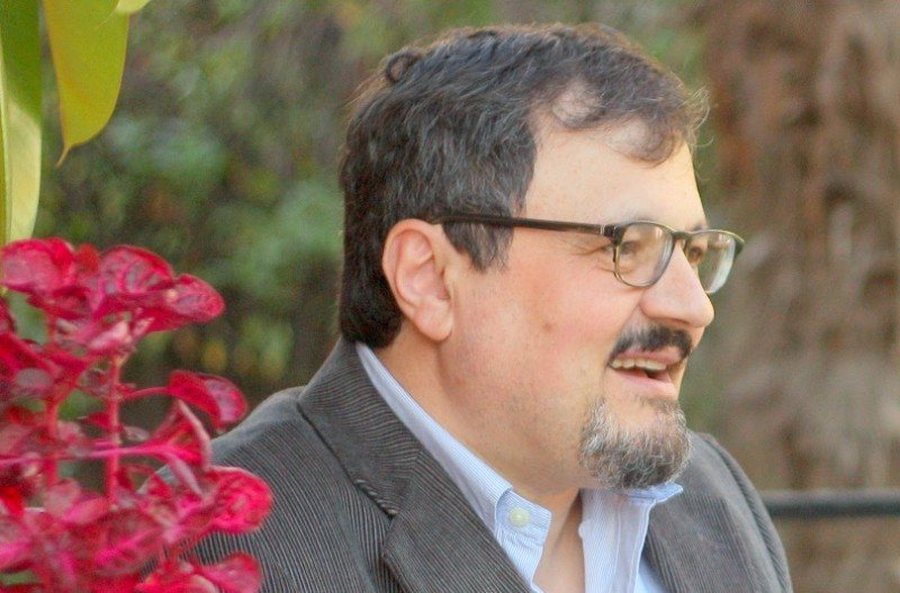
Unlike the pseudologists, the nationalist ideologues and demagogues who sometimes associate with them stay away from absurdities, but they still allow untruths to enter knowledge, under the pretext that they are serving the nation...
About the petition addressed to the Assembly of the Republic of Albania, the Ministry of Education, the Agency for Media and Information, the National Agency of the Information Society and the Audiovisual Media Authority (AMA) is being made not only a lot of noise, but also not the right noise. A group from the intellectual elite, but I am not very clear by whom and how and on whose initiative they were selected, demand the intervention of the public authority, to curb the promotion of slander in the media, especially on television, mainly related to the narrative of the origin of the Albanian language and people. The problem is real, and caring about what the mass media gives to the public is the prerogative of the petitioned institutions, which, as far as I understand, are simply being asked to do their job or enforce the law (which is why they exist and are maintained).
I was invited to sign, but I had to decline. Because I don't believe in petitions, and even less in "intellectual" petitions. The intellectual has the opportunity, even the duty, to articulate his position individually in public. One thing that the intellectual A says does not gain weight and argument, if he says it together with the intellectual B. Therefore the petition is essentially a gesture, a performative, at a time when this practice - of the gesture - is greatly impoverishing life public. Many of the names that have joined the petition I do not know, and I do not believe that they have made any contribution to the health of public discourse. On the contrary, they are names that have just become names, precisely because they signed.
A fourth reason, important to me, is that the petition creates the impression that there are two camps - that of knowledge and that of pseudo-knowledge with the indifferent in between; and invites the public to reflect. But I think there are at least three camps: that of knowledge, that of pseudo-knowledge, and that of nationalist ideologues, who are often protagonists in public discourse. These ideologues are generally skilled, expert, well-prepared people, but who have as a common denominator the belief that the national question allows the distortion of knowledge. Sometimes I think these people poison the minds of the public worse than the pseudologists. This is how one of them wrote, in the context of the current debates about the petition:
I would say that "anti-Albanian circles" either do not depend on turbologists at all, or use them to reproduce. These pseudos have no merit, who bring their strange theories, with often comic effects, and in any case indefensible to screens and bookstores - they are even the best proof that Albanian culture cannot be articulated at the academic level and can produce only folkloric discourse, worthy of some museum of Balkan intellectual immaturity.
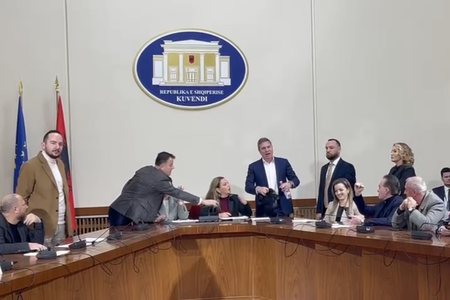
Unfortunately, what should have been part of a debate to lead to the truth, through argument and counter-argument, in us is often equated with "political" clash, such as what happens in the parliament in Tirana, where the victory must be ensured for "our" side. The division between truth and falsehood is replaced by the division between WE and YOU, with deplorable results (our truth and your truth, or the total relativization of truth); turning knowledge into a crutch of inter-ethnic conflicts, real and imaginary. In fact, I have said it before, the greatest service to the enemies of the Albanian cause is provided by the turbologists and their apologists, who are training the minds of people with such convictions to paralyze any kind of communication between "ours". and "others" and at the same time narcotize the critical thinking of the Albanian subject of discourse.
Their approach to the relationship between knowledge and ideology can be found today everywhere - in the official discourse, in school textbooks, in the words and deeds of those who perhaps sincerely remember that they are serving the nation and the national issue, even sacrificing themselves for it. For me, pseudologs - the subject of the petition - would not have had the resonance they have without the mediation of this third party. Unlike pseudologists, nationalist ideologues and demagogues who sometimes associate with them stay away from absurdities, but they still allow untruths to enter knowledge, under the pretext that they are serving the nation. But some of them now want to maintain the monopoly on the nationalist discourse - which is equally endangered by the turbologists; some others have long given over to kitsch.
On the other hand, I believe that the pseudo-Albanology that has taken off today has always been a part of the nationalist discourse, since the time when the people of Arbëresh started this - driven by the desire to confess what is unique about Albanians and Albania. Historical-comparative linguistics, as solid knowledge, came relatively late in Albanian culture, with the generation of Çabej; otherwise, the role of historical knowledge until then had been played by mythological descent narratives and legends combined with folkloric descriptions. However, today this revival of "alternative" thought is also related to the weakening of the institutions of knowledge and education, the decline of the prestige of authority and respect for the teacher; as it relates to me, from another point of view, with the mass contact of Albanians with foreigners, after 1990. I have noticed that some of the amateur etymologists, who have drowned the screens, come from the experience of contact with neighboring languages - Italian, Greek. The etymological explanation is a way to overcome the feeling of inferiority that arises from this contact. In parallel, there is an awakening of popular interest in issues of identity, ancestry and autochthony, especially in the diaspora and in Kosovo. But none of this would have happened, if it had not found fertile ground, in the orality that continues to make the law, in our collective mindset.
Orality does not admit doubt, nor hypothesis testing; prefers narrative to argument; the shaman and the ideologist to the scholar; the permanent present to the flow of time; statics and repetition, to dynamics and change. Reasoned discourse loses ground in the face of gesture and performative. The great success of turbologists today seems to me to be comparable to the financial pyramid disaster in the 1990s, which was also caused by the belief and contempt of doubt. This has been well understood by some entertainers, in the mass media - I don't want to call them journalists - who give space beyond any logic to absurdities in their shows, because they know that they will win the public. And I'm not just talking about turbologists and pseudo-etymologists; because there are fortune tellers, astrologers, conspiracists, people who reject medicine, pharmacology, vaccines; that explain who leads the world; that predict earthquakes and comets and who knows what else. A diverse mass of people, united only by opposition to knowledge, science and reason, in the name of opposition to authority. There is no free profession, so as not to be questioned: the judge, the doctor, the expert: the society has returned to its best: a certain negative selection.
*A summary of the things I said in conversation with Ilir Yzeir, in RTSH's DNA show, which was broadcast on Sunday, February 25, at 11:00 p.m.



Lini një Përgjigje